










CAPITALDIGEST MARKET REVIEW, 11/05/2026
May 11, 2026
DOLLAR GAINS AS TRUMP SAYS IRAN PEACE OFFER ‘UNACCEPTABLE’
The dollar advanced for a second day against its major peers in Asian trade on Monday, supported by strong U.S. jobs data and safe-haven demand driven by a shaky U.S.-Iran ceasefire. The euro was down 0.2% at $1.1757, the yen slipped 0.3% to 157.155 yen per dollar and the British pound was 0.3% lower at $1.3590. The risk-sensitive Australian dollar slipped 0.2% to $0.7229, while its kiwi counterpart weakened 0.3% to $0.5948. Factors that could weigh on the dollar “have become more elusive after hawkish Fed dissents, resilient U.S. data and continued stalemate in the Middle East,” said Alex Loo, senior macro strategist at TD Securities in Singapore. The Fed held rates steady last month as expected, but the decision exposed its deepest split in decades, with three officials dissenting against signalling future rate cuts. Oil prices jumped in Asian trade on Monday, with Brent crude up 4.5% at $105.85 a barrel, after President Donald Trump on Sunday rejected Iran’s response to a U.S. proposal for peace talks, dashing hopes for an imminent end to the 10-week-old conflict. “I don’t like it — TOTALLY UNACCEPTABLE,” Trump wrote on Truth Social, without giving further detail. The Chinese yuan was 0.1% firmer against the dollar at 6.7939 yuan in offshore trade, up for an eighth consecutive day as markets looked ahead to a visit to China by U.S. President Donald Trump later this week. Trump and Chinese President Xi Jinping are set to discuss Iran, Taiwan, artificial intelligence, nuclear weapons and critical minerals when they meet later this week, according to U.S. officials. Data earlier in the day showed China’s producer prices smashed expectations to hit a 45-month high in April on rising global energy costs. That followed figures released over the weekend showing China’s export growth accelerated last month as factories raced to meet AI-related demand. The U.S. dollar index , which measures the greenback’s strength against a basket of six currencies, was up 0.1% at 98.103. The greenback has found support from the U.S. jobs report released Friday that showed non-farm payrolls increased 115,000 in April, almost twice as fast as expected. Those figures reinforced expectations the Federal Reserve would keep interest rates unchanged for some time. “The dollar remained on the back foot last week, with the market laser-focused on prospects for a gradual reopening of the Strait of Hormuz, with the breakthrough potentially coinciding with the Trump-Xi meeting,” strategists from Barclays wrote in a research report. “That said, U.S. data remains resilient and the labour market appears to have stabilised across a number of data sets,” they added.
STERLING, GILTS RISE AS STARMER VOWS TO STAY DESPITE ELECTION DRUBBING
The pound and UK government bond prices climbed on Friday after British Prime Minister Keir Starmer vowed to stay in office to “deliver change” after his ruling Labour Party suffered heavy losses in local elections. Starmer’s Labour haemorrhaged support in areas reporting overnight, with results still rolling in on Friday. The populist Reform UK party of Brexit campaigner Nigel Farage was so far the main winner, gaining more than 350 council seats in England. Investors have been concerned that should Starmer be forced out, he would be replaced by a left-leaning Labour leader, who could increase public borrowing, pressuring debt and currency markets. The pound was last up 0.6% at $1.3624 , and rose 0.1% against the euro . Meanwhile, Britain’s benchmark 10-year gilt yield , a proxy for government borrowing costs, was outperforming other global bonds and had fallen 7 basis points to 4.875%. Yields move inversely to prices. It was too early to gauge the full impact of the results, analysts and investors said, but Starmer vowing to stay on had reassured markets somewhat. “Obviously a lot can change in the next few hours with the rest of the results,” said Matthew Amis, investment director at Aberdeen. “But for the time being this isn’t the event that the market was set up for, which was potentially having Starmer falling on his sword,” he said. “So it’s a bit of a sigh of relief from the gilt market.” “I think it’s an initial relief rally,” said Lloyd Harris, head of fixed income at Premier Miton Investors. “But ultimately I think the fireworks are still to come.” “I would say it’s a small net positive for gilts that actually the Greens haven’t done better,” Harris said, referring to the environmentally focused left-wing party which favours higher spending. Britain’s FTSE 100 stock index (.FTSE), opens new tab slipped 0.2% as oil prices remained just below $100 a barrel on concerns about the fragile Iran ceasefire, but outperformed broader European equity markets.
DOLLAR WEAKENS AS INVESTORS PIN HOPES ON A RESOLUTION TO THE US-IRAN CONFLICT
The dollar eased on Friday, set for a second straight weekly fall as investors stayed cautiously optimistic about a swift end to the Middle East conflict, after President Donald Trump said the ceasefire remained in place despite renewed U.S.-Iran hostilities. The United States said it expected an Iranian response as soon as Friday to its latest proposal to end the war in the Gulf, even as U.S. and Iranian forces traded fire in the region and the United Arab Emirates came under renewed attack. Analysts said investors were taking heart from the fact that while oil prices were higher, a fragile ceasefire broadly held. “The U.S. has strongly suggested it is trying to avoid escalation and wants the ceasefire intact,” said Kyle Chapman, FX markets analyst at Ballinger Group in London. The dollar index measured against key peers fell 0.4% to 97.877, after hitting 97.623 earlier this week, its lowest level since February 27, a day before the war started. It was set for a weekly drop of 0.3% after falling about as much the previous week. “We are bearish on the DXY (dollar index) as we think supported risk appetite and additional risk premium should push the DXY to 95 in the coming months,” strategists at Morgan Stanley said in a note. The euro was up 0.5% at $1.17808 , poised to end the week a touch firmer. Investors, who had flocked to the safe-haven dollar and sold currencies of oil import-dependent economies such as Japan and the euro area after oil prices surged following Iran’s effective closure of the Strait of Hormuz, drifted toward riskier currencies in recent weeks as hopes grew for a resolution to the Iran conflict.
CANADIAN DOLLAR FORECASTS MORE BULLISH AS GEOPOLITICAL RISK EBBS: REUTERS POLL
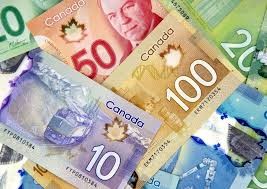
The Canadian dollar is expected to give back some recent gains against its U.S. counterpart in the coming months, but could resume its uptrend if economic uncertainty linked to the Middle East war and U.S. tariffs eases, according to a Reuters poll. A median forecast of 27 foreign exchange analysts in the May 1-6 poll put the Canadian dollar down 0.3% at 1.3667 per U.S. dollar, or 73.17 U.S. cents, in three months – slightly stronger than the 1.37 level forecast in a survey last month. In 12 months, the loonie is seen up 1.5% at 1.3433, compared with 1.3500 in the previous forecast. “We have already seen a substantial repricing of risk, with geopolitical premiums going away, but ongoing uncertainty surrounding the U.S.-Iran conflict suggests the pair may remain range-bound in the near term,” said Sarah Ying, head of foreign exchange strategy at CIBC Capital Markets. Iran said on Wednesday it was reviewing a new U.S. proposal, after sources said Washington and Tehran were closing in on a one-page memorandum to end the war in the Gulf, while leaving contentious issues such as Iran’s nuclear programme for later. “Improving risk conditions, an erosion in (U.S.) dollar haven demand, and a terms-of-trade tailwind from persistently higher oil prices are all factors that favour USD-CAD downside,” said Nick Rees, head of macro research at Monex Europe. Oil, which has surged since the closure of the Strait of Hormuz, is a major Canadian export. The Bank of Canada has said that if oil prices stay high and begin pushing up inflation, it may need to respond with consecutive interest-rate hikes. Investors expect two increases this year, swap market data show. However, a majority of economists surveyed by Reuters late last month said borrowing costs would remain unchanged this year. “Granted, markets may have to navigate CUSMA negotiations first, but assuming no significant surprises, we would expect the loonie to make gains against the dollar into the back end of the year,” Rees said. The Canada-United States-Mexico Agreement, a continental trade pact, also known as USMCA, has shielded much of Canada’s exports from U.S. tariffs. It is due for review by a July 1 deadline.
POUND GAINS FROM OPTIMISM OVER US-IRAN DEAL, OPTIONS SUGGEST CALM AFTER LOCAL ELECTIONS
The pound rose against the dollar on Wednesday, as investors took heart from an Axios report saying that the United States and Iran were closing in on a deal to end the war. In Britain, key local elections take place on Thursday and Prime Minister Keir Starmer’s Labour Party is bracing for big losses. Repeated scandals and criticism that it has not yet delivered an improvement in living standards have stirred speculation Starmer may be replaced, a cause for concern for investors in the bond and currency markets. Prediction market site Polymarket shows there is a near-70% chance Starmer will be out by December. That has risen from a low probability of 49% in early April. Sterling was last up 0.6% on the day at $1.3621 around its highest since February . Against the euro , the pound was steady, leaving the single currency at 86.35 pence. “More political instability could be on its way and investors could well be positioning for the potential for renewed political instability that could follow Thursday’s local elections,” MUFG currency strategist . The pound has gained nearly 7% since Labour won the 2024 general election and benchmark interest rates are at 3.75%, down from 5.25%.But the economy is flatlining, inflation is starting to flare as energy prices surge due to the U.S-Iran conflict, and borrowing costs for anything from a mortgage to personal loans have risen to multi-year highs, as gilt yields have risen. Five-year gilts yield was around 4.53%, having jumped from 3.68% before the war broke out in late February and they are up from 4.05%, when Labour came to power. A survey of monthly business activity showed UK services firms witnessed the largest rise in price pressures in three and a half years in April, with more than half of the respondents reporting an increase in their average cost burdens. Meanwhile, the options market painted a fairly sanguine picture for the election, as the cost of protection against big overnight swings in the pound fell in line with that for other major currencies . Overnight implied volatility, one measure of the cost of hedging against big moves in the pound over a 24-hour period, drifted to around 6.83%, roughly in the middle of its recent range. Overnight implied vol for euro/sterling, meanwhile, was also relatively subdued at 2.71%, according to LSEG data. A week ago, the cost of hedging against a big move after Thursday’s election was around 6.27%.