










CAPITALDIGEST DAILYNEWS, 11/05/2026
May 11, 2026
OIL FALLS 11% AS US-IRAN DEAL NEARS
Global oil prices plunged sharply on Wednesday, with Brent crude falling about 11 per cent to below $100 per barrel, following growing optimism that the United States and Iran are nearing an agreement to end the ongoing Gulf war. The decline came as Iran said it was reviewing a new US proposal, amid reports that both countries were close to agreeing on a one-page memorandum that could halt hostilities and pave the way for further negotiations. According to Reuters, sources familiar with the talks said the proposed deal would be followed by discussions to reopen shipping routes through the Strait of Hormuz, lift US sanctions on Iran, and address Tehran’s nuclear programme. The sharp drop in prices reflects easing concerns over supply disruptions that had driven crude above $100 per barrel in recent weeks due to the conflict, which disrupted energy flows through the strategic waterway.Brent was at $108 per barrel before it later dropped to $98 amid hopes that both Washington and Tehran would resolve their differences soon. Reuters reports of progress in negotiations triggered a broad sell-off in oil markets, with investors betting on a potential restoration of supply once the strait is reopened. US President Donald Trump, in a social media post, suggested that the war could end if Iran “agrees to give what has been agreed to,” adding that failure to do so could lead to intensified military action. He also announced a pause in a naval mission aimed at reopening the Strait of Hormuz, citing “great progress” in ongoing peace talks. Meanwhile, a Pakistani source involved in mediation efforts was quoted as saying, “We will close this very soon. We are getting close.” Despite the optimism, there were indications that significant issues remain unresolved, particularly regarding Iran’s nuclear activities and other longstanding US demands. An Iranian lawmaker, Ebrahim Rezaei, described the reported proposal as “more of an American wish list than a reality,” signalling potential resistance from Tehran. Analysts said the oil market remains highly sensitive to geopolitical developments, noting that any breakthrough in negotiations could further ease prices, while a collapse in talks may trigger renewed volatility. The Strait of Hormuz, a key global oil transit route, has been at the centre of the disruption, with restricted shipping contributing to supply concerns in recent weeks.

BANKS EARN N18.2TN DESPITE PROFITS DECLINE
Nigeria’s largest banks delivered a mixed but ultimately reassuring set of financial results in 2025, with balance sheet expansion and revenue growth offset by a sharp, policy-driven hit to profitability. According to the 2025 audited financial statement for the period ended 31 December, tier-one lenders’ gross earnings rose broadly, with the total amount collectively rising 7.69 per cent to N18.2tn from N16.9tn in the same period of 2024. This growth was led by Access Holdings to N5.52tn in 2025 from N4.87tn reported in 2024, followed by Zenith Bank rising to N4.07tn from N3.82tn, First HoldCo with N3.21tn from N3.37tn, UBA with N2.97tn from N3.1tn, and GTCO, which saw its gross revenue rise to N2.11tn in 2025 from N2.15tn in 2024, confirming that core banking activity remains strong despite macro pressures. During the period, interest income calculated using the effective interest rate expanded sharply for most banks. Zenith nearly doubled to N2.72tn, while GTCO jumped to N1.32tn, highlighting the benefit of Nigeria’s high-yield environment.At the same time, non-interest income continues to deepen, with e-banking revenues collectively rising to N685.5bn from N628.4bn across the board, underscoring the growing importance of digital channels. More importantly, balance sheets strengthened significantly. Access HoldCo’s total assets surged to N51.5tn from N41.4tn, while UBA and Zenith crossed N33.7tn and N31.4tn, respectively. Shareholders’ funds also expanded across all banks, reflecting the post-recapitalisation exercise, which has boosted capital buffers and improved loss-absorption capacity. This capital build-up is central to the story. Nigerian banks raised a total of N4.65tn in fresh capital over a two-year recapitalisation drive, with 33 lenders meeting revised minimum requirements set by the Central Bank of Nigeria. The CBN governor, Olayemi Cardoso, said the exercise has strengthened the industry’s capacity to absorb shocks and support economic growth: “The recapitalisation programme has strengthened the capital base of Nigerian banks, reinforcing the resilience of the financial system and ensuring it is well-positioned to support economic growth and withstand domestic and external shocks.” The CBN said all lenders remain fully operational, with no disruption to banking services recorded during the recapitalisation period, as authorities sought to avoid instability while tightening capital requirements.The effort comes alongside a phased exit from regulatory forbearance introduced in previous years to cushion banks from economic headwinds. However, the cost of that reset is visible in earnings. In the full-year report of Nigeria’s biggest banks, First HoldCo’s profit after tax fell to N52bn in 2025 from N663bn in 2024, UBA fell to N404bn from N766bn, and GTCO also recorded a decline to N865bn from N1.01tn. In contrast, Zenith held steady at N1.04tn, while Access Bank grew its profit to N743bn. The divergence reflects elevated loan loss provisions, as banks unwind regulatory forbearance and reclassify previously shielded loans. This is less about fresh deterioration and more about recognising legacy risks. That explains the expected pause in dividends for shareholders in their 2025 full-year financials, as UBA’s full-year 2025 results showed loan loss provisions of N331bn on its books. First HoldCo followed with impairments rising to N710bn from N371bn, while Access Holdings’ charge for impairment on loans and advances to customers jumped 209 per cent to N287.3bn.However, UBA and First HoldCo have assured the investing public that this pause in dividends was impacted by prudent and forward-looking risk management decisions, a strategic clean-up exercise aimed at strengthening the group’s balance sheet and restoring confidence. Investors remain positive as market data shows NGX banking stocks rally at the close of trading on 4 May 2026, by 0.36 per cent, hitting 2,290.78 points. Market data showed the All-Share Index increased by 0.36 per cent to 243,158.97 points, pulling the year-to-date return down to +56.26 per cent, and market breadth remained firmly positive, as it strengthened to 1.69x from 1.26x, indicating strong buying interest across counters, with 54 stocks closing in the green. Trading data shows that banking stocks were the primary drivers of the market rise; these stocks include GTCO, rising by 3.70 per cent, and Stanbic IBTC, rising 9.70 per cent, among others, after the trading hours.

NGX MARKET CAPITALISATION DROPS TO N153.86TN ON SELLOFFS
The Nigerian equities market retreated into negative territory on Thursday as a massive wave of sell-offs in large-cap stocks erased N1.922tn from the total market capitalisation. This downturn was primarily driven by investors rotating out of high-value industrial and consumer goods stocks to lock in profits, ending the session with the total market value at N153.859tn. The benchmark All-Share Index declined by 2,994.90 points, representing a loss of 1.23 per cent to close at 239,734.61 points. The day’s performance was weighed down by significant price depreciation in blue-chip tickers, notably Dangote Cement, BUA Cement, Nestle Nigeria, Lafarge Africa, and Skyway Aviation Handling Company. Despite the heavy blow to the overall value, market breadth remained broadly positive as 41 gainers outpaced 30 losers, suggesting that while the heavyweights retreated, mid- and small-cap stocks continued to find favour among retail investors. Chemical and Allied Products and FTN Cocoa Processors emerged as the session’s top performers, both hitting the maximum daily gain of 9.99 per cent to close at N212.50 and N8.04, respectively. They were closely followed by Berger Paints, Meyer, and Zichis Agro Allied Industry, all recording a 9.97 per cent uptick. On the flip side, University Press led the losers’ chart with a 10 per cent drop to close at N4.50, while Red Star Express followed with a decline of 9.59 per cent and Skyway Aviation Handling Company shed 8.63 per cent of its value. Market activity saw a significant spike as the total volume of shares traded rose 29.34 per cent to 1.830 billion units, valued at N72.168bn across 81,131 deals. NEM Insurance dominated the activity chart, transacting 360.565 million shares worth N7.937bn. Other highly traded stocks during the session included Fortis Global Insurance, VFD Group, Access Holdings, and FCMB Group.

CBN FOREIGN SUBSIDIARY RULE SPARKS N1.92TRN LOSS ON NGX
The stock market on Thursday closed on a negative note as investors lost N1.92 trillion following sell-offs in banking and cement stocks. This came amid reactions to new regulatory guidelines by the Central Bank of Nigeria on foreign subsidiaries of banks. Market capitalisation dropped from N155.780 trillion to N153.858 trillion, representing a decline of 1.23 per cent or N1.922 trillion. The All-Share Index (ASI) also fell by 1.23 per cent or 2,994.90 points to close at 239,734.61, from 242,729.51 recorded previously. The Year-to-Date (YTD) return moderated to 54.82 per cent. Speaking on the development, an investment banker and stockbroker, Mr Tajudeen Olayinka, attributed the decline to investors’ reaction to the new CBN directive on foreign subsidiaries of banks. According to him, the guideline compels banks operating in foreign countries to limit investments in foreign subsidiaries to 10 per cent of their equity capital or shareholders’ funds.Olayinka told the News Agency of Nigeria that the apex bank also directed banks currently above the threshold to begin divestment from such subsidiaries. “The drop in the ASI and market capitalisation came from market reactions to the new CBN guideline that compels banks operating in foreign countries to limit their investment in foreign subsidiaries to 10 per cent of their equity capital or shareholders’ funds. “The market’s immediate interpretation is that the CBN is effectively integrating revenues and other reserves of banks operating in foreign countries into their existing regulatory capital. “This will limit their corporate payout capabilities or make future payouts dependent on growth trajectories,” he said. Olayinka explained that the development triggered heavy repricing of international banking stocks, which subsequently affected other highly capitalised equities, particularly cement companies. “So, prices of many of the international banks came down heavily by way of repricing. “This was followed by declines in prices of highly capitalised listed companies like cement,” he said. He, however, described the development as temporary, explaining that the affected banks remain fundamentally strong and undervalued. “I think the development is temporary, as the affected banks are already well capitalised and largely undervalued. “Therefore, the upside potentials for the banks are very high, suggesting that anyone selling off banking stocks at this time might actually be throwing away good money. “This is because the industry is now very strong and highly regulated. The liquidity hasn’t gone away,” Olayinka said. Meanwhile, the market breadth closed positive, recording 42 gainers against 30 losers. CAP and FTN Cocoa Processors led the gainers’ chart with 9.99 per cent each, closing at N212.50 and N8.04 per share, respectively. Berger Paints, Zichis Agro Allied Industries and Meyer declined by 9.97 per cent each, settling at N98.75, N30.33 and N17.10 per share.Conversely, University Press led the losers’ chart with 10 per cent, closing at N4.50. Red Star Express trailed with 9.59 per cent, ending the session at N25.45, while Skyway Aviation Handling Company dipped by 8.63 per cent, closing at N130.75 per share. Also, Cileasing shed 8.50 per cent, settling at N7, and Consolidated Hallmark lost 7.54 per cent, closing at N6.01 per share. Market activity improved for the day, as total traded volume rose by 29.34 per cent to 1.83 billion shares worth N72.17 billion, exchanged in 81,131 deals. NEM Insurance recorded the highest traded volume with 360.56 million shares, accounting for 19.70 per cent of the day’s total volume. Seplat Energy led in value terms with transactions worth N12.98 billion, representing 17.99 per cent of the total value traded. (NAN)

NAIRA DIPS AMID RISING FX DEMAND
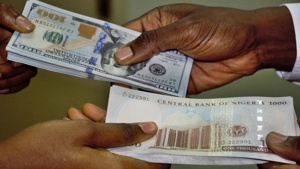
The naira depreciated against the US dollar at the Nigerian Foreign Exchange Market on Tuesday, driven by increased demand for foreign payments. As sharp FX interventions from the Central Bank of Nigeria slow, the local currency has experienced heightened volatility against the greenback, though Broadstreet analysts maintain a positive exchange rate outlook for the remainder of the year. The Apex Bank defended the naira with $150m in April, representing an 83 per cent decrease from the liquidity injected into the official window in March. The authority has reportedly taken a back seat to protect the nation’s gross external reserves, which have declined by approximately $1bn to $48.34bn. In the official window on Tuesday, the naira settled at N1,366.56/$, down from N1,365.25/$ the previous day, according to the CBN’s daily FX publication. Further details from the CBN revealed a sharp increase in interbank foreign exchange activity, which bolstered liquidity levels in the official window despite reduced direct intervention. Interbank FX turnover surged to $71.59m across 99 deals, up from $59.93m reported in the previous session.While domestic reserves continue their downward trend, global oil prices also retreated on Tuesday. The decline followed a United States operation aimed at reopening the Strait of Hormuz to shipping traffic, though sporadic exchanges of fire between U.S. and Iranian forces slowed the price drop. Brent crude futures fell by $1.38, or 1.2 per cent, to $113.06 per barrel, after a nearly six per cent surge on Monday. Similarly, U.S. West Texas Intermediate crude declined by $2.21, or 2.1 per cent, to settle at $104.26 per barrel. The CBN Governor Olayemi Cardoso said, “The foreign exchange system that used to operate in those days is very different from what it is now. “Then, you had the CBN that was primarily the only one determining that market. That is different now. It is market-driven. There is more liquidity in the market. There is confidence. Investors come in and go out as they like.”