











CAPITALDIGEST DAILYNEWS, 10/08/2026
August 10, 2026
RISING FUEL PRICES SLASH PETROL, DIESEL, COOKING GAS DEMAND
Rising pump prices forced Nigerian consumers to cut petrol, diesel and cooking gas consumption during the first half of 2026 as higher energy costs squeezed household incomes and raised transportation and production costs. An analysis of the H1 2026 Downstream Industry Analysis Report by the Major Energy Marketers Association of Nigeria, obtained by The PUNCH, showed a clear relationship between rising fuel prices and weakening demand for the country’s three major petroleum products. According to the report, the average retail price of Premium Motor Spirit (petrol) rose from N1,035 per litre in January to N1,051 in February, before climbing to N1,289 in March. It increased further to N1,533 in April and peaked at N1,596 in May before easing to N1,300 in June. The price increases coincided with declining consumption. Average daily petrol consumption fell from about 60–61 million litres in January to around 58 million litres in February, dropped sharply to about 48 million litres in March, recovered slightly to roughly 51 million litres in April, declined to 46–47 million litres in May, and improved marginally to about 48 million litres in June after pump prices eased. Diesel consumption also weakened as prices rose. Automotive Gas Oil sold for an average of N1,362 per litre in January, N1,420 in February and N1,648 in March. Prices surged to N2,475 in April, reached N3,277 in May and moderated to N2,900 in June. Average diesel consumption stood at about 19.5 million litres per day in January, rose slightly to around 20 million litres in February, then declined to about 15.5–16 million litres in March. It recovered modestly to approximately 17.5 million litres in April before settling at about 16 million litres daily in May and June. Liquefied Petroleum Gas also recorded weaker demand. Average LPG prices increased from N1,086 per kilogramme in January to N1,360 in February, N1,572 in March, N1,791 in April and N1,800 in May before easing to N1,661 in June. Consumption moved in the opposite direction, falling from about 4.9–5.0 kilotonnes daily in January to roughly 4.3–4.4 kilotonnes in February. Demand briefly recovered to about 5.1–5.2 kilotonnes in March before declining steadily to around 4.2 kilotonnes in June. MEMAN attributed the higher fuel prices to rising global crude oil prices driven by geopolitical tensions in the Middle East and disruptions to shipping through the Strait of Hormuz. Although crude prices eased in June, they remained above levels recorded at the beginning of the year. The association said the figures showed that Nigerian consumers had become increasingly price-sensitive, with higher pump prices translating into lower consumption of petrol, diesel and cooking gas. Meanwhile, MEMAN cautioned against relying solely on domestic refining for Nigeria’s fuel supply, warning that complementary imports would remain critical to guaranteeing energy security, promoting competition and preventing excessive market concentration. The report stated, “The Nigerian downstream petroleum sector enters the second half of 2026 at a defining moment. The structural transition from an import-dependent market to one supported by significantly expanded domestic refining capacity has largely been achieved. “The focus now shifts from increasing refining output to building a competitive, transparent, and resilient downstream market capable of sustaining long-term growth and energy security.” MEMAN said imports should continue to complement local refining despite improved domestic capacity. It said, “Although domestic refining has significantly reduced Nigeria’s reliance on imported petroleum products, imports will continue to play a complementary role in ensuring supply diversity and sustaining competitive market conditions. “While Dangote Refinery maintains that imports should be banned where sufficient domestic supply exists, the Federal Government has consistently maintained that preserving its authority to issue import licences is essential to managing the country’s strategic and security stocks, preventing supply shortages, safeguarding competition, and mitigating excessive market concentration.” The association also warned that Nigeria’s long-term fuel supply should not depend on a single refinery and called for the establishment of a National Strategic Stock to cushion refinery outages, logistics disruptions and geopolitical shocks. It added that the second half of 2026 would be a period of market consolidation, with priorities centred on stronger regulation, balanced supply arrangements and enhanced energy security.

NGX GAIN N192BN DESPITE BROADER MARKET LOSSES
The Nigerian equities market closed higher on Thursday, with investors gaining N192bn as buying interest in selected banking, energy and consumer goods stocks outweighed losses across a broader segment of the market. The Nigerian Exchange Limited All-Share Index rose by 297.10 points, or 0.12 per cent, to close at 245,209.34 index points, up from 244,912.24 recorded in the previous session. Similarly, market capitalisation increased from N158.086tn at the opening of trading to N158.278tn at the close, reflecting a gain of N192bn for investors. Market breadth, however, remained negative as 24 stocks appreciated compared with 35 decliners. The trend highlights continued selective buying amid sustained profit-taking across several counters, with gains in mid-cap stocks sufficient to keep the benchmark index in positive territory. Buying interest in FCMB Group, Eterna and AVA Capital Partners helped drive the market’s modest rebound, while investors also returned to Honeywell Flour Mills following the previous session’s losses. On the gainers’ table, Eterna led the pack after appreciating 10 per cent to close at N36.30 per share from N33.00. AVA Capital Group gained 9.63 per cent to close at N11.95 from N10.90, while Legend Internet appreciated 9.52 per cent to finish at N4.60 per share from N4.20. FCMB Group surged 8.55 per cent to close at N12.70 from N11.70, while Honeywell Flour Mills gained 7.98 per cent to end the day at N17.60 per share from N16.30. Conversely, FTN Cocoa Processors led the decliners, dropping 10 per cent to close at N2.52 per share from N2.80. Ecobank Transnational Incorporated shed 9.99 per cent to drop from N80.10 to N72.10, while Chellarams lost 9.85 per cent to close at N11.90 from N13.20 per share. Thomas Wyatt Nigeria fell 9.83 per cent to ease from N3.56 to N3.21, while UPDC Real Estate declined 8.45 per cent to close at N3.25 from N3.55 per share. Meanwhile, bellwether stocks, including MTN Nigeria Communications, Dangote Cement, Seplat Energy, Custodian Investment, Presco and Julius Berger, closed flat for the session as institutional investors maintained focus on mid-cap opportunities.
BANKS PARK N83.95TN WITH CBN AS LIQUIDITY RISES
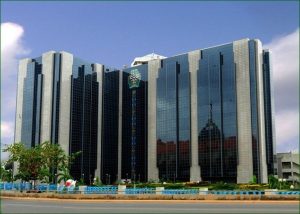
Nigerian banks significantly increased the amount of funds placed with the Central Bank of Nigeria through its Standing Deposit Facility in July, indicating a sharp rise in excess liquidity within the financial system despite the apex bank’s tight monetary policy stance. Latest financial data released by the CBN showed that commercial banks deposited N83.95tn with the apex bank in July 2026, representing a 670.2 per cent increase from N10.9 trillion recorded in the corresponding period of 2025. The sharp rise in SDF placements was accompanied by a steep decline in banks’ reliance on the CBN’s Standing Lending Facility, underscoring improved liquidity conditions across the banking sector. According to the data, banks borrowed N1.19tn through the SLF in July, an 82 per cent drop from N6.63tn recorded in July last year. The SDF allows banks with excess cash to place overnight deposits with the CBN and earn interest, while the SLF enables eligible banks facing temporary liquidity shortfalls to obtain short-term funding from the apex bank. Apart from the SLF, the CBN also provides liquidity support through repurchase transactions, under which it purchases securities from banks with an agreement that the institutions will buy them back at a predetermined date and price. Borrowing through the SLF attracts an interest rate of 500 basis points above the Monetary Policy Rate. The simultaneous increase in deposits and decline in borrowing suggests that banks had considerably more liquidity available during the month, reducing the need to access emergency funding from the central bank while increasing the volume of idle funds parked with the regulator. The development comes against the backdrop of the CBN’s decision to maintain a tight monetary policy framework aimed at reining in inflation and anchoring price stability. At its most recent Monetary Policy Committee meeting, the apex bank retained the Monetary Policy Rate at 26.5 per cent. It also left unchanged the asymmetric corridor around the MPR at +50 basis points and -450 basis points, while keeping the Cash Reserve Ratio for commercial banks at 45 per cent, the CRR for merchant banks at 16 per cent and the 75 per cent CRR on non-Treasury Single Account public sector deposits. “Movements in the SDF and SLF windows provide important insight into banking sector liquidity. Rising SDF balances typically indicate that banks are holding excess cash that cannot immediately be deployed into lending or investments, while lower utilisation of the SLF suggests they are under less funding pressure and have sufficient liquidity to meet short-term obligations,” said a Lagos-based banking analyst, Joel Asika.
RENEWED DEMAND LIFTS NIGERIA EUROBONDS AFTER PREVIOUS SELLOFF
Nigeria’s sovereign Eurobonds strengthened last week, reversing earlier losses as investors returned to the country’s dollar-denominated debt amid improving sentiment. The renewed buying interest pushed bond prices higher and compressed their yields, demonstrating increased confidence in Nigeria’s credit profile despite lingering global economic uncertainties. Data from Meristem Securities showed average yields on Nigerian Eurobonds declined by four basis points during the week to 6.91 per cent from 6.95 per cent. This means stronger demand after the previous week’s selloff had created more attractive entry points for investors. The recovery came after Nigerian Eurobonds suffered losses a week earlier when average yields rose by nine basis points to 6.96 per cent. The earlier decline in prices was driven by heightened geopolitical tensions in the Middle East and expectations that global interest rates, particularly in advanced economies, would remain high for longer, prompting investors to reduce exposure to emerging market debt. Meristem said trading activity during the latest week was concentrated on the sovereign bonds maturing on 28 November 2027, 23 February 2038, and 28 September 2051. Yields on the three instruments fell by eight, five and four basis points, respectively, underscoring renewed demand across different maturities. The Nigerian Eurobond market reversed the previous week’s bearish trend, suggesting renewed investor appetite for Nigerian sovereign credit following the recent uptick in yields,” the investment firm said. CSL Stockbrokers also linked the market’s improved performance to growing confidence in Nigeria’s macroeconomic outlook. outlook. “The bullish sentiment likely reflected investors’ optimism around improving domestic macroeconomic fundamentals and firm crude oil prices, alongside sustained investor appetite for higher-yielding emerging market debt,” CSL Stockbrokers said. In contrast, the weakness recorded in the preceding week reflected investors’ migration toward US fixed-income securities. Rising crude oil prices had reinforced expectations that major central banks, especially the US Federal Reserve, could maintain restrictive monetary policy for longer, reducing the appeal of emerging market bonds, including those issued by Nigeria.

SEC STEPS UP UNCLAIMED FUNDS RECOVERY
The Securities and Exchange Commission has intensified efforts to reduce unclaimed funds and dormant investment assets by launching a Probate/Unclaimed Monies Awareness and Investor Clinic aimed at helping beneficiaries recover inherited investments and strengthening investor protection in Nigeria’s capital market. Speaking at the opening of the clinic in Abuja, organised by the commission in partnership with Meristem on Thursday, the Director-General of SEC, Dr Emomotimi Agama, said the initiative was designed to bridge the gap between investors’ legal entitlements and their ability to access inherited assets. He noted that many Nigerian families face prolonged delays in accessing shares, dividends and other investments after the death of loved ones because they are unfamiliar with probate procedures, documentation requirements and registrar processes. “For many Nigerian families, the death of a loved one who held shares, dividends, or other investments marks the beginning of a long and often confusing journey,” Agama said. Describing unclaimed funds and dormant assets as a persistent challenge, he said they represent “real money that belongs to real families, sitting idle, disconnected from the people it was meant to serve.” According to him, the commission is committed to closing the gap through policy initiatives and direct engagement with investors. He explained that the clinic brought together the Federal Ministry of Justice, the Probate Registry, the National Population Commission and capital market registrars to provide practical guidance on probate procedures, required documentation and the recovery of inherited investments. “Today is not simply an awareness session. It is a working clinic designed to equip you with practical knowledge: how probate works, how to obtain the right documentation, and how to recover what is rightfully yours,” he said. Agama stressed that the SEC mandate to protect investors extends beyond the lifetime of shareholders. “This commission exists to protect your rights in the capital market, and that protection does not end when a shareholder passes on. It extends to ensuring their beneficiaries can access what is due to them without unnecessary hardship,” he added. Also speaking, the Acting Chief Executive Officer of Meristem Registrars and Probate Services Limited, Ms Nkechinyelu Okoye, identified a lack of awareness and poor estate planning as key reasons billions of naira in financial assets remain unclaimed. “There are three categories of beneficiaries that we encounter quite often. The first are those who think only land, houses, and other physical assets can be transferred legally from deceased loved ones. They do not realise that financial assets such as shares, fixed income investments, and even money in savings apps also form part of an estate,” she said. Okoye said another group consists of beneficiaries who are unaware their deceased relatives owned financial assets, while a third group knows the investments exist but does not understand the claims process or required documentation. “I dare add a fourth category. These are investors who do not provide or update their KYC documents and, as a result, when they pass on, their loved ones have no idea they have investments to claim,” she added. According to her, these factors have contributed to the rising volume of unclaimed dividends, dormant accounts and other abandoned financial assets. “All of these categories contribute to the several unclaimed assets lying all around. Ultimately, financial resources that could have been beneficial to these beneficiaries remain inaccessible,” she stated. She described the clinic as more than an awareness programme, saying it would provide practical support to investors, beneficiaries, executors and administrators. “Our goal is to empower investors, beneficiaries, executors, administrators, and the general public with the knowledge they need to navigate probate and estate administration with greater confidence,” Okoye said. She also urged investors to prepare valid wills, maintain accurate shareholder records and regularly update their Know Your Customer information to make it easier for beneficiaries to access inherited investments. “We want investors to appreciate the importance of preparing a valid will, maintaining accurate shareholder records, and ensuring that their affairs are properly organised. Taking these simple steps today can save families considerable stress and delay in the future,” she said. The SEC added that the clinic formed part of its broader investor protection strategy, providing participants with direct access to experts on tracing investments, verifying shareholder records, resolving probate-related issues and recovering unclaimed capital market assets.