












CAPITALDIGEST DAILYNEWS, 02/11/2026
November 2, 2026
NMDPRA SETS NEW CONDITIONS FOR PETROL IMPORT LICENCES
The Nigerian Midstream and Downstream Petroleum Regulatory Authority has set new conditions for granting petrol import licences, saying this will be based on published merit-based criteria and a transparent determination of supply shortfalls, as domestic refineries increase their share of the country’s fuel supply. The Authority Chief Executive, Rabiu Umar, disclosed this while delivering the keynote address at the 2026 OTL Africa Downstream Energy Week in Lagos, with the theme ‘Secure Energy, Shared Prosperity’. Umar said import licences would remain available to eligible operators, but the process would be guided by clear criteria and verifiable assessments of supply gaps to ensure transparency and fair competition in the downstream petroleum market. “For our importers, the door stays open. Import licences will be issued only on the basis of published merit-based criteria and also a transparent shortfall determination that everybody can audit,” he said. His position comes amid a significant shift in Nigeria’s petrol supply, with the regulator saying domestic refineries now account for about 75 per cent of the petrol supplied to the country, while imports have more than halved within a year. “A year ago, more than half of the petrol in Nigerian tanks was imported. Last month, three litres in every four were refined here. I think that is a significant achievement,” Umar said. He attributed the change to increased domestic refining, adding that the country had continued to maintain fuel supply despite disruptions in the global energy market. He maintained that the shift towards local refining had strengthened Nigeria’s energy security by reducing dependence on imported petroleum products and keeping more of the value generated from the sector within the domestic economy. “A war in the Gulf has shaken the world’s fuel supply and pushed crude oil to around one hundred dollars a barrel. Through it all, Nigeria kept its fuel flowing, because more of that fuel is now made here. That shift is what this Energy Week is about,” he said. However, the NMDPRA chief warned that the country’s growing reliance on domestic refining should not lead to complacency, noting that a large proportion of local supply currently came from one major refinery. According to him, energy security required a diverse supply base, making it necessary to support smaller refineries, revive government-owned refineries and retain access to imports where domestic production falls short of demand. “We are also clear-eyed. Much of this supply comes from one large refinery, which ran above its nameplate capacity in September. Energy security also means diversity of supply,” he said. Umar noted that the authority would continue to support modular refineries and work with the Nigerian National Petroleum Company Limited towards returning the country’s state-owned refineries to operation. He also said the regulator would maintain import channels to ensure that the market had alternative sources of supply when necessary. Umar stated that the regulator’s role under the law was not to determine petroleum product prices but to ensure that operators competed fairly and that market transactions were conducted transparently. “I generally believe the market will set prices, and I think it’s a controversial element, but by the PIA, NMDPRA does not set prices. What NMDPRA does is to ensure fair market competition in the market, and to ensure that practices are done transparently, sustainably, and at arm’s length,” he said. He said the authority had not recorded nationwide petroleum supply disruptions in the past couple of years, adding that widening the supply base and making market information available to stakeholders would help sustain the gains. The NMDPRA chief also said the regulator was working to strengthen competition in the market through consultations on proposed regulations to prevent anti-competitive practices in the midstream and downstream petroleum sectors. He disclosed that the authority had signed a memorandum of understanding with the Federal Competition and Consumer Protection Commission to coordinate enforcement and strengthen consumer protection. According to him, the authority was committed to consulting stakeholders before introducing new regulations, rather than adopting sudden measures that could create uncertainty for businesses and investors. “One of the key elements that will drive further investment in this sector is to ensure that we are consistent, we are equitable, we are open, and transparent,” Umar said. He added that the regulator would give businesses and other affected parties the opportunity to contribute to the formulation of regulations that could affect their operations. He maintained that ensuring the quality of petroleum products was essential to protecting consumers from substandard fuel that could damage equipment or create safety risks. The regulator is also reviewing its licensing framework to reduce administrative delays and improve the ease of doing business in the sector. Umar added that some licences that currently required annual renewal could be extended to five-year periods where appropriate, while unnecessary approval steps would be removed. He said the authority wanted operators to be able to obtain licences remotely without visiting its offices, provided they met the relevant requirements. “One of the things that discourages people from investing is the complexity of regulation, and to achieve that disentanglement, we have launched an internal review of all the licences that NMDPRA issues,” he said. He added that the licensing reforms were part of the authority’s broader plan to become a firm, fair and fast regulator, with consistent enforcement of rules and improved responsiveness to operators.

CIBN INVESTITURE TO EXAMINE BANK RECAPITALIZATION, INDUSTRIAL GROWTH
The Chartered Institute of Bankers of Nigeria will focus on how banks can deploy fresh capital raised through recapitalisation exercise to support Nigeria’s industrial transformation at its 2026 Fellowship Investiture in Lagos on 31 October. The keynote address, titled ‘Bank Recapitalisation: Leveraging New Bank Capital fo Nigeria’s Industrial Transformation’, will be delivered by the Chief Executive Officer of the Nigerian Economic Summit Group, Dr Tayo Aduloju. The discussion comes as the banking industry adjusts to the Central Bank of Nigeria’s recapitalisation requirements, which have raised minimum capital thresholds for banks and placed renewed attention on their capacity to finance businesses, infrastructure and productive sectors of the economy. The institute is expected to bring together banking executives, policymakers, government officials, investors and academics to examine the role of stronger bank capital in expanding access to finance and supporting economic growth. The CIBN said the investiture would also recognise individuals who have contributed to the development of banking and the wider economy.Among those to receive honorary fellowship awards are the Deputy Chief of Staff to the Lagos State Governor, Mr Sam Egube; the Managing Director and Chief Executive Officer of the Nigeria Deposit Insurance Corporation, Mr Thompson Sunday; the Governor of the Bank of Sierra Leone, Dr Ibrahim Stevens; and the Managing Director and Chief Executive Officer of Quest Merchant Bank, Mr Afolabi Olorode. Others include the Chairman of Dangote Cement Plc and former Group Chairman of Ecobank Transnational Incorporated, Mr Emmanuel Ikazoboh; the Vice Chairman of Famfa Oil Limited, Chief Folorunsho Alakija; the Secretary to the Ogun State Government, Mr Tokunbo Talabi; and the Managing Director and Chief Executive of the Federal Airports Authority of Nigeria, Mrs Olubunmi Kuku. According to the institute, 755 people will be recognised at the ceremony. Eighteen will receive honorary fellowship awards, 460 Associates will become elected Fellows, while 277 senior management staff of banks and members of the academic community will be conferred with honorary senior membership. In a statement, the Team Lead of Corporate Communication and Brand Management at CIBN, Mr Taofik Sanni, said the awards recognise the recipients’ meritorious service, commitment to ethics and professionalism, and contributions to banking and the economy in Nigeria and internationally. The Governor of Lagos State, Mr Babajide Sanwo-Olu, and the Minister of State for Budget and Economic Planning, Hon. Doris Uzoka-Anite, will attend as special guests of honour. The Chief Executive Officer of Crosse Pointe Capital & Advisory Ltd and Wakilin Sokoto, Mallam Bello Maccido, will chair the hybrid event.
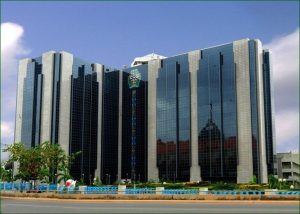
NGX SLIDES AS MARKET CAP DROPS TO N164.19TN
Trading on the Nigerian Exchange Limited on Wednesday closed on a bearish note, as the market capitalisation and overall performance index recorded a slight contraction compared to the previous session. Total market capitalisation dropped from N164.91tn recorded on Tuesday to N164.19tn. Similarly, the All-Share Index slipped by 1,107.28 points, closing at 252,882.78 points down from Tuesday’s peak of 253,990.06 points. Over the trading cycle commencing 22 October 2026, the local bourse recorded a high of 253,990.06 points and touched a weekly low of 244,956.94 points, while macro indicators remained steady with the Central Bank of Nigeria retaining its benchmark Monetary Policy Rate at 23.00 percent. Equity trading was marked by mixed sentiment, with Sovereign Trust Insurance Plc leading the gainers after rising 10.00 per cent to close at N1.98, followed by UPDCREIT, which advanced 9.61 per cent to finish at N21.10. Other notable advancers included Austinlaz, United Bank for Africa Plc, and Critical Minerals Financing Corp. On the losers’ chart, First Holdco Plc posted the steepest decline, shedding 10.00 per cent to close at N139.50, alongside Tripple Gee and Company, ETranzact International, Royal Exchange, and Fortis Global Insurance, which dropped between 4.76 per cent and 5.51 per cent. In the Exchange Traded Products segment, Greenwich Alpha ETF and Stanbic IBTC ETF 30 both gained 3.59 percent, while Vetiva S&P Nigeria Sovereign Bond ETF and Vetiva Consumer Goods ETF shed 5.79 percent and 5.43 percent, respectively. The fixed income market witnessed upward movement in specific Federal Government savings bonds, led by FGS202774 and FGS202776, which rose 17.65 percent and 11.11 percent, with no price declines recorded in debt instruments for the session.

NIGERIA’S NET FX FLOWS HIT $22.5BN, HIGHEST SINCE 2019
Nigeria’s net foreign exchange flows rose to $22.50bn in the second quarter of 2026, their highest level since the final quarter of 2019, as a reduction in dollar outflows outweighed a slight decline in total inflows. Data from the Central Bank of Nigeria’s Q2 2026 Statistical Bulletin show that net FX flows increased by 5.5 per cent from $21.33bn in the first quarter to $22.50bn in Q2. The improvement means more FX remained in the economy after accounting for outflows. However, it does not necessarily mean that all the funds entered the CBN’s reserves or were available for immediate use in the official market. Total FX inflows fell from $32.39bn in Q1 to $31.43bn in Q2, while outflows dropped more sharply from $11.05bn to $8.93bn. The $2.12bn decline in outflows more than offset the $960m reduction in inflows, lifting the net balance by $1.17bn. Monthly figures also showed a steady rise in net flows during the quarter. Nigeria recorded $6.53bn in April, $7.91bn in May and $8.06bn in June, which was the strongest month of the period. Despite the recovery, the Q2 figure remained below the historical peak of $31.93bn recorded in the third quarter of 2014. It was also lower than the $25.08bn reported in the fourth quarter of 2019. The CBN figures show that autonomous sources, meaning FX transactions outside the central bank’s direct channel, played a major role in the quarter’s flows. Net FX flows through autonomous sources stood at $6.70bn in April, fell to $5.70bn in May and rose to $6.74bn in June. Flows through the CBN were more volatile. The central bank recorded a net outflow of $176.28m in April before posting net inflows of $2.21bn in May and $1.32bn in June. The figures suggest that private sector and other autonomous channels continued to provide a substantial share of the net FX entering the economy. The improvement also coincided with an increase in foreign portfolio investment. Portfolio investment rose by 45 per cent to $6.51bn in Q2, from $4.49BN in Q1, according to previously reported CBN data. Portfolio inflows can provide additional foreign currency to the economy and support activity in the financial markets. However, such funds can be withdrawn when investors’ expectations change, making them less stable than longer-term investments. Foreign direct investment has remained a concern. Data from the National Bureau of Statistics showed that FDI declined sharply in Q1 of 2026, even as overall capital importation increased. The contrasting movements indicate that Nigeria’s FX inflows are being shaped by different types of investment, with portfolio funds gaining ground while longer-term direct investment remains weak. Sustained net FX inflows could help ease pressure on the FX market and improve dollar liquidity. The durability of that improvement will depend on whether inflows remain strong, outflows stay contained and more stable sources of foreign investment recover.

PERSONAL LOANS HIT NEW HIGH N1.99TN
Nigerians’ outstanding personal loans increased by an estimated N58.5bn in the second quarter of 2026, reaching N1.99tn at the end of June, as households faced persistent inflationary pressures and high borrowing costs. An analysis by The PUNCH of the Central Bank of Nigeria’s Second Quarter 2026 Economic Report showed that personal loans rose by 3.03 per cent from approximately N1.93tn recorded at the end of March. The development came as total consumer credit increased by 3.26 per cent to N3.17tn from N3.07tn in the preceding quarter, representing an increase of about N100bn within three months. The CBN stated, “Consumer credit outstanding increased by 3.26 per cent to N3.17tn, from N3.07tn in the preceding quarter. The increase reflected growth in both retail and personal loans, which rose by 4.10 per cent and 3.03 per cent, respectively.” According to the report, personal loans accounted for 62.87 per cent of total consumer credit, while retail loans constituted the remaining 37.13 per cent. This means that nearly N63 out of every N100 owed by consumers to financial institutions was classified as personal borrowing, highlighting its dominance in the consumer credit market. Retail loans also increased by approximately N46.5bn to N1.18tn at the end of June, compared with an estimated N1.13tn in March, representing quarterly growth of 4.10 per cent. Although retail loans recorded a faster percentage increase, personal loans contributed more to the outstanding stock of consumer credit. The increase in personal borrowing occurred amid renewed inflationary pressures, which continued to affect household purchasing power. The CBN reported that headline inflation rose to 15.91 per cent in June 2026 from 15.38 per cent in March, reflecting increases in the prices of essential goods and services. The report attributed the development largely to higher energy and commodity prices associated with geopolitical tensions in the Middle East, which increased production and transportation costs. These conditions placed additional pressure on household expenditure, particularly for consumers whose incomes had not increased sufficiently to offset rising prices. However, the report did not establish whether the increase in personal loans was driven primarily by household financial difficulties, consumption needs or improved access to credit. The growth in consumer borrowing also occurred despite elevated lending rates in the banking sector. According to the CBN, the average prime lending rate declined marginally to 19.01 per cent in Q2 from 19.37 per cent in the preceding quarter. In contrast, the maximum lending rate increased slightly to 34.37 per cent from 34.34 per cent, indicating that borrowing remained expensive for some categories of bank customers. Although these rates reflect broader banking sector lending conditions rather than specific personal loan charges, they provide an indication of the financing environment confronting borrowers. A recent report ‘Enhancing Financial Inclusion & Advancement’ noted that four in every 10 Nigerians borrowing from formal financial institutions now take loans mainly for consumption and coping needs, as rising financial pressures increasingly push credit away from productive activities. The ‘2026 Access to Financial Services in Nigeria Survey’ revealed that 40.8 per cent of formal borrowers used loans for coping and consumption, up sharply from 31.7 per cent in 2023. The 9.1 percentage-point increase made coping and consumption the largest purpose of formal credit, overtaking productive enterprise borrowing, which fell from 40.2 per cent to 34.3 per cent during the same period. Borrowing for household assets also declined from 25.2 per cent to 23.4 per cent. The report warned, “Coping/consumption purposes rose from 31.7 per cent to 40.8 per cent; productive purpose fell from 40.2 per cent to 34.3 per cent. We need to ensure that credit builds productive capacity and does not produce distress.” Formal credit use increased from six per cent of adults in 2023 to 10 per cent in 2026, with about 11.9 million Nigerians borrowing from regulated providers. When informal sources were included, 36 per cent of adults had access to some form of credit. Credit use among informally employed Nigerians tripled from five per cent to 15 per cent, while borrowing among people aged 18 to 35 rose from four per cent to 10 per cent. Business owners recorded an increase from four per cent to 10 per cent, while farmers rose from two per cent to six per cent.