











CAPITALDIGEST MARKET REVIEW, 09/11/2026
November 9, 2026
US DOLLAR HOLDS ONTO PAYROLLS GAINS,NZ DOLLAR RISES
The US dollar traded not far from a 1-1/2-year high versus the euro and a seven-month high on the Aussie on Monday, after surging by the most in nearly six months on Friday as robust US jobs data pushed up bets for higher interest rates. New Zealand’s currency bounced from a seven-month trough after too-close-to-call weekend elections weakened the government, although the country will need to wait until late this month to find out who will govern as vote counting continues. The US dollar index , which measures the currency against six major rivals including the euro, was steady at 102.20 early on Monday, after leaping around 0.7% on Friday, when data showed jobs growth accelerated in October while the unemployment rate fell. The euro edged up 0.1% to $1.11485, after slumping 0.7% on Friday and hitting a low of $1.1132, not far from the trough from a week earlier at $1.1105, the weakest since May 2025. The Aussie added 0.3% to $0.6875, after tumbling more than 1% on Friday to the lowest since March 31 at $0.6855. The dollar eased 0.2% to 158.185 yen , following Friday’s 0.6% jump. Bank of Japan Governor Kazuo Ueda said on Friday the central bank expects underlying inflation to stay around its 2% target but recognises there are “some upside risks.” Futures imply around 79% odds the US Federal Reserve will raise rates on December 9, compared to 71% a week earlier, according to CME Group’s FedWatch tool. Bets on Fed tightening next month had been receding amid a rout in global tech stocks as investors worried about the outlook for AI investment, profitability and regulations, particularly after Democrats swept US midterm elections earlier this month. “The Blue Sweep has put the AI trade to the test given risks for heavier AI regulation and a slow down in the CAPEX cycle. At the same time, however, economic realities continue to surprise to the upside — data momentum remains very strong across indicators,” Barclays strategists wrote in a report. “This combination is yet to dent the dollar’s appeal.” Comments from Fed officials on Friday supported views for a rate hike. New York Fed President John Williams said US economic growth has remained remarkably resilient in the face of successive shocks but inflation is too high and it is essential to bring it back to 2%. Separately, St. Louis Fed President Alberto Musalem said inflation remains a top concern in conversations he has with businesses in his Midwestern district, while Fed Bank of San Francisco President Mary Daly said the Fed will likely still need to hike rates further even with the “painful” tech stock selloff. Sterling edged up 0.1% to $1.3360, while the greenback eased 0.1% to C$1.4119 . On Friday, the US currency surged 1.1% against Canada’s loonie after Canadian data showed surprise job losses. The New Zealand kiwi climbed 0.4% to $0.5557 on Monday, bouncing back after hitting a low of $0.5529 at the end of last week. Preliminary results in New Zealand elections gave Prime Minister Christopher Luxon’s National Party, ACT New Zealand and New Zealand First 67 seats in a 131-seat parliament, one more than the 66 required for a majority. But almost 400,000, or nearly 15% of votes, have yet to be counted, and official results are not due until November 27. Both Luxon and Labour leader Chris Hipkins have said they would wait for final results before entering formal coalition negotiations.
STERLING DIPS AS STOCK ROUT BOOSTS DOLLAR, OUTWEIGHS RATE RISE BOOST
The pound fell against the dollar on Friday, as a stock market selloff hit currencies more geared towards global growth, while holding broadly steady against the euro around a 19-month high. “The market impact of yesterday’s BoE policy update was overshadowed by the deepening selloff for AI-related investments,” said Lee Hardman, senior currency analyst at MUFG. The major domestic event of the week was Thursday’s Bank of England meeting, which saw a rate rise and strong hints that at least one further increase will be needed, barring a sudden de-escalation in the Gulf and a fall in oil prices. Tech stocks tumbled on Wall Street on Thursday, and Asia on Friday, before broadening out in European trading, giving a boost to the dollar. The pound was last at $1.3399, down 0.4%, though roughly flat on the week due to gains in earlier sessions. It was at 83.41 pence per euro, steady on the day and week, and close to its highest since March 2025 which it hit Thursday in the aftermath of the BoE meeting. “The pound has recently been supported by growing optimism over stronger UK growth, higher UK yields and fiscal concerns becoming a bigger market issue in the euro area than in the UK,” said Hardman. The BoE policy update should reinforce sterling’s bullish momentum heading into year-end, but one risk for the currency would be a deeper selloff for AI stocks, he added.
DOLLAR LITTLE CHANGED AS OIL PRICES BOUNCE, PAYROLLS EYED
The dollar index was roughly unchanged on Thursday, as oil prices rebounded following a sharp drop in the prior session and investors weighed the possibility of a slowdown in AI-related spending dampening economic growth. Crude prices were up more than 3% after plummeting on Wednesday as the widespread losses suffered by the Republican Party in the elections earlier this week boosted expectations that the risk of a further escalation in the US-Israeli war on Iran was diminished. In addition, US stocks were sharply lower, weighed down by a tumble of more than 6% in the S&P 500 technology sector, as concerns about the massive spending by AI-related companies resurfaced, along with the possibility of more regulations which could slow the buildout of infrastructure for the emerging technology. Democrats vowed to use their resounding midterm victory to rein in President Donald Trump, setting up two years of possible deadlock in Washington. Investors were also awaiting Friday’s key government payrolls report. Labor Department data on Thursday showed weekly initial jobless claims fell by 6,000 to a seasonally adjusted 189,000, matching a 57-year low hit in July, and below the 196,000 estimate of economists polled by Reuters. In other data, US worker productivity grew faster than expected in the third quarter, depressing labor costs and supporting views that the labor market was not a source of inflation. “It’s a little bit of oil rebounding… basically, data that came out this week has been strong enough to support the still-stable US job market, and that just helps with the narrative around Fed pricing…. back-to-back Fed hikes at the end of the year and start of the new year,” said Kevin Ford, lead FX and macro strategist at Convera. Ford said that while the market is adjusting to a slower longer-term growth outlook on expectations of a slowing in the AI buildout, in the short-term, the economy is still on stable enough footing for the Fed to continue with rate hikes and the markets are positioning for that ahead of the payrolls report. Coming off its biggest daily percentage drop in three weeks, the dollar index , which measures the greenback against a basket of currencies, ticked up 0.02% to 101.49, with the euro up 0.02% at $1.1229. Despite the political shift in the US and drop in crude prices, expectations for the Federal Reserve’s interest rate path remained largely unchanged. Markets are pricing in a 66.1% chance of a rate increase of at least 25 basis points from the Fed at its December meeting, according to CME FedWatch, down from 79.9% a week ago. Cleveland Federal Reserve President Beth Hammack said the US central bank has more work to do to get inflation down to its 2% target, as price pressures remain unacceptably high, while Richmond Fed President Tom Barkin said a gradual pace of rate increases “makes sense.” Rising public debt and the rapid expansion of non-bank finance could curb the European Central Bank’s ability to set the appropriate monetary policy, ECB board member Isabel Schnabel said. Meanwhile flag-waving protesters marched through French cities and public workers went on strike on Thursday, underscoring lingering concerns about France’s fiscal trajectory. Sterling slipped 0.09% to $1.3457, having earlier risen to a more than seven-week high after the Bank of England raised interest rates for the first time in over three years on Thursday and warned that at least one more increase was likely if the US-Iran conflict continues. The Japanese yen strengthened 0.46% against the greenback to 157.63 per dollar after minutes from the Bank of Japan’s September meeting, when policymakers raised rates to a 31-year high of 1.25%, reinforced bets for further interest rate hikes. The BOJ minutes showed some board members signaling a chance of faster-paced increases. The BOJ board also debated the neutral rate and market pricing of the BOJ’s terminal rate, in a sign of its growing focus on how far the central bank could lift borrowing costs without cooling the economy too much. Analysts at Goldman Sachs said in a note on Thursday that the Japanese currency is the best AI hedge, with the dollar falling against the yen on days the Nasdaq underperformed the S&P 500, with even bigger declines for the greenback on days when the underperformance was greater than 1%. Separately, analysts at Barclays said the yen is becoming less sensitive to oil prices as it moves in tandem with global risk sentiment over the long run, “but has diverged notably to the weak side during periods of higher oil prices.”
STERLING ROUGHLY UNCHANGED AFTER SIX-SESSION RALLY AND BoE RATE HIKE
Sterling was roughly unchanged after a six-session rally against the dollar on Thursday, as the Bank of England raised rates for the first time in over three years but some policymakers indicated the scope of its total tightening could be smaller than markets had been pricing. The trade-weighted pound rose to its highest level since the Brexit vote 10 years ago at 86.37 . While it has traded above its June 2016 level since December 2025, it remains below the roughly 88 seen right before the outcome of the vote. The Bank of England’s Monetary Policy Committee voted 8-1 to raise rates to 4% from 3.75%, with the dissent coming not from a policymaker seeking to keep rates on hold but from one seeking a bigger hike. Coming into Thursday’s decision, investors and financial markets had been near-certain there would be a rate rise this month. But financial markets also priced in three quarter-point rate rises for 2027, more than most economists think is likely. “This is not the start of an aggressive tightening campaign; ultimately domestic inflation remains relatively well behaved, and there is still slack in the economy,” David Rees, chief economist at Schroders, said. “Nonetheless, even if the BoE makes further hikes, potentially more than one, markets are already pricing in a full hiking cycle of close to 100 basis points,” he added. The pound rose 0.01% to $1.3473 after touching $1.35025 on Wednesday, its highest level since September 15. The dollar fell to its lowest level in more than a month on Thursday in the aftermath of an overwhelming victory by Democrats in the US midterm elections, which sent oil prices and Treasury yields lower. Some analysts underlined that inflationary pressures are still in place, and growth has been more resilient than anticipated. “This begs the question of whether policy is truly restrictive, while demand for further hikes has been building,” Madison Faller, global investment strategist at JP Morgan Private Bank, said. “But today’s move still feels like a measured, credibility-preserving one rather than the start of an aggressive cycle,” she added. The pound was up 0.05% at 83.48 pence per euro after hitting 83.24 pence last week, its highest level since March 2025.
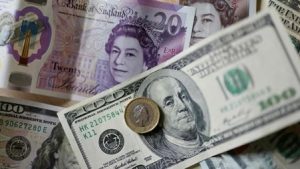
BRITISH POUND HITS SEVEN-WEEK HIGH AGAINST WILTING DOLLAR
The British pound rose to its highest level since September 15 on Wednesday, buoyed by a weaker US dollar following the Democrats’ sweeping victory in the midterms, while traders awaited the Bank of England’s policy decision on Thursday. Sterling rose 0.63% against the dollar to $1.3495 at 10:22 GMT and was at 83.43 pence per euro, a touch firmer on the day. The pound benefited from a fragile dollar, after Democrats won control of both chambers of the US Congress. The pound has been in sharper focus since British finance minister John Healey’s budget, which laid out cautious tax and spending plans aimed at supporting households battered by “global economic storms.” It has also drawn support from expectations of interest rate hikes by the Bank of England. Traders are pricing in a rate increase on Thursday, according to money market data. Higher rates typically boost a currency. However, some analysts believe much of the optimism is already priced in, leaving sterling with limited room for further gains. “BoE hike pricing continues to look stretched relative to G10 peers, and valuation remains a clear challenge for Sterling,” Goldman Sachs analysts wrote in a note. Some economists polled by Reuters expect the central bank to temper market bets on three to four increases in 2027. “A ‘dovish hike’ would be a headwind for GBP, but we don’t expect that it would do lasting damage with fundamentals improving,” analysts at BofA Global Research wrote.