











CAPITALDIGEST DAILY NEWS, 27/04/2026
April 27, 2026
NNPC APRIL CRUDE SUPPLIES TO DANGOTE CROSS 1BN BARRELS
Crude oil supply from the Nigerian National Petroleum Company Limited’s trading arm surged in April 2026, with shipment records indicating that more than 1.03 million metric tonnes, equivalent to about 6.8 million barrels or over 1.08 billion litres, were delivered to the Dangote Oil and Gas Company Limited within the month. An analysis of tanker vessel movements obtained by The PUNCH on Tuesday shows that the deliveries were executed through eight crude cargoes handled by NNPC Trading, reinforcing the state oil firm’s role as a major feedstock supplier to the 650,000 barrels-per-day Dangote refinery. The shipments, sourced from key Nigerian crude streams including Anyala, Bonga, Odudu, Forcados, Qua Iboe, and Utapate, were routed through the refinery’s Single Point Mooring systems, SPM-C1 and SPM-C2. The document shows that out of the eight cargoes, five have been fully discharged, while three others are still awaiting berthing or completion, indicating a steady pipeline of crude inflows into the refinery. This development comes amid the refinery’s continued complaints of supply inadequacies, with a total requirement of 19 cargoes monthly, and a recent report that the country imported 55.39 million barrels in January and February 2026. A breakdown of the deliveries showed that Sonangol Kalandula initiated the supply chain, delivering 123,000 metric tonnes of crude from Anyala. The vessel arrived on April 5, berthed on April 8, and sailed on April 9. This was followed by Advantage Spring, which supplied 128,190 metric tonnes from Bonga, arriving on April 11 and completing discharge by April 13.Similarly, a vessel code-named Barbarosa delivered 125,000 metric tonnes from Odudu, while Sonangol Njinga Mban transported 129,089 metric tonnes from Bonga. Another completed shipment, handled by Nordic Tellus, brought in 139,066 metric tonnes from Forcados, completing discharge on April 17. However, three additional cargoes remain in progress. Advantage Sun, carrying 142,327 metric tonnes from Bonga, has arrived but is yet to berth. Also pending are Advantage Spring from Utapate with 120,189 metric tonnes, and Sonangol Kalandula from Qua Iboe with 126,471 metric tonnes. In total, the NNPC Trading cargoes account for 1,033,332 metric tonnes of crude, underscoring what industry analysts describe as a “strong and sustained supply commitment” to the Dangote refinery. Further findings show that, beyond crude deliveries, the Dangote refinery also received multiple shipments of refined products and blending components from international markets during the period. Among them, Seaways Lonsdale delivered 37,400 metric tonnes of blendstock gasoline from Immingham, United Kingdom, handled by Vitol, between April 18 and 19. Another vessel, Augenstern, supplied 37,125 metric tonnes of Premium Motor Spirit from Lavera, France, discharging between April 8 and 9. From Norway, Emma Grace brought in 37,496 metric tonnes of PMS from Mongstad, while LVM Aaron delivered 36,323 metric tonnes from Lome, Togo. Similarly, Egret discharged 35,498 metric tonnes of naphtha from Rotterdam between April 16 and 18, providing critical feedstock for gasoline blending. A pending shipment, Mont Blanc I, carrying 36,877 metric tonnes of blendstock gasoline from Antwerp, Belgium, is yet to berth, while Aesop is expected to deliver 130,000 metric tonnes of residue catalytic oil from Singapore later in April. In addition to NNPC Trading volumes, other crude cargoes from international and domestic traders also supported refinery operations. Notably, Yasa Hercules delivered 273,287 metric tonnes of crude from Corpus Christi, United States, while Front Orkla brought in 264,889 metric tonnes from Ingleside, US. A major cargo, Navig8 Passion, supplied 496,330 metric tonnes of crude from Cameroon, highlighting regional supply integration. Domestic contributions included Harmonic, which delivered nearly 993,240 barrels from Ugo Ocha, and Aura M, which supplied 1 million barrels from Escravos, alongside an additional 651,331 barrels of cargo from Anyala. Operational data indicate that most vessels berthed within one to two days of arrival and departed shortly after discharge, suggesting improved efficiency at the refinery’s offshore terminals. The Dangote refinery, located in Lekki, Lagos, is Africa’s largest single-train refinery, with a nameplate capacity of 650,000 barrels per day. The facility is expected to significantly reduce Nigeria’s dependence on imported petroleum products by refining domestic crude and supplying petrol, diesel, aviation fuel, and other derivatives to the local market. NNPC Limited, through its trading arm, has remained a central player in supplying crude to the refinery under evolving commercial arrangements, amid ongoing reforms in Nigeria’s downstream oil sector. Earlier this month, Africa’s richest man and President of the Dangote Group, Aliko Dangote, revealed in a report by Bloomberg that the refinery received 10 cargoes of crude oil from the state-owned oil firm in March, compared to an average of about five cargoes monthly since late 2024. Dangote said the shipments included six cargoes paid for in naira and four in dollars, under the crude supply arrangement between the refinery and the NNPC. “Nigeria doubled crude supply to Dangote Refinery in March as Africa’s top oil producer moved to shore up fuel availability after the Iran war disrupted Middle East shipments. Last month, they gave us six cargoes with payments in naira and four cargoes with payments in dollars,” he stated.

NGX FOREIGN INFLOWS HIT N288BN IN MARCH
Foreign portfolio participation on the Nigerian Exchange Limited recorded a significant recovery in March 2026, with total foreign transactions increasing by 107.74 per cent to reach N288.82bn. According to the latest Domestic and Foreign Portfolio Investment report released by NGX Regulation Limited on Wednesday, total market transactions grew 13.10 per cent to N1.744tn in March, up from the N1.542tn recorded in February. The latest report noted, “The significant jump in foreign inflows, which rose from N72.32bn in February to N181.77bn in March, suggests that international investors are increasingly finding value in Nigerian equities following recent market re-ratings and improved foreign exchange liquidity.” Despite the surge in foreign activity, domestic investors continued to dominate the bourse, accounting for 83.44 per cent of total transactions. Total domestic value stood at N1.455tn for the month, with institutional investors outperforming retail participants by 26 per cent. Providing insight into the local market composition, the report added, “The domestic market remains the bedrock of our exchange. With institutional transactions rising to N914.23bn, it is clear that local pension funds and asset managers are maintaining a strong bullish stance on high-quality Nigerian equities, even as foreign interest returns.”The surge in foreign inflows comes amid a period of aggressive fiscal and monetary reforms aimed at stabilising the naira and attracting foreign direct investment. Historically, foreign participation in the Nigerian capital market has been hampered by currency volatility and challenges in capital repatriation. However, the 107.74 per cent month-on-month increase indicates a potential shift in sentiment as investors respond to improved transparency in the Nigerian Autonomous Foreign Exchange Market. Year-to-date figures show that total market transactions for the first quarter of 2026 have hit N4.148tn, representing a massive 85.87 per cent increase compared to the N2.232tn recorded during the same period in 2025. This growth reflects the broader market rally that has seen the NGX All-Share Index reach record highs over the last year.Reflecting on the historical trend and market depth, the report added, “Over a 19-year period, domestic transactions have increased significantly by 160.83 per cent. While foreign participation has fluctuated, the long-term trajectory remains positive, reinforcing the Exchange’s position as a premier destination for both local and international capital.” As the second quarter begins, market observers expect institutional investors to maintain their leading role, while foreign participation is projected to remain sensitive to macroeconomic indicators, particularly inflation data and subsequent Central Bank of Nigeria interest rate decisions.

NIGERIA’S DOMESTIC DEBT SERVICING JUMPS 46% TO N8.6TN
Nigeria’s total debt servicing rose by N2.98tn year-on-year to N15.81tn in 2025, driven largely by a sharp increase in domestic interest payments and sustained external obligations, data from the Debt Management Office has shown. An analysis of the DMO’s actual debt service reports showed that total payments increased from N12.83tn in 2024 to N15.81tn in 2025, representing a 23.2 per cent rise within the period. The increase was driven primarily by domestic debt servicing, which climbed from N5.87tn in 2024 to N8.61tn in 2025, marking a N2.74tn increase or about 46.7 per cent year-on-year. This means domestic debt accounted for approximately 54.5 per cent of total debt servicing in 2025, up from about 45.8 per cent in 2024, highlighting a clear shift in the structure of the country’s debt burden towards local obligations. External debt servicing, on the other hand, rose from $4.66bn in 2024 to $5.15bn in 2025, representing an increase of $490m or 10.5 per cent. Using the Central Bank of Nigeria’s official exchange rates adopted by the DMO, external debt service amounted to about N7.15tn in 2024 at N1,535.3176 per dollar and N7.39tn in 2025 at N1,435.2571 per dollar. This translates to a N240bn increase in naira terms, equivalent to about 3.4 per cent year-on-year. Despite the rise, the share of external debt service in total obligations declined from roughly 55.8 per cent in 2024 to 45.5 per cent in 2025, reflecting the faster growth of domestic debt costs. A deeper breakdown of the domestic debt service profile showed that interest payments accounted for the overwhelming portion of obligations, rising from N5.60tn in 2024 to N8.24tn in 2025, an increase of N2.64tn or 47.1 per cent. Interest payments alone represented about 95.7 per cent of total domestic debt service in 2025, compared to about 95.4 per cent in 2024, indicating that the burden remains heavily skewed towards servicing interest rather than repaying principal. Within the interest component, Federal Government bonds continued to dominate, with payments rising from N4.69tn in 2024 to N5.35tn in 2025, reflecting an increase of N663.38bn or 14.1 per cent. However, the most significant growth was recorded in Nigerian Treasury Bills, where interest payments surged from N747.15bn in 2024 to N2.55tn in 2025. This represents an increase of N1.80tn or about 241 per cent, indicating a substantial rise in short-term borrowing costs and a possible shift towards increased reliance on Treasury bill issuances. The share of Treasury bills in total domestic interest payments rose sharply to about 31 per cent in 2025 from just 13 per cent in 2024, while the share of FGN bonds declined from about 83.7 per cent to roughly 65 per cent, even though bonds remained the largest single cost component. Other instruments accounted for smaller proportions but still showed notable changes. Interest on FGN Savings Bonds increased from N6.38bn in 2024 to N13.59bn in 2025, representing a 113 per cent rise, although its share remained marginal at less than 0.2 per cent of total domestic interest payments. Sukuk bond rentals rose slightly from N158.43bn in 2024 to N171.73bn in 2025, an increase of about 8.4 per cent, while Green Bond payments increased from N2.18bn to N6.67bn, representing a jump of over 206 per cent, albeit from a low base. On the principal side, domestic debt repayments increased from N265.86bn in 2024 to N370.93bn in 2025, marking a N105.07bn rise or about 39.5 per cent. Principal repayments accounted for just 4.3 per cent of total domestic debt service in 2025, reinforcing the dominance of interest obligations in Nigeria’s domestic debt profile. Monthly trends showed that domestic debt service was unevenly distributed, with several months recording exceptionally high payments due to bond coupon settlements and Treasury bill maturities. For instance, total domestic debt service exceeded N1tn in March 2025, reflecting peak payment cycles associated with large instruments. On the external side, total debt service in 2025 amounted to $5.15bn, comprising $3.06bn in principal repayments, $2.03bn in interest payments, and $59.21m in other charges. Principal repayments accounted for approximately 59.4 per cent of total external debt service in 2025, while interest payments made up about 39.5 per cent, indicating a more balanced structure compared to domestic debt, where interest dominates. A breakdown by creditor category showed that commercial debt accounted for the largest share at $2.55bn, representing about 49.6 per cent of total external debt service in 2025. Within this category, Eurobond repayments alone stood at $2.49bn, accounting for roughly 48.4 per cent of total external debt service and over 97 per cent of commercial debt payments, making it the single largest external obligation. Multilateral creditors accounted for $1.996bn, representing about 38.8 per cent of total external debt service. Payment to the International Development Association of the World Bank was $769.24m, while the International Monetary Fund accounted for $816.29m, largely reflecting principal repayments. Other multilateral obligations included payments to the African Development Bank, African Development Fund, Islamic Development Bank, International Fund for Agricultural Development, and the European Investment Bank. Bilateral creditors accounted for $599.95m, representing about 11.6 per cent of total external debt service. The Exim Bank of China dominated this segment with $475.77m, accounting for nearly 79 per cent of bilateral payments. Other bilateral creditors included the Agence Française de Développement, Exim Bank of India, Japan International Cooperation Agency, Germany’s KfW, and the China Development Bank. In comparison, total external debt service in 2024 stood at $4.66bn, with significant contributions from multilateral and commercial creditors, though at lower levels than recorded in 2025. The increase in external debt service between the two years was driven mainly by higher principal repayments, particularly on commercial debt instruments such as Eurobonds, alongside sustained interest obligations. Overall, the data show that Nigeria’s debt service burden is becoming increasingly dominated by domestic obligations, particularly interest payments on short- and long-term securities, while external debt continues to exert pressure through large commercial repayments. The PUNCH earlier reported that debt servicing in Nigeria outpaced capital expenditure by N3.9tn between 2024 and 2025, highlighting growing fiscal pressures on the federal budget. Also, The PUNCH recently reported that the Federal Government increased its borrowing plan for 2026 to N29.20tn following an expansion in the proposed budget size. The figure was an increase of N11.31tn when compared with the earlier N17.89tn borrowing projection contained in the 2026 Abridged Budget Call Circular issued by the Federal Ministry of Budget and Economic Planning. The Programme Manager of the Sustainable Nigeria Programme at Heinrich Böll Stiftung, Mr Ikenna Ofoegbu, earlier warned about the high cost of borrowing in the economy. According to him, revenue is being swallowed by debt payments. “Our debt servicing is about 60 per cent to 70 per cent. It has come down from about 80 per cent to 90 per cent. So now we’re about 60 per cent to 70 per cent,” he said. He criticised the lack of transparency. “Unfortunately, we’re not dealing with the kind of leaders that we can trust, whatever they say or their intentions. We cannot trust the system. We cannot trust our politicians,” he said. “I don’t know the last time we saw all these reports publicly.” The Executive Director of Centre for Inclusive Social Development, Mr Folahan Johnson, recently said the human impact of debt should not be ignored. “The true cost of debts is the out-of-school child, the out-of-school girl,” he said. “The true cost of debts is that a woman who has to do business loses her life because of lack of access to basic maternal health care.”
FG BORROWS N2.69TN FROM BOND MARKET IN THREE MONTHS
The Federal Government borrowed N2.69tn from the domestic bond market in the first quarter of 2026, as strong investor demand continued to drive subscriptions above offer levels despite tighter allotments, an analysis of Debt Management Office auction results has shown. Data from the DMO for January, February, and March 2026 indicated that the total was raised through a combination of competitive and non-competitive allotments across the three months. The figures showed that the government offered N2.45tn worth of bonds in the quarter, while investors submitted subscriptions totalling N5.88tn. Out of this, about 45.64 per cent was allotted, indicating that less than half of the total bids were accepted. This also means that total subscriptions were about 240.14 per cent of the amount offered, reflecting a strong oversubscription level of more than two times the offer size. On a strictly competitive basis, the allotment ratio was slightly lower at about 43.42 per cent. A year-on-year comparison showed that the government significantly increased its borrowing from the bond market. In the first quarter of 2025, total allotment stood at about N1.94tn, compared to N2.69tn in the same period of 2026, representing an increase of N750.08bn or 38.76 per cent. Total subscriptions rose from N2.83tn in 2025 to N5.88tn in 2026, indicating a jump of N3.05tn or 107.71 per cent, while the amount offered increased from N1.10tn to N2.45tn. Despite the stronger demand, the proportion of subscriptions accepted declined from about 68.32 per cent in the first quarter of 2025 to 45.64 per cent in 2026, suggesting a more cautious approach to borrowing. A breakdown of the 2026 figures showed that the bulk of the borrowing occurred in January. In January 2026, the government offered N900bn and received subscriptions of N2.25tn, with total allotment, including non-competitive allotments, standing at N1.68tn. This represented about 74.37 per cent of subscriptions and about 186.16 per cent of the amount offered. Compared to January 2025, when N601.04bn was allotted, the January 2026 figure was higher by N1.07tn, representing a 178.75 per cent increase. Subscriptions also rose significantly from N669.94bn in January 2025. In February 2026, the government offered N800bn and recorded subscriptions of N2.70tn, the highest monthly subscription in the quarter. However, only N524.28bn was allotted. This translated to a subscription rate of about 337.40 per cent, while only 19.42 per cent of bids were accepted, indicating a wide gap between investor demand and actual borrowing. Year-on-year, February 2026 recorded stronger demand but lower borrowing compared to February 2025, when N910.39bn was allotted from subscriptions of N1.63tn. This represents a decline of N386.11bn or 42.41 per cent in allotment despite higher subscriptions. In March 2026, the government offered N750bn, received subscriptions of N931.50bn, and allotted N485.50bn. This represented a subscription rate of about 124.20 per cent, with about 52.12 per cent of subscriptions accepted. Compared to March 2025, when total allotment stood at N423.68bn, the March 2026 figure reflected an increase of N61.82bn or 14.59 per cent. Month-on-month analysis showed that the offer size declined steadily from N900bn in January to N800bn in February and N750bn in March. However, subscriptions rose from N2.25tn in January to N2.70tn in February before dropping sharply to N931.50bn in March. Similarly, total allotment fell from N1.68tn in January to N524.28bn in February and further to N485.50bn in March, indicating that borrowing was heavily concentrated in the first month of the quarter. The auction results also showed that marginal rates declined significantly compared to the corresponding period of 2025, although there was a slight increase in March 2026. In January 2026, marginal rates ranged between 17.50 per cent and 17.62 per cent, compared to between 21.79 per cent and 22.60 per cent in January 2025, indicating a sharp drop in borrowing costs. In February 2026, rates declined further to a range of 15.50 per cent to 15.74 per cent, compared to about 19.20 per cent to 19.33 per cent in February 2025, showing a reduction of about 3.5 to 3.8 percentage points. However, in March 2026, marginal rates rose slightly to between 16.00 per cent and 16.64 per cent. Despite this increase, rates remained below March 2025 levels, which ranged from 19.00 per cent to 19.99 per cent. Overall, the data showed that while borrowing costs increased slightly towards the end of the quarter, they remained significantly lower than the levels recorded in the same period of 2025. The trend suggests that the Federal Government benefited from improved market conditions and strong investor demand, even as it maintained a conservative stance on the volume of bids accepted during the period. The PUNCH earlier reported that the Federal Government planned to raise N700bn from the domestic bond market in April 2026, extending a gradual reduction in offer size as it continues to navigate elevated borrowing costs. Details from the April 2026 Federal Government of Nigeria Bond Offer Circular issued by the Debt Management Office showed that the auction is scheduled for April 27, with settlement on April 29. The issuance will be executed through the re-opening of existing instruments across three maturities, a strategy aimed at improving liquidity in benchmark securities. The PUNCH earlier reported that the Federal Government’s domestic borrowings from financial market operators rose sharply in 2025 despite high interest rates, widening the gap between public and private sector access to credit. A renowned economist and Chief Executive Officer of the Centre for the Promotion of Private Enterprise, Dr Muda Yusuf, earlier warned that rising Federal Government borrowing from the domestic financial system is increasingly crowding out the private sector, as banks favour low-risk, high-yield government securities over lending to businesses. “The increase in credit to the government can be attributed to a number of factors. The government has been raising money to finance the deficit. So this financing of the deficit has led to the issuance of bonds, treasury bills, and so on, which banks also buy. The rate is also very attractive, and it’s more attractive to them than lending to the real sector,” Yusuf said. He further urged the government to moderate its borrowing.

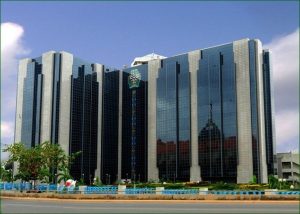
CBN TIGHTENS GRIP AS INTERBANK DEFICIT HITS N4.1TN
In a strategic move to curb rising food and fuel prices, the Central Bank of Nigeria has tightened its grip on the financial system, pushing the interbank deficit to N4.1tn. By vacuuming out excess liquidity through high-yield government bills, the CBN is betting that a short-term drought in the banking system is a necessary sacrifice to stabilise the naira and prevent inflation from spiralling out of control after its recent jump to 15.4 per cent. According to the latest Afrinvest Weekly Market and Economic Analysis, the interbank system remains under immense pressure as the apex regulator prioritises the containment of resurgent inflation and exchange rate volatility. The report reveals that system liquidity conditions, representing the volume of discretionary cash available for banks to lend to one another, remain deep in negative territory. While the average system deficit narrowed by 18.7 per cent to settle at N4.1tn, down from N5.0tn the previous week, the figures signal a deliberate drought orchestrated by the regulator to mop up excess money supply. Analysts at Afrinvest noted that this persistent shortfall is not accidental but a core feature of the current fiscal defence strategy. “The persistent system liquidity shortfall reflects sustained monetary tightening by the CBN, driven by a combination of OMO-induced sterilisation and limited offsetting inflows,” the report stated. To anchor inflation expectations and prevent excess naira from chasing limited foreign exchange, the CBN utilised Open Market Operations. By offering N600bn in high-yield OMO bills, the CBN effectively mopped up cash from the banking system, locking it away to prevent it from driving up general price levels. Despite the cash scarcity, investor appetite remains voracious. The 140-day and seven-day bills saw massive oversubscriptions, with bid-to-cover ratios of 8.6x and 4.3x, respectively. “Investor demand was robust, underscoring continued appetite for high-yield government securities despite prevailing liquidity constraints,” the analysis added. A striking takeaway from the analysis is the growing liquidity segmentation within the Nigerian banking sector. This phenomenon occurs when a few large, cash-rich banks hold massive surpluses while smaller institutions struggle with deficits. Instead of lending to their struggling peers in the interbank market, often due to heightened risk concerns, these surplus institutions are choosing to park their money back with the CBN. The report highlighted that Standing Deposit Facility placements averaged N4.1tn, noting that “these placements highlight continued liquidity segmentation as surplus institutions maintained significant deposits at the CBN despite the broader system deficit.” Surprisingly, despite the liquidity crunch, interbank funding rates remained stable. The Open Repo rate held steady at 22.0 per cent, while the Overnight rate moderated slightly to 22.3 per cent. Analysts suggest this indicates that the market has fully priced in the CBN’s hawkish stance, meaning banks have already adjusted their operations to a high-interest-rate environment. Looking ahead, the forecast remains consistent as the tight grip is not expected to loosen soon. Experts expect “liquidity conditions to remain constrained in the near term, and funding rates are likely to remain elevated but stable”, anchored by the prevailing monetary policy. This aggressive tightening comes at a pivotal moment for the national economy. After eleven months of cooling prices, Nigeria’s headline inflation rebounded to 15.4 per cent in March 2026. This spike was largely driven by a global energy shock that pushed crude oil prices above $100/bbl, leading to higher domestic fuel and logistics costs. By keeping the interbank system thirsty for cash, the CBN aims to support the naira and control the Consumer Price Index. While the squeeze on liquidity raises the cost of funds for banks, the apex bank appears convinced that a short-term sting in interest rates is a necessary price to pay to avoid the long-term pain of runaway inflation.