












CAPITALDIGEST DAILY NEWS, 18/05/2026
May 18, 2026
NIGERIA MISSES OPEC OIL PRODUCTION QUOTA AGAIN
Again, Nigeria has missed its crude oil production quota set by the Organisation of the Petroleum Exporting Countries after averaging 1.49 million barrels per day in April, below the 1.5 mbpd benchmark. Figures from the Nigerian Upstream Petroleum Regulatory Commission showed that the country produced an average of 1,488,540 barrels of crude daily in April, representing about 99 per cent of the OPEC quota. When condensates were added, total daily production rose to 1.66mbpd Last month, the NUPRC said oil production now averaged 1.8mbpd. However, data released on Tuesday was at variance with the report. The latest data mean Nigeria remained below its OPEC allocation for the ninth straight month since July 2025. The NUPRC document showed that combined crude oil and condensate production peaked at 1.85 mbpd during the month, while the lowest output stood at 1.46 mbpd. The PUNCH reports that the April figures are an appreciable improvement compared to March, when oil output was 1.55mbpd. Nigeria’s oil production has struggled for years due to crude theft, pipeline vandalism, ageing infrastructure, and underinvestment in the upstream sector. Although output improved marginally in April compared to March, it was still insufficient to meet the country’s OPEC target, underscoring persistent challenges in ramping up production despite government efforts to boost volumes. The PUNCH reports that Nigeria’s crude production in March was 1.38 mbpd. While there was a 69,000 bpd increase from the 1.31 mbpd recorded in February, the figure is still 117,000 bpd below the OPEC quota. The figures for February indicated a month-on-month decline of 146,000 barrels per day, widening the country’s shortfall from its OPEC production allocation. This is the eighth consecutive month the country has failed to meet the OPEC quota since July 2025. Recall that although Nigeria recorded a marginal improvement in January, when production rose from 1.422 mbpd in December 2025 to 1.46 mbpd, the rebound was short-lived as output fell significantly in February 2026. Earlier data from NUPRC had also shown that crude oil production weakened at the end of 2025. Production declined from 1.436 mbpd in November 2025 to 1.422 mbpd in December, before recovering slightly in January. In 2025, Nigeria’s crude oil production fell below its OPEC quota in nine months of the year, meeting or slightly exceeding the target only in January, June, and July. Nigeria opened 2025 strongly, producing 1.54 mbpd in January, about 38,700 barrels per day above its OPEC allocation. However, production slipped below the quota in February at 1.47 mbpd and weakened further in March to 1.40 mbpd, marking one of the widest shortfalls during the year.
EQUITIES MARKET RALLIES TO RECORD HIGH ON STRONG BUYING
The Nigerian equities market reached an unprecedented milestone during Wednesday’s trading session as the bulls tightened their grip on the local bourse, pushing the benchmark index to a fresh all-time high. Specifically, the Nigerian Exchange All-Share Index climbed by 283.52 points, or 0.11 per cent, to settle at 252,695.19 points, marking a significant psychological breakthrough as it sustained its position above the quarter-million mark. This bullish momentum was largely underpinned by sustained buying interest in heavyweights, with MTN Nigeria Communications and BUA Cement acting as the primary catalysts for the day’s record-breaking performance. The appreciation in share prices for these large-cap entities directly impacted the market’s total valuation, as the market capitalisation rose by NGN 64bn to close at N162.06tn. This growth reflects a resilient year-to-date performance, which currently stands at over 60 per cent, signalling robust investor confidence despite broader macroeconomic pressures. Beyond the telecommunications and industrial goods sectors, the upturn was further supported by price gains in other medium- and large-capitalised stocks such as UACN, Berger Paints Nigeria, and Fidson Healthcare. Market breadth, a key indicator of investor sentiment, remained firmly positive at the close of the session as 39 stocks advanced against 29 decliners. Leading the gainers’ chart were Daar Communications, Fidson Healthcare, Livestock Feeds, and CWG, all of which posted the maximum daily gain of 10 per cent. Conversely, NCR Nigeria and Cornerstone Insurance headlined the losers’ list, shedding 10 per cent each. Trading activity remained vibrant, with approximately 1.56 billion shares exchanged in over 76,000 deals, valued at N91.66bn. While analysts suggest that mild headwinds could emerge in subsequent sessions due to potential profit-taking, the current trajectory highlights a maturing market increasingly driven by domestic institutional liquidity and strategic positioning in blue-chip equities.

CBN UNVEILS NEW FOREX MANUAL TO BOOST MARKET LIQUIDITY
The Central Bank of Nigeria on Friday launched the fourth edition of its Foreign Exchange Manual, with the revised framework scheduled to take effect from June 1, 2026, as part of ongoing reforms aimed at improving transparency, liquidity and confidence in Nigeria’s foreign exchange market. Speaking at the launch of the revised manual in Abuja, the Governor of the Central Bank of Nigeria, Mr Olayemi Cardoso, said the initiative reflected the apex bank’s commitment to strengthening macroeconomic stability and modernising Nigeria’s foreign exchange administration. “This unveiling reflects our collective commitment to strengthening Nigeria’s macroeconomic foundations, enhancing transparency, and reinforcing confidence in the foreign exchange market,” Cardoso said. He said the revised manual became necessary following evolving global economic conditions, domestic structural adjustments, and ongoing reforms in Nigeria’s foreign exchange market. “Over the past decade, the global economy has become increasingly complex and uncertain, while the domestic economy has undergone structural adjustments, including efforts to diversify foreign exchange earnings and manage inflationary pressures,” he said. Cardoso added, “This Fourth Edition is the result of extensive consultation and rigorous technical review, aligned with international best practices. It reflects our commitment to modernising foreign exchange administration to enhance clarity, consistency, and market efficiency. The Manual will take effect on June 1, 2026.” The CBN governor said the successful implementation of the revised framework would depend on the cooperation of authorised dealer banks, corporates, regulators, ministries, departments and agencies, exporters, importers and other stakeholders. “Your adherence is essential, your cooperation indispensable, and your partnership remains central to the stability and credibility of the Nigerian foreign exchange market,” he stated. He added that the apex bank would strengthen monitoring mechanisms to ensure fairness, accountability and compliance across the foreign exchange market. “To support seamless adoption, the Manual will be readily available at no cost to Authorised Dealers, reflecting our priority on compliance over cost recovery,” Cardoso said. In his address, the Deputy Governor, Economic Policy Directorate of the Central Bank of Nigeria, Dr Muhammad Abdullahi, said the revised manual formed part of broader reforms initiated under Cardoso’s leadership to restore confidence, improve transparency, deepen liquidity and strengthen market efficiency. He said the review was undertaken to align Nigeria’s foreign exchange framework with current market realities and international best practices. “The revised Manual we are unveiling today is therefore not a standalone exercise, but part of a broader and deliberate institutional reform effort designed to strengthen the integrity, credibility, and effectiveness of Nigeria’s foreign exchange ecosystem,” Abdullahi said. According to him, the revised manual was developed after extensive consultations with authorised dealers, exporters, corporates, regulators, development partners and other stakeholders across the public and private sectors.He said the review process adopted an “Ease of Doing Business” approach aimed at reducing transaction bottlenecks, operational inefficiencies and market ambiguities. “Our goal is to reduce transaction frictions, improve processing timelines, deepen market confidence, encourage formal market participation, and create a more seamless and efficient experience for legitimate users of Nigeria’s foreign exchange market,” he said. Abdullahi disclosed that the revised manual introduced several major changes, including harmonising the disbursement structures for the Personal Travel Allowance and Business Travel Allowance with the revised Bureau De Change guidelines. Under the revised structure, 75 per cent of PTA and BTA would be disbursed electronically, while 25 per cent may be paid in cash. Other changes include the upward review of allowable advance payment for imports from 15 per cent to 30 per cent, free processing of Form NXP and the introduction of provisions for service exports, PAPSS transactions, remittances by technology companies, and non-resident investment accounts. The manual also introduced provisions allowing payments for services, fees and charges in foreign currency where receipts are generated in foreign currency, as well as tuition fee payments for undergraduate and postgraduate studies, subject to a maximum of $25,000 per semester. The deputy governor further stated that the revised framework provided for unfettered access for holders of export proceeds and ordinary domiciliary accounts, 100 per cent repatriation of export proceeds for foreign companies operating in the extractive sector, and the removal of the mandatory Form A requirement for remittances using ordinary domiciliary accounts. “These reforms collectively seek to improve operational efficiency, deepen market confidence, reduce administrative bottlenecks, support legitimate business activities, strengthen compliance standards, and further modernise Nigeria’s foreign exchange framework,” he added. Representing the Minister of Finance and Coordinating Minister of the Economy, Mr Taiwo Oyedele, the Permanent Secretary, Special Duties, Mr Mohammed Danjuma, described the revised manual as a strategic tool to improve transparency, operational efficiency, and investor confidence in Nigeria’s foreign exchange market. “This initiative reflects our unwavering commitment to reforms that promote macroeconomic stability, accountability, and sustainable growth,” Danjuma said. He added that the revised manual would strengthen regulatory compliance, reduce ambiguities in market practices and support ease of doing business. “I’m confident that this manual will significantly improve market discipline, support ease of doing business, and align our practices with international standards and global best practices,” he said. In his goodwill message, the Chairman of the Body of Banks’ Chief Executive Officers and Group Managing Director of United Bank for Africa, Mr Oliver Alawuba, commended the apex bank for the reforms introduced in the foreign exchange market. According to him, the revised manual reinforced the CBN’s policy direction on transparency, ethical conduct, improved oversight and credible price discovery in the foreign exchange market. “The table has been turned. There’s so much greater confidence in the Nigerian economy, thanks to the reform that has been conducted by the Central Bank of Nigeria,” Alawuba said. He assured the apex bank that commercial banks would support the implementation of the revised manual and ensure compliance with its provisions.
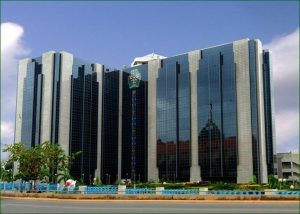
SEC RAISES ALARM OVER SHADY ONLINE INVESTMENT PLATFORMS
The Securities and Exchange Commission has warned Nigerians against the growing number of unregistered online investment schemes being promoted across social media platforms, describing many of them as Ponzi operations designed to defraud unsuspecting investors. In a public notice dated 8 May 2026, and shared via its official X handle on Thursday, the Commission said several platforms offering guaranteed or unrealistic returns are not registered or authorised to operate in Nigeria’s capital market. According to the SEC, the schemes are being aggressively marketed on WhatsApp, Instagram, TikTok, Telegram, Facebook, and other digital platforms to lure members of the public with promises of quick profits. “The attention of the Securities and Exchange Commission has been drawn to the increasing promotion of unregistered online investment schemes on social media applications and websites,” the regulator stated. The Commission noted that many of the operators exhibit characteristics of Ponzi or prohibited investment schemes, while some also provide unauthorised investment advisory services. It urged Nigerians to avoid investment platforms promising unrealistic returns, warning that such schemes often expose investors to fraud and severe financial losses, stressing that only entities registered with the Commission are legally permitted to offer investment and advisory services in Nigeria. The regulator advised members of the public to verify the registration status of any investment company or platform through its official fintech and capital market operator databases before committing funds. The latest warning comes amid increased regulatory scrutiny of suspected fraudulent investment operators. The Commission reiterated that the Investments and Securities Act 2025 empowers only registered entities to solicit investments in Nigeria, adding that public awareness and due diligence remain key to combating financial scams.

BANKING SECTOR NEEDS ETHICAL REBIRTH, SAYS CIBN
The Chartered Institute of Bankers of Nigeria has issued a stern warning to financial institutions regarding the surge in insider-related fraud, calling for an urgent return to ethical standards in recruitment and operations. Speaking at the 2026 Annual General Meeting of the CIBN Lagos State Branch, the President and Chairman of Council, Pius Olanrewaju, linked the growing threat of cybercrime to a “paradigm shift” where banks now prioritise deposit targets and social connections over the character and integrity of prospective employees. “Today, the parameter for employment seems to have shifted. If you can bring in deposits or have connections, you are employed without proper scrutiny. That paradigm shift is giving us problems,” Olanrewaju stated. The CIBN President revealed that the industry continues to suffer heavy losses due to a dangerous collaboration between bank insiders and external criminal networks. Highlighting a recent surge in high-profile breaches, he noted that billions of naira were syphoned from two banks in just a fortnight, a trend he attributed to a “rush for quick wealth” among young professionals. He emphasised that the era of thorough background checks and educational verification must be restored to safeguard public confidence in the financial system. “We are too much in a hurry. People now want to make money quickly without understanding that wealth built without integrity can collapse in a minute,” he added. Despite these ethical concerns, the institute expressed optimism regarding the ongoing Central Bank of Nigeria recapitalisation exercise. Olanrewaju commended the apex bank for its structured approach and the 24-month implementation period, which allowed banks to align with international, national, or regional categories at their own pace. Meanwhile, the Lagos State Branch of the CIBN posted a strong performance for the 2025 financial year, as total net assets rose to N264.3m and net surplus reached N10.4m, reflecting the branch’s leading role in membership growth and professional capacity building.