










CAPITALDIGEST MARKET REVIEW, 20/04/2026
April 20, 2026
DOLLAR PUSHES TO ONE-WEEK HIGH AS US-IRAN TENSIONS REIGNITE
The U.S. dollar firmed to its highest level in a week against major currencies on Monday before paring gains as renewed U.S.-Iran tensions and fading hopes for a Middle East peace deal sent investors toward safe havens. The United States said on Sunday that it had seized an Iranian cargo ship that tried to run its blockade, while Iran said it would retaliate, stoking fears about a resumption of hostilities. Tehran also said it would not participate in a second round of negotiations that the U.S. had hoped to kick off before its two-week ceasefire with Iran expires on Tuesday. “The weekend escalation revives the geopolitical risk premium just as markets had started pricing a peace dividend,” said Charu Chanana, chief investment strategist at Saxo, adding that higher oil “is not just an energy story, it is a growth-and-rates story.” The euro last bought $1.1757 after hitting a one-week low of $1.1729 earlier in the session, while sterling was 0.11% lower at $1.3503. The risk-sensitive Australian dollar fell 0.27% to $0.7148. The dollar index , which measures the U.S. currency against six peers, was at 98.30, hovering near its highest in a week and recouping some of its recent losses. The index is down 1.5% in April amid rising risk appetite on hopes for a peace deal. The index had surged 2.3% in March on haven demand after the war broke out. Analysts said the restrained moves in the currency markets, with the dollar giving back some of its early gains, pointed to lingering optimism that despite the setbacks over the weekend a resolution could still be on the cards. Chris Weston, head of research at Pepperstone, said while the tone is risk-off to start the week, the move so far “appears orderly rather than indicative of a major volatility shock.” “Market participants understand that the path to a formal agreement was unlikely to be linear and remains vulnerable to sudden changes, so market players won’t be wholly surprised by a sentiment shift,” Weston said.
STERLING STEADIES NEAR PRE-WAR LEVELS; TRADERS LOOK PAST UK POLITICS
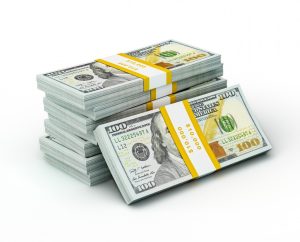
The British pound steadied on Friday, having returned to levels seen before the onset of the Iran war, with traders overlooking the renewed pressure on British Prime Minister Keir Starmer to resign. Starmer is under pressure despite sacking a senior official following news that Britain’s former ambassador to the United States had failed security vetting but was still handed the job. “I thought the story would be bigger for markets but Starmer has faced multiple calls to resign and seems to survive each time,” said Neil Wilson, UK investor strategist at Saxo Markets. “There is no sense that he is about to resign on this and a civil servant…has taken the flak instead. This may be enough for the market to assume that Starmer is safe for now.” Against the euro, the pound slipped 0.1% to 87.155. The war in the Middle East has caused a global energy price spike, fanning concern around inflation and growth. Money markets are betting on at least one 25 basis point rate increase from the BoE this year, a stark reversal from before the war began when there had been expectations for two rate cuts .On Thursday, Bank of England Governor Andrew Bailey told BBC News that the central bank was “not going to rush to judgements” on interest rate rises. “We have to see the BoE cut to support growth and Bailey has been trying to steer the market back a bit with his comments…if we get higher yields because of fiscal concerns then that equals a weaker currency,” said Wilson. The pound fell 1.9% in March as the Middle East conflict weighed on markets. The closure of the Strait of Hormuz – critical for the flow of energy – dealt a blow to the outlook for the British economy. Earlier this week, Britain suffered the sharpest cut to economic growth forecasts for the world’s large rich economies by the International Monetary Fund, and finance minister Rachel Reeves slammed the “folly” of the U.S. strategy for the conflict. Still, sterling is headed for its best monthly performance in a year in April so far, rising 2.6% as markets are increasingly betting on a resolution to the war. The pound also found some support this week after the latest GDP figures from the UK Office for National Statistics came in well above economists’ expectations.
DOLLAR FALLS TO MULTI-WEEK LOWS AS RISK APPETITE RISES ON HORMUZ NEWS
The safe-haven U.S. dollar dropped to multi-week lows on Friday as risk appetite soared after Iran said the Strait of Hormuz is open, boosting optimism that the Middle East conflict is winding down. Iranian Foreign Minister Abbas Araqchi said in a post on X the strait is open to all commercial vessels for the remainder of a U.S.-brokered 10-day truce agreed between Israel and Lebanon to halt fighting between Israel and Iran-backed Hezbollah. Shortly after Araqchi’s statement, U.S. President Donald Trump posted on Truth Social: “IRAN HAS JUST ANNOUNCED THAT THE STRAIT OF IRAN IS FULLY OPEN AND READY FOR PASSAGE”. Trump told Reuters on Friday that the U.S. will work with Iran to recover its enriched uranium and bring it back to the United States as part of any deal. Following the announcement, oil prices plunged, Wall Street shares posted sharp gains and U.S. Treasuries surged, pushing their yields lower.In afternoon trading, the dollar index , which measures the greenback against a basket of six currencies, fell 0.3% to 97.96 after earlier dropping to 97.632, its lowest in seven weeks. The index was down 0.6% on the week, set for a second straight weekly decline. Over the past two weeks, it has fallen about 2.1%, its largest two-week drop since late January. “The dollar’s weakness is mainly about the market unwinding the geopolitical risk premium,” said George Vessey, lead FX and macro strategist at Convera in London. “I don’t think we are pricing in a fundamentally weaker U.S. dollar because there are question marks around the Federal Reserve, what’s the Fed’s next move is going to be after inflation came out hotter than expected. So the economy is still somewhat resilient so it’s not going to be the start of a full structural dollar decline.”
POUND TICKS UP AFTER DATA SHOWS UK ECONOMY SURGED BEFORE IRAN WAR
Sterling rose slightly on Thursday after data showed the British economy grew rapidly in February and markets waited for more news about a possible peace deal in the U.S.-Iran war. The pound was last up 0.1% at $1.3575. The euro slipped against the British currency and was down 0.1% at 86.94 pence . Britain’s economy grew 0.5% month-on-month in February, the UK Office for National Statistics said, the biggest increase since January 2024 and well above economists’ expectations for 0.2% growth. The statistics office said there was broad-based growth across the services sector and car production also rose. However, the jump in energy prices from the Iran war means bumper growth has probably already been extinguished, said Ruth Gregory, deputy chief UK economist at Capital Economics. “We still think growth will slow to a crawl in the coming quarters and that the 1.4% rise in real GDP in 2025 will be followed by a gain of about 0.7% this year,” she said. James Smith, UK economist at ING, said he was treating the data sceptically. He and other economists have said the ONS’ seasonal adjustment process may be overstating growth in the first quarters of recent years. The pound was also lifted somewhat by investors’ hopes that the U.S. and Iran may be close to reaching a peace deal. A key Pakistani mediator was in Tehran and the administration of U.S. President Donald Trump talked up the chances of an agreement that would open the crucial Strait of Hormuz. The pound dropped 1.9% in March as the war closed the Strait – through which 20% of the world’s oil and liquefied natural gas typically flows – denting the outlook for the British economy and pushing investors towards the safe-haven U.S. dollar as stock markets plunged. Sterling has rallied around 2.6% so far in April, however, as markets have bet on some form of peace deal. It now stands higher than just before the war began. Britain’s currency has been supported by market expectations that the Bank of England will raise interest rates once or twice this year, which makes assets in the UK look relatively more attractive. BoE Governor Andrew Bailey told the BBC the central bank was “not going to rush to judgements” on interest rate rises in an interview published on Thursday.
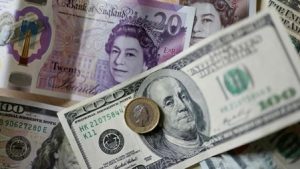
US DOLLAR GAINS ON TECHNICAL RALLY; US-IRAN PEACE HOPES CAP SAFE-HAVEN DEMAND
The U.S. dollar climbed against major currencies on Thursday, retracing some of its recent losses on a technical recovery, as investors awaited news about a possible U.S.-Iran peace deal. President Donald Trump said the U.S.-Israeli war with Iran was “close to over,” while the White House expressed optimism about a deal, saying more in-person talks would likely take place in Pakistan over the weekend. Yet an Iranian official said big splits remained, including over Tehran’s nuclear ambitions, even as the two sides have made some progress. “We’re seeing a bit of a relief bounce here in the dollar and the cyclical backdrop for the currency is still neutral over the next few months,” said Elias Haddad, global head of markets strategy at Brown Brothers Harriman in London.”There are hopes of a diplomatic off-ramp on the U.S.-Iran conflict and that continues to support this recovery that we’re seeing in financial market risk sentiment,” he said, adding that Thursday’s rally in the safe-haven dollar will likely be limited. In afternoon trading, the euro fell from a seven-week high against the dollar of $1.1823, and was last down 0.1% at $1.1782. The dollar index, which measures the currency’s strength against six major peers, rose 0.2% to 98.19. The index, whose biggest component is the euro, earlier fell to its lowest level since late February. It was on track for its largest daily gain in two weeks, however. The index has declined for eight straight sessions through Wednesday to give up most of the gains sparked by the war, as a ceasefire revived appetite for riskier currencies. That said, some market participants warned that “peak uncertainty” is not behind us just yet given that the U.S.-Iran ceasefire, which expires next week, is still fragile, and questions about the inflation outlook remain. “It’s not so much whether peak uncertainty has passed, but whether the market has already priced in and maybe moved beyond the worst-case outcome that the uncertainty produced,” wrote Anthony Saglimbene, chief market strategist at Ameriprise, in emailed comments. “On that basis, we believe the market is walking away from worst-case scenarios and rightfully so.” Against the yen, the dollar advanced 0.2% to 159.21 yen. The move followed news that Japan’s Finance Minister Satsuki Katayama said that the country and the United States agreed to intensify communication on exchange rates after she met with U.S. Treasury Secretary Scott Bessent on Wednesday. The greenback also drifted higher after data showed initial claims for state unemployment benefits dropped 11,000 to a seasonally adjusted 207,000 for the week ended April 11. Economists polled by Reuters had forecast 215,000 claims for the latest week.