












CAPITALDIGEST DAILYNEWS, 25/05/2026
May 25, 2026
CRUDE DROPS TO $102 ON POSSIBLE US-IRAN PEACE DEAL
Oil prices dipped further on Thursday as United States President Donald Trump awaited Iran’s response to the latest US peace proposal. Brent crude fell from around $106 per barrel to $102 on Thursday, while WTI also dropped to $96 from $98 earlier on Wednesday. Iran’s government said it was reviewing the latest proposal from the US for a potential deal to end the nearly three-month conflict that has sent global fuel prices soaring. Ministry of Foreign Affairs spokesperson Esmaeil Baghaei had earlier said that Iranians had “received US views and are reviewing them,” according to the Iranian state agency Nour News. Al Jazeera reports that six weeks after a ceasefire took effect, efforts to bring the conflict to a permanent end have intensified in recent days as Pakistan’s military chief, Field Marshal Asim Munir, continues “talks and consultations” with Iranian authorities. Pakistan’s Interior Minister Mohsin Naqvi arrived in Iran on Wednesday for his second visit in less than a week to discuss Washington’s latest proposal. Trump had warned that talks were on the “borderline” between a deal and the US renewing its attacks on Iran “Believe me, if we don’t get the right answers, it goes very quickly. We’re all ready to go,” Trump told reporters on Wednesday, Trump, who has repeatedly set deadlines for Iran to reach a deal only to delay or cancel them, said he was willing to wait a few days to “get the right answers” from Tehran. Iranian Foreign Minister Abbas Araghchi said on Wednesday that his ministry was ready for either talks or a return to fighting. “Wherever it is necessary to fight, we will fight, and wherever it is necessary to negotiate, we will negotiate,” he said. Meanwhile, seven leading OPEC+ oil-producing countries will likely agree to a modest hike in July output when they meet on June 7, four sources told Reuters, though delivery for several remains disrupted by the Iran conflict. Reuters reports that the monthly target set by seven core OPEC+ members is expected to be raised by about 188,000 barrels per day. The PUNCH reports that if the United States and Iran agree to end the conflict and reopen the Strait of Hormuz, petrol prices could crash.

CBN HOLDS RATES AS OPS FLAGS MANUFACTURING RISKS
The Monetary Policy Committee of the Central Bank of Nigeria on Wednesday retained the benchmark interest rate at 26.5 per cent, citing rising external risks, renewed inflationary pressure, and the need to sustain exchange rate stability. The CBN Governor, Olayemi Cardoso, announced the decision at the end of the committee’s 305th meeting held in Abuja. He said, “The committee’s decision is as follows: retain the monetary policy rate at 26.5 per cent.” The decision also elicited mixed reactions from members of the Organised Private Sector. They acknowledged the justification for retaining interest rates and, on the other hand, cautioned that high rates hamper private sector investment in SMEs and manufacturing, leading to lower output and hampering job creation. The committee also retained the standing facilities corridor around the MPR at +50/-450 basis points, the Cash Reserve Requirement of Deposit Money Banks at 45 per cent, Merchant Banks at 16 per cent, and non-TSA public sector deposits at 75 per cent. The decision came after Nigeria’s headline inflation rose for the second consecutive month to 15.69 per cent in April 2026 from 15.38 per cent in March, according to the latest Consumer Price Index report released by the National Bureau of Statistics. Food inflation also increased to 16.06 per cent in April from 14.31 per cent in March, reflecting higher transportation and logistics costs as well as seasonal pressures, while core inflation moderated to 15.86 per cent from 16.21 per cent. The MPC said the renewed inflationary pressure was largely caused by external shocks, particularly spillovers from the Middle East crisis, which had pushed up global energy prices and logistics costs. However, the committee said the impact on Nigeria had been muted by earlier reforms, including exchange rate stability, improved external reserves, stronger monetary policy transmission, a better-capitalised banking system, and ongoing fiscal consolidation. It said, “Although inflation has risen marginally for two consecutive months, largely induced by external shocks, the MPC recognised its transitory nature and remained confident that the current macroeconomic environment is sufficiently robust to support a return to disinflation.” Speaking during the post-meeting press briefing, Cardoso said the CBN would sustain its current policy direction, noting that the country had recorded 11 straight months of disinflation before the recent uptick. “We’ve got to remember that we’ve been coming from 11 straight months of disinflation. And we believe that what we have now is something that has resulted from external shocks,” he said. He added that the apex bank had built buffers to protect the economy, saying Nigeria’s recent sovereign rating upgrade by Standard & Poor’s showed that current policies were moving the economy in the right direction. According to him, exchange rate stability remains central to the CBN’s inflation-control strategy. “It is key that the centrepiece of our toolkit is ensuring that our foreign exchange rate remains stable,” Cardoso said, adding that the bank would continue to work with fiscal authorities to reduce inflation pass-through. On the foreign exchange market, the governor dismissed claims that the CBN was aggressively intervening to defend the naira. “The answer is that it’s not true,” he said. “The foreign exchange system has changed considerably.” Cardoso said daily foreign exchange turnover had risen from about $100m when the current administration took office to roughly $550m, with occasional spikes to $1bn. He said the CBN’s intervention in 2025 was only about 1.2 to 1.3 per cent of total market turnover, adding that the market was increasingly being driven by willing buyers and willing sellers. The governor also said Nigeria’s external reserves remained dynamic and resilient, despite recent concerns over declines in reserve levels. The MPC communiqué showed that gross external reserves stood at $49.49bn as of May 15, 2026, compared with $48.35bn at the end of March, providing 9.04 months of import cover. Cardoso said some reserve movements reflected normal payments for government obligations and loans, but added that new inflows were also coming in. Addressing the new foreign exchange manual, the apex bank chief said the document, which became effective on June 1, was part of ongoing reforms to deepen transparency and improve market confidence. He said the last major revision was done in 2017, adding that the new manual would make it easier for exporters to repatriate foreign exchange earnings and access their funds without unnecessary restrictions.
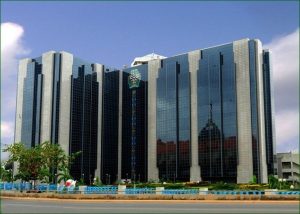
BANKS, FINTECHS REPORT 82,143 SUSPICIOUS TRANSACTIONS TO NFIU
fintech firms, insurance companies, capital market operators, and other reporting entities flagged 82,143 suspicious transactions to the Nigerian Financial Intelligence Unit in 2024 amid intensified efforts to detect money laundering, terrorism financing, and other illicit financial activities. The figure was contained in the NFIU’s 2024 Annual Report, which also revealed that the agency received 25,819,719 Currency Transaction Reports and 23,364 Suspicious Activity Reports during the year under review. The report, which was recently released on the NFIU’s website, was obtained by Sunday PUNCH on Friday. According to the report, “During the review period, the NFIU received a total of 25,819,719 CTRs, 82,143 STRs, and 23,364 SARs.” The NFIU explained that it receives threshold-based disclosures, suspicious transaction and activity reports, as well as regulatory submissions relating to anti-money laundering, counter-terrorist financing, and counter-proliferation financing measures. It added that it works closely with regulators, including the Central Bank of Nigeria, the National Insurance Commission, the Securities and Exchange Commission, and the Special Control Unit Against Money Laundering, to ensure compliance with relevant laws and regulations. An analysis of the report showed that Deposit Money Banks accounted for the majority of suspicious transaction filings, submitting 73,531 reports, representing about 89.5 per cent of all STRs received during the year. Other Financial Institutions filed 5,442 reports, while capital market operators and insurance companies submitted 1,796 reports. Designated Non-Financial Businesses and Professions accounted for 1,013 reports, while Virtual Asset Service Providers, which include digital asset operators, filed 361 suspicious transaction reports. The report noted that suspicious transaction reports are mandatory whenever a reporting entity determines that a transaction or activity may be linked to money laundering, terrorist financing, proliferation financing, or other unlawful conduct. It stated, “Section 7 of the MLPAA requires all reporting entities, including financial institutions and designated non-financial institutions, to submit a report where there is a determination that the activity or transaction is suspicious and possibly linked to money laundering, terrorist financing, or other illegal activity.” Quarterly data showed a steady increase in suspicious transaction reporting by banks throughout the year. DMBs filed 14,744 STRs in the first quarter, 17,031 in the second quarter, 20,052 in the third quarter, and 21,704 in the fourth quarter. Other Financial Institutions also recorded sustained growth, with filings rising from 842 in the first quarter to 1,908 in the fourth quarter. The NFIU also received 23,364 Suspicious Activity Reports in 2024. Banks again accounted for the largest share with 19,873 reports, followed by Other Financial Institutions with 2,071 reports and capital market and insurance firms with 1,382 reports. DNFBPs filed 38 SARs, while no SARs were recorded from VASPs during the period. Beyond suspicious transactions, reporting entities submitted 25.82 million Currency Transaction Reports to the NFIU. Deposit Money Banks accounted for 23.16 million of the reports, representing about 89.7 per cent of the total, while Other Financial Institutions filed 2.53 million reports. Capital market and insurance companies submitted 127,726 reports. The report explained that financial institutions are required to report transactions above N5m for individuals and N10m for legal persons to the NFIU within seven days. It added that all incoming and outgoing transfers exceeding $10,000, whether conducted by a single individual or aggregated within a day, must be reported within 24 hours. Quarterly currency transaction reporting by banks increased from 5,101,625 reports in the first quarter to 5,478,751 in the second quarter and peaked at 6,297,310 in the third quarter before easing slightly to 6,281,077 in the final quarter. Other Financial Institutions recorded 103,489 reports in the first quarter, 396,083 in the second quarter, 1,055,017 in the third quarter, and 978,641 in the fourth quarter. The NFIU further disclosed that it received 21,466,288 reports relating to Politically Exposed Persons in 2024. Deposit Money Banks accounted for the largest share of the filings, recording 3,643,024 reports in the first quarter, 4,007,797 in the second quarter, 4,745,405 in the third quarter, and 8,727,968 in the fourth quarter. Capital market and insurance institutions filed 54,280 reports during the year, while Other Financial Institutions submitted 231,747 reports. As part of its compliance and enforcement activities, the NFIU conducted 1,317 off-site examinations and 98 on-site examinations across Abuja, Enugu, Kaduna, Kwara, Lagos, Maiduguri, Port Harcourt, and Sokoto. The agency said it also issued guidelines on the identification, verification, and reporting of suspicious transactions related to money laundering, terrorism financing, and proliferation financing. According to the report, the guidelines were introduced to improve the quality of Suspicious Transaction Reports, reduce false positives and defensive filings, and ensure the implementation of effective risk-based measures against criminal abuse of the financial system. The report showed that the NFIU onboarded 483 reporting entities onto its reporting platforms during the year and registered 1,317 entities on the NIGSAC portal. It also disclosed that 44,256 DNFBPs were enrolled on a simplified suspicious transaction reporting platform developed jointly with SCUML to improve compliance across sectors such as real estate, casinos, dealers in precious metals and stones, legal practitioners, accountants, and trust service providers. The NFIU said it identified several emerging financial crime risks from its analysis of reports received during the year. These included frequent cash withdrawals from government accounts at the state and local government levels, the use of corporate entities as intermediaries for transactions involving virtual asset service providers, misuse of personal bank accounts for business transactions to evade taxes, and the diversion of public funds through third-party entities. The agency also raised concerns over the use of illegal Bureau de Change operators to launder funds for politically exposed persons and some government agencies. It warned that emerging technologies, including artificial intelligence tools, online file converters, and digital platforms, could expose institutions to data breaches, fraud, and regulatory violations if not properly managed. The report added that terrorist organisations were exploiting dealers in precious metals and stones to finance their activities, while some operators in the sector conducted transactions through personal savings accounts and operated without mandatory SCUML certification, increasing the risk of money laundering, fraud, tax crimes, and corruption. Separately, the NFIU disclosed that it disseminated 3,030 proactive intelligence reports and 1,866 reactive intelligence reports to competent authorities in 2024 to support investigations and prosecutions relating to money laundering, terrorism financing, and associated crimes. Among the top offences linked to intelligence reports disseminated during the year were corruption, which accounted for 1,958 reports; fraud, with 1,022 reports; stand-alone money laundering, with 705 reports; criminal tax offences, with 385 reports; and illicit trafficking in narcotic drugs and psychotropic substances, with 294 reports. Terrorism financing accounted for 239 reports, while human trafficking and migrant smuggling generated 114 reports. The NFIU also strengthened international intelligence cooperation, receiving 84 requests from foreign financial intelligence units and making 109 requests to its counterparts abroad. The report noted that the agency received 143 spontaneous disclosures from foreign intelligence units, some of which were shared with domestic agencies to support investigations. Last year, the Central Bank of Nigeria issued a draft framework aimed at modernising anti-money laundering practices across the country’s financial system by adopting intelligent, automated solutions.In a circular dated May 20, 2025, and addressed to all regulated financial institutions, the apex bank stated that the proposed standards were in response to the growing digitalisation of Nigeria’s financial system and the increasing sophistication of financial transactions. According to the CBN, the new standards are intended to enhance efficiency, improve detection accuracy, and ensure full compliance with both local regulations and international frameworks such as those established by the Financial Action Task Force. Under the new regime, financial institutions will be required to deploy intelligent AML systems capable of real-time transaction monitoring and anomaly detection. These systems must integrate AI and ML capabilities to perform behavioural pattern recognition, risk scoring, and adaptive learning to identify potentially suspicious activities, such as large cash deposits, cross-border transactions, and cryptocurrency dealings. The standards also mandate that these systems interface smoothly with core banking applications, customer onboarding platforms, and internal transaction processors. Automated reporting to the Nigerian Financial Intelligence Unit is also a key requirement. AML platforms must generate Suspicious Transaction Reports, Currency Transaction Reports, and Foreign Currency Transaction Reports as required by law and be equipped with dashboards to support internal and external compliance oversight.

SEC FIXES JUNE 1 FOR T+1 SETTLEMENT CYCLE TRANSITION
The Securities and Exchange Commission has announced the transition to a T+1 settlement cycle for equities and commodities transactions in the Nigerian capital market, with effect from Monday, 1 June 2026. The apex regulatory body stated that the transition is in furtherance of its statutory mandate to promote an efficient, fair and transparent capital market ecosystem. The official circular published by the commission outlines a comprehensive implementation framework that all capital market operators and relevant institutional stakeholders are expected to adopt in preparation for the migration. The commission stated that the migration to a T+1 settlement cycle forms part of its ongoing market modernisation initiatives aimed at enhancing trading efficiency, strengthening risk management, reducing counterparty exposure, improving system liquidity and aligning the domestic market layout with international standards and global best practices. According to the regulatory notice, all eligible trades executed on the floor of the local exchange under the new framework will settle one business day after the transaction date, effectively compressing the current two-business-day timeline. “Importantly, the final trading day under the existing T+2 cycle will be Friday, 29 May 2026. Specifically, trades executed on both 29 May and 1 June 2026 will settle on the same date, Tuesday, 2 June 2026, creating a seamless convergence window that supports an efficient transition. From 1 June onwards, all trades will operate under the T+1 framework, and it is essential for all capital market operators, securities exchanges, clearing and settlement infrastructure providers, custodians, registrars, issuers and other stakeholders to ensure they are fully operationally ready by the commencement date,” the commission noted. The strategic policy shift moves Nigeria closer to global capital market standards, following the footprint of the United States, which migrated to T+1 in May 2024, alongside Canada and Mexico. For domestic retail investors, the contraction of the transaction cycle guarantees quicker access to cash proceeds arising from corporate share sales. Conversely, institutional players, asset managers and custodians are required to prioritise the immediate reconfiguration of their back-office infrastructure and transaction reconciliation workflows to prevent settlement hitches. Market analysts noted that the rapid transition from T+3 to T+2, and now to T+1 in less than seven months, highlights the regulatory body’s proactive approach to bridging the infrastructure gap with developed markets, presenting an attractive environment for foreign portfolio inflows. “Market participants are expected to review and align their systems, processes, controls and operational workflows ahead of the implementation date. The commission will continue to engage stakeholders and monitor the implementation process to ensure an orderly and seamless transition. We remain committed to strengthening market integrity, enhancing investor confidence and fostering the development of a modern, resilient and globally competitive Nigerian capital market,” the circular added.

FGN BOND SUBSCRIPTIONS DROP 45% DESPITE HIGHER YIELDS
Investor appetite for Federal Government bonds weakened in May 2026 as total subscriptions dropped by 45.6 per cent month-on-month, despite rising yields at the auction. Data released by the Debt Management Office showed that total market subscriptions fell to N516.17bn in May from N947.99bn recorded in April. At the May 18 auction, the DMO offered N300bn each for the reopened 22.60 per cent FGN January 2035 bond and the 16.2499 per cent FGN April 2037 bond. The 10-year paper attracted subscriptions worth N262.23bn, while the 20-year bond recorded N253.94bn in bids. This represented a significant decline from April, when investors submitted a combined N947.99bn in subscriptions across the 5-year, 7-year, and 10-year instruments auctioned by the DMO. The April auction recorded subscriptions of N181.94bn for the 5-year bond, N167.04bn for the 7-year paper, and N599.02bn for the 10-year instrument. Despite weaker demand, the government raised rates at the auction. The 10-year bond cleared at a marginal rate of 17.00 per cent in May, higher than the 16.59 per cent recorded on the same tenor in April, while the 20-year paper cleared at 17.04 per cent. The April auction had recorded marginal rates of 16.30 per cent for the 5-year bond, 16.50 per cent for the 7-year instrument, and 16.59 per cent for the 10-year paper. Analysis of the auction results showed that investor demand for the 10-year bond weakened considerably in May. Subscriptions for the instrument fell by 56.2 per cent, from N599.02bn in April to N262.23bn in May. However, despite lower subscriptions, total allotment rose sharply. The DMO allotted N614.51bn in May, more than double the N276.79bn allotted in April. The increase was largely driven by a N280bn non-competitive bid on the 20-year bond. The DMO allotted N476.84bn on the 20-year instrument and N137.67bn on the 10-year paper. A non-competitive bid is a type of bond auction bid in which the investor agrees to accept the yield or interest rate determined at the auction rather than specifying a preferred rate. It guarantees allocation of the requested securities, unlike competitive bids, where investors may receive only part of their request or none at all if their demanded yield is too high. The auction results also showed that bids for the 10-year bond ranged between 15.00 per cent and 22.60 per cent, while bids for the 20-year paper ranged from 14.00 per cent to 18.49 per cent. The DMO stated that although successful bids were allotted at marginal rates of 17.00 per cent and 17.04 per cent respectively, the original coupon rates of 22.60 per cent for the January 2035 bond and 16.2499 per cent for the April 2037 bond would be maintained. The Federal Government has continued to ramp up domestic borrowing through bond auctions as it seeks to finance the widening fiscal gap in the 2026 budget amid mounting expenditure pressures. Following the upward revision of the budget to N68.32tn by the National Assembly, the fiscal deficit rose to N31.46tn, with projected revenues estimated at N36.87tn and planned borrowing put at N29.20tn.