












CAPITALDIGEST DAILYNEWS, 19/10/2026
October 19, 2026
GOVT’S PETROL DISCOUNT MAY COST 0.4% OF GDP
The Federal Government’s petrol price relief package could cost Nigeria up to 0.4 per cent of its Gross Domestic Product, equivalent to about N1.77tn, as concerns mount over the intervention’s fiscal implications ahead of the 2027 general elections. BMI, a Fitch Solutions company, disclosed this in its latest report, titled ‘Fuel Discount Mechanism Raises Macro Risks in Nigeria’, which was obtained by The PUNCH on Sunday. The research firm warned that the intervention could worsen Nigeria’s fiscal position, weaken government revenue and trigger renewed pressure on the naira if sustained beyond its intended period. It stated, “Although the government has not disclosed the package’s cost, our initial estimates suggest it will amount to around 0.2-0.4 per cent of GDP assuming the measures are removed in early Q2 2027, broadly in line with the pre-election spending increases already embedded in our forecasts.” An analysis by The PUNCH, based on the National Bureau of Statistics’ 2025 nominal GDP figure of approximately N441.5tn, showed that the estimated cost of the petrol relief package could range from N883bn to N1.77tn. The calculation provides an indicative naira value of BMI’s projection using the 2025 GDP figure, rather than a cost estimate directly published by the research firm. The report followed the 8 October announcement by the Minister of Finance, Taiwo Oyedele, of a 30-day intervention requiring NNPC retail outlets to sell petrol at cost without earning profit margins. The government also proposed a wholesale petrol price benchmark of N1,350 per litre, under which refiners and importers would absorb costs above the threshold and recover their losses when crude oil prices decline.Other measures include forward crude sales to domestic refineries, the establishment of a national strategic fuel reserve, expanded cash transfers and additional support for vulnerable households. Despite the government’s initial 30-day timeline, BMI projected that the petrol discount mechanism could remain in place for approximately six months, extending into the first quarter of 2027. It stated, “We expect the discount mechanism to remain in place for roughly six months before being phased out in late Q1 or early Q2 2027.” The projection partly reflects expectations that global crude oil prices could decline following a possible agreement between the United States and Iran in the first quarter of 2027. BMI also maintained its forecast that Nigeria’s budget deficit would widen from 1.7 per cent of GDP in 2025 to 3.3 per cent in 2026, citing anticipated fiscal pressures ahead of the January 2027 elections. Although the firm acknowledged that the intervention differed significantly from Nigeria’s previous petrol subsidy regime, it warned that extending the arrangement could create fresh economic imbalances. Under the former subsidy system, the government effectively absorbed the difference between regulated pump prices and market costs, exposing public finances to rising crude prices and exchange rate depreciation.The current arrangement instead requires NNPC to forgo its retail profit margin while allowing pump prices to reflect underlying market costs. BMI stated, “We see significant macroeconomic risks if the NNPC fuel discount mechanism is not removed and instead becomes entrenched.” It warned that prolonged implementation could reduce NNPC’s remittances to government accounts, limiting resources available for infrastructure development, public services and security. The firm also cautioned that weaker fiscal credibility could increase borrowing costs and worsen Nigeria’s debt-service burden, while reduced retail margins could constrain investment in the downstream petroleum sector. Beyond the fiscal implications, BMI identified potential foreign exchange risks, warning that discounted petrol prices could encourage cross-border smuggling if Nigerian fuel becomes significantly cheaper than supplies in neighbouring countries. According to the report, increased smuggling could raise fuel import requirements and demand for foreign exchange, potentially triggering dollar shortages and renewed pressure on the naira. It added that concerns over a possible reversal of economic reforms could discourage foreign portfolio investment, reducing an important source of dollar inflows. The report further identified potential risks to the Dangote Refinery and its planned initial public offering, noting that increased government intervention in petroleum pricing could weaken investor confidence. BMI warned that requiring suppliers to sell fuel at cost without a clear mechanism for recovering forgone profits could undermine profitability, while tighter price controls could encourage refiners to prioritise exports over domestic sales. However, the firm described the proposed forward sale of crude oil to domestic refineries as a more promising measure for improving local fuel supply, despite previous implementation challenges. It cautioned that failure to withdraw the temporary intervention could turn the relief package into a prolonged fiscal burden, with consequences for government revenue, foreign exchange stability and investor confidence. The Federal Government earlier said the petrol discount introduced by the Nigerian National Petroleum Company Limited’s retail arm is not a return of fuel subsidy, insisting that no public funds are being used to reduce prices at its filling stations. In a statement, the government said the discount was funded by NNPC Retail Limited’s decision to reduce its retail profit margin, rather than through payments from the federal budget or the Federation Account.
NIGERIA’S FX DEMAND HITS $18.34BN AS SERVICE SURGE
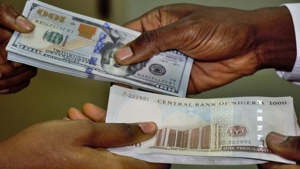
Nigeria’s foreign exchange utilisation surged to $18.34bn in the second quarter of 2026, its highest level in nearly 15 years, as financial services transactions accounted for more than half of total demand, according to the Financial Markets Dealers Association. The sector absorbed $9.64bn during the quarter, representing 52.58 per cent of total FX utilisation, as demand for cross-border financial transactions rose sharply despite declining expenditure on some categories of imports. The FMDA’s Q2 FX market report, based on data from the Central Bank of Nigeria, showed that total utilisation increased by 12.84 per cent from $16.25bn in the first quarter and 52.42 per cent from $12.03bn in the corresponding period of 2025. The figures point to a growing concentration of FX demand in services and financial transactions, rather than merchandise imports alone. Invisible transactions, which cover payments for services and other non-merchandise items, accounted for $13.24bn, or 72.19 per cent of total FX utilisation in Q2. This represented a 93.16 per cent increase from $6.85bn recorded in the corresponding period of 2025. Financial services accounted for most of the increase, with demand rising 72.81 per cent from $5.58bn a year earlier. Business services demand climbed 191.39 per cent to $1.66bn from $570.41m, while other services increased 118.66 per cent to $1.12bn. The report did not provide a detailed breakdown of the financial services transactions. It is therefore unclear how much of the demand represented investment-related payments, financial obligations or other cross-border transactions. The figures also showed that import-related FX utilisation declined 1.49 per cent to $5.10bn. Industrial imports fell 22.67 per cent to $1.86bn, while oil imports dropped 9.75 per cent to $1.25bn. In contrast, demand for manufactured products rose 77.73 per cent to $982.09m. The report identified $542.56m in unallocated invisible demand, reflecting a discrepancy between the June figures and the reported aggregate. On the supply side, autonomous FX inflows strengthened their dominance, providing $23.31bn, or 74.15 per cent of total inflows during the quarter. The amount represented the highest level since Q1 of 2020, while autonomous sources accounted for a larger share of supply than in both the preceding quarter and the corresponding period of 2025. Their share rose from 68.48 per cent in Q1 of 2026 to 63.64 per cent in Q2 of 2025. Total FX inflows, however, declined 2.96 per cent quarter-on-quarter to $31.43bn, although they remained 14.04 per cent above the level recorded a year earlier. CBN-sourced inflows fell 20.44 per cent to $8.12bn, while the central bank’s direct FX sales to the market dropped 66.73 per cent to $418.08m from $1.26bn in Q1. Compared with the $3.17bn recorded in Q2 of 2025, CBN sales were down 86.79 per cent. The association also reported that the central bank sold $1.67bn in FX during the first half of 2026, the lowest half-year amount since its records began in 2008. Despite the decline in total inflows, Nigeria recorded net FX flows of $22.50bn in Q2, the highest level since the fourth quarter of 2019.
IMF ENDORSES CBN RATE CUT, WARNS AGAINST PREMATURE EASING
The International Monetary Fund has endorsed the Central Bank of Nigeria’s decision to cut its benchmark interest rate to 23 per cent, saying the move is justified by progress in taming inflation, although monetary policy remains tight. Director of the IMF’s African Department, Zeine Ould Zeidane, said Nigeria had made significant gains in reducing inflation after a period of elevated price pressures and high real interest rates. Speaking at a press briefing during the ongoing IMF-World Bank Annual Meetings in Thailand, Zeidane said the CBN was right to begin normalising interest rates without abandoning its fight against inflation. He said the September adjustment should not be mistaken for a broad shift towards an accommodative monetary policy, as the overall stance remains restrictive. “The stance itself remains a tight one,” Zeidane said, adding that the CBN’s decision was appropriate under the prevailing economic conditions. He stressed that monetary policy must continue to respond to incoming economic data, with the priority remaining the reduction of inflation towards the central bank’s target. The IMF’s endorsement provides international backing for the CBN’s decision to lower borrowing costs after a prolonged period of monetary tightening. However, the Fund cautioned that central banks must remain vigilant against inflation risks. Its latest regional assessment indicated that further monetary tightening might still be necessary in many African economies, adopting a firmer position than its April assessment. For Nigeria, this means further interest rate adjustments will depend on whether inflation continues to moderate and whether the progress recorded so far can be sustained. At its September Monetary Policy Committee meeting, the CBN cut the Monetary Policy Rate by 350 basis points, reducing it to 23 per cent from 26.5 per cent. The decision surprised many market participants who had expected the committee to retain the benchmark rate amid concerns about inflation and price stability. The MPC also recalibrated the Standing Facilities Corridor while retaining existing Cash Reserve Requirement levels for deposit money banks, merchant banks and non-Treasury Single Account public sector deposits. The rate reduction marked a shift after an extended period of tight monetary policy aimed at containing inflation and stabilising the economy. Nigeria’s headline inflation rate eased marginally to 15.39 per cent in August 2026 from 15.43 per cent in July, according to the National Bureau of Statistics. The decline extended the disinflation trend for a third consecutive month, strengthening the case for a measured adjustment in monetary policy. However, the small month-to-month reduction also highlights the need for caution, as inflation remains a key consideration for the CBN. “The central bank will need to weigh the benefits of lower borrowing costs against the risk of renewed price pressures, ensuring that any further adjustment is supported by sustained improvements in inflation and broader economic conditions,” said an Abuja-based economist, Nonso Iheoma.

NGX GAINS AS EQUITIES RALLY ACROSS SECTORS
Trading on the Nigerian Exchange Limited closed on a positive note on Thursday, as the benchmark All-Share Index recorded a modest gain of 33.48 points to settle at 247,707.13 points compared to the 247,673.65 points recorded on Wednesday. The market capitalisation of listed equities similarly appreciated, closing higher at N160.83tn from N160.81tn recorded in the previous trading session. Across the broader trading landscape, activity levels reflected robust investor engagement as total equity volume crossed hundreds of millions across major sectors, anchored by strong performances in key counters. Sectoral performance was largely upbeat, spearheaded by significant rallies in specialised market indicators. The NGX Oil and Gas Index led the sectoral advances with a notable surge to close at 6,194.16 points, up from 6,034.68 points, driven by strong buying interest in energy and exploration equities. The NGX Lotus Islamic Index also advanced firmly to 23,164.84 points, while the NGX Growth Index scaled higher to 26,970.58 points. Additional positive momentum was observed in the NGX Main-Board Index, which climbed to 10,820.66 points, and the NGX Banking Index, which ticked upward to settle at 2,556.46 points. Conversely, a few indices experienced downward pressure, including the NGX Premium Index, which retreated to 30,909.21 points, and the NGX Consumer Goods Index, which closed relatively flat at 4,033.67 points. Individual stock performances highlighted active trading across premier and main board securities. In the banking subsector, United Bank for Africa Plc recorded positive price movement, closing at N43.15 with a 0.35 per cent gain on heavy volume of over 36.3 million shares traded, while Zenith Bank Plc traded actively with over 12.3 million shares changing hands at N127.70. Access Holdings Plc saw moderate activity, closing at N28.30, whereas First Holdco Plc appreciated 0.84 per cent to close at N138.00. Dangote Cement Plc maintained a steady market presence at N1,066.70, and Seplat Energy Plc anchored the oil and gas exploration category with robust trades at N16,000.10. Meanwhile, Aradel Holdings Plc recorded a strong 7.14 per cent appreciation to close at N1,499.90, reflecting sustained investor appetite for integrated energy services.

EQUITIES REBOUND AS MARKET CAPITALIZATION HITS N160.8TN
Trading activities on the Nigerian Exchange closed on a positive note on Wednesday, as the market capitalisation recorded an upward movement to close at N160.812tn compared to N160.708tn recorded on the previous trading day. The market All-Share Index similarly appreciated to settle at 247,673.65 basis points from 247,513.63 basis points, reflecting a broad-based recovery across key sectoral indices. Market activity spanned multiple asset classes including equities, exchange-traded products, bonds, and mutual funds, recording a total equities volume turnover of 314,899,895 shares valued across 30,922 deals. Tier-one banking equities maintained robust liquidity and investor interest. United Bank for Africa Plc traded actively with 11,743,883 shares exchanging hands across 957 deals, closing at a price of N43.00 per share and a market capitalisation of N1,900,435.54m. Zenith Bank Plc recorded significant turnover with 17,771,602 shares traded across 2,349 deals, closing at N127.80 per share. Access Holdings Plc recorded heavy activity in the other financial institutions category, pulling a volume of 99,365,975 shares across 1,652 deals to close at N28.40 per share. Guaranty Trust Holding Company Plc also witnessed strong participation, recording 12,169,864 shares traded in 2,082 deals to close at N128.00 per share. The consumer goods and industrial goods sectors posted notable market performances characterised by high-priced bellwether listings. Dangote Cement Plc closed at N1,066.70 per share with a market capitalisation of N17,999,025.65m, while BUA Cement Plc closed at N297.00 per share. Telecommunications giant MTN Nigeria Communications Plc maintained a solid market valuation of N17,720m, closing at a price of N844.00 per share with 1,170,077 shares traded across 2,198 deals. Airtel Africa Plc traded at a prime price point of N6,300.00 per share, contributing to the telecommunications services volume on the main board. The Federal Government and corporate debt securities segment recorded light activity during the session, with various bond tranches maintaining stable pricing configurations alongside non-interest financial products such as Sukuk bonds. Overall, market breadth closed on a resilient note as sectoral indicators such as the NGX Main-Board Index, NGX Banking Index, and NGX Oil and Gas Index demonstrated steady mid-week momentum.