












CAPITALDIGEST DAILYNEWS, 13/07/2026
July 13, 2026
NIGERIA’S OIL OUTPUT HITS 74-MONTH HIGH, BEATS OPEC QUOTA
Nigeria’s crude oil production has climbed to its highest level in more than six years, with the country exceeding its Organisation of the Petroleum Exporting Countries production quota for the fourth consecutive month, buoyed by improved operational stability and fewer disruptions to oil infrastructure. Latest figures released on Sunday in Abuja by the Nigerian Upstream Petroleum Regulatory Commission showed that the country’s average crude oil production rose to 1.56 million barrels per day in June 2026, while condensate output stood at 0.18 million barrels per day, bringing total crude oil and condensate production to 1,735,398 barrels per day. The production level represents 104 per cent of Nigeria’s 1.5 million barrels per day crude oil production quota approved by OPEC and marks the country’s highest crude oil output since April 2020, making it a 74-month high. The figures, contained in the commission’s latest production report and conveyed in a statement issued by its Head of Media and Corporate Communications, Eniola Akinkuotu, showed that June also marked the fourth consecutive month of production growth, reinforcing the recovery of Nigeria’s upstream oil sector after years of production losses caused by crude theft, pipeline vandalism and operational disruptions. The statement read, “Nigeria’s crude oil and condensate production soared to an average of 1,735,398 barrels per day in the month of June 2026, representing positive growth for a 4th consecutive month. In the month under review, crude oil production hit 1.56mbpd while 0.18mbpd of condensates was produced. This means Nigeria met 104 per cent of the 1.5mbpd crude oil production quota set by the Organisation of Petroleum Exporting Countries.” According to the commission, total crude oil and condensate production increased from 1.700 million barrels per day recorded in May to 1.735 million barrels per day in June, representing a 2.2 per cent month-on-month increase. The report showed that combined production had earlier stood at 1.483 million barrels per day in February before rising steadily to 1.564 million barrels per day in March, 1.663 million barrels per day in April, 1.701 million barrels per day in May, and 1.735 million barrels per day in June. The NUPRC attributed the improved performance to stable production activities across major oil-producing assets and the absence of significant pipeline outages during the review period. “The improved performance was primarily driven by stable production operations across most producing assets and the absence of any major pipeline outages during the period under review. “This enhanced operational stability supported improved production uptime and crude evacuation efficiency. Although a limited number of assets experienced short-duration operational shutdowns, the overall impact on national production was minimal. “In addition, scheduled turnaround maintenance activities were effectively managed and completed without significant disruption to production operations. “The sustained growth recorded in June reflects the continued commitment of operators and industry stakeholders towards improving operational efficiency, maintaining asset integrity, and enhancing production reliability across the Nigerian upstream petroleum sector,” the statement added. The commission also disclosed that Nigeria’s highest daily combined crude oil and condensate production during the month reached 1.89 million barrels per day, while the lowest daily production stood at 1.57 million barrels per day. The peak production level underscores Nigeria’s growing potential to achieve the Federal Government’s medium-term ambition of producing two million barrels of oil per day, a target that has remained elusive for years due to insecurity in oil-producing communities, crude theft and ageing infrastructure. An analysis of production by export terminals showed that Bonny Terminal retained its position as Nigeria’s highest-producing terminal, recording an average daily production of 318,280 barrels, compared with 293,880 barrels in May. Forcados Terminal ranked second with 306,360 barrels per day, up from 289,900 barrels recorded in the previous month. However, production at Qua Iboe Terminal declined to 164,730 barrels per day from 173,360 barrels per day in May. Similarly, Escravos Terminal recorded a slight increase to 138,030 barrels per day, compared with 135,470 barrels per day in the previous month, while Bonga Terminal maintained steady output, producing 103,660 barrels per day, slightly above the 102,540 barrels per day recorded in May. The sustained production growth is expected to strengthen Nigeria’s oil export earnings, improve foreign exchange inflows and provide additional fiscal revenues for the Federal Government at a time authorities are seeking to increase crude output and attract fresh investment into the upstream sector. Nigeria has struggled in recent years to meet its OPEC production allocation because of widespread crude oil theft, pipeline vandalism, underinvestment, and prolonged operational challenges. However, reforms introduced under the Petroleum Industry Act, enhanced security around critical oil infrastructure, and closer collaboration between government agencies and oil producers have contributed to the gradual recovery in production. Maintaining production above the OPEC quota and sustaining operational stability will be critical if Nigeria is to realise its target of producing two million barrels per day and maximise the benefits of favourable global oil market conditions.

FG BORROWS N5TN FROM BOND MARKET IN SIX MONTHS
The Federal Government raised N5.08tn from the domestic bond market in the first six months of 2026, marking a 77.8 per cent increase from the N2.86tn raised during the corresponding period of 2025, an analysis of Debt Management Office auction results by The PUNCH has shown. The increase came despite a decline in borrowing costs, with average marginal rates easing compared with last year, even as investor appetite remained strong, with subscriptions exceeding N9tn over the six-month period. The DMO auction results showed that the Federal Government allotted N5.08tn worth of bonds between January and June 2026, compared with N2.86tn allotted during the same period in 2025, representing an increase of N2.22tn. The figures include both competitive and non-competitive allotments disclosed in the auction results. The government also significantly increased the amount of bonds offered to investors during the review period. Between January and June 2026, it offered N4.95tn worth of bonds, compared with N1.85tn in the corresponding period of 2025. This represents an increase of N3.10tn, or 167.6 per cent, reflecting a more aggressive domestic borrowing programme. Investor demand also strengthened in nominal terms. Total subscriptions rose to N9.04tn in the first half of 2026 from N4.37tn a year earlier, an increase of N4.67tn or about 107 per cent. However, demand moderated when measured against the size of the government’s offer. While subscriptions were equivalent to 236.1 per cent of the amount offered in the first half of 2025, the ratio declined to 182.6 per cent in the corresponding period of 2026. This suggests that although investors committed substantially more money, the increase did not keep pace with the sharp expansion in borrowing requirements. A further analysis of the auction data showed that investors submitted 2,823 bids across all bond auctions in the first six months of 2026, up from 1,621 bids in the corresponding period of 2025. Successful bids also increased from 926 to 1,449 over the period. However, the proportion of successful bids declined to 51.3 per cent in 2026 from 57.1 per cent in 2025, indicating that the DMO became more selective in accepting bids despite stronger participation. The government’s monthly borrowing profile showed significant differences across the six months. January recorded the highest borrowing during the review period, with N1.54tn allotted to competitive investors and total allotments of about N1.68tn after including non-competitive allocations, compared with N601.04bn in January 2025. June followed with total allotments of N1.22tn, compared with just N100bn during the corresponding month of 2025, making it one of the strongest months for domestic debt issuance. May also witnessed a sharp increase, with N614.51bn allotted through competitive bids and total allotments rising to N894.51bn after the inclusion of a N280bn non-competitive allocation for the 16.2499 per cent FGN April 2037 bond. This compares with N300.69bn raised in May 2025. Borrowing was relatively lower in February and April. The DMO allotted N524.28bn in February 2026, down from N910.39bn in February 2025, while April allotments fell to N276.79bn from N520.90bn recorded during the corresponding period last year. March was the only other month to record an increase, with allotments rising to N485.50bn from N423.68bn. The data also point to a decline in the government’s domestic borrowing costs. Marginal rates across the various bond instruments ranged between 15.50 per cent and 18.35 per cent during the first half of 2026. In comparison, marginal rates ranged from 17.75 per cent to 22.60 per cent during the corresponding period of 2025. The simple average marginal rate across all instruments declined to about 16.78 per cent in the first six months of 2026 from about 19.84 per cent in the same period of 2025. Similarly, the allotment-weighted average marginal rate fell to about 17.29 per cent from about 20.14 per cent. The 22.60 per cent FGN January 2035 bond remained the government’s largest funding instrument during the review period. Across four reopening auctions held between January and June 2026, the bond attracted subscriptions of about N2.30tn and accounted for approximately N1.52tn in allotments. The 16.2499 per cent FGN April 2037 bond also recorded strong investor interest. Offered only in May and June, the 20-year instrument attracted subscriptions exceeding N1.24tn and total allotments of about N1.38tn, boosted by the N280bn non-competitive allocation recorded in May. Among shorter-tenor instruments, the 19.89 per cent FGN May 2033 bond attracted N1.34tn in subscriptions and N541.34bn in allotments during its three reopening auctions in February and March 2026. In contrast, the 2025 auction data showed that the 19.89 per cent FGN May 2033 bond accounted for the largest share of government borrowing during the first half of the year, raising N1.07tn, while the 18.50 per cent FGN February 2031 bond followed with N758.90bn. The figures indicate that while the Federal Government significantly expanded domestic borrowing during the first half of 2026, investor demand remained robust despite the larger supply of securities. The PUNCH earlier reported that foreign investors channelled $3.23bn into Nigerian bonds in the first quarter of 2026, highlighting a strong appetite for the country’s fixed-income securities amid elevated interest rates and improving confidence in the foreign exchange market. Data from the capital importation report released by the National Bureau of Statistics showed that bond investments accounted for 32.71 per cent of the $9.86bn portfolio investments recorded during the quarter and 31.10 per cent of the total $10.37bn capital imported into the country. The bond inflow represented a 267.67 per cent increase from the $877.41m recorded in the corresponding period of 2025 and a 63.76 per cent rise from the $1.97bn attracted in the preceding quarter. The sharp increase reflects the attractiveness of Nigerian sovereign debt instruments, which have offered among the highest yields in emerging and frontier markets following the Central Bank of Nigeria’s aggressive monetary-tightening cycle over the past two years. Since assuming office in September 2023, CBN Governor Olayemi Cardoso has led the Monetary Policy Committee through one of the most aggressive tightening cycles in Nigeria’s history, raising the Monetary Policy Rate from 18.75 per cent to a peak of 27.50 per cent through a series of hikes in 2024 aimed at curbing inflation, stabilising the naira and restoring investor confidence. After holding the benchmark rate at 27.50 per cent throughout most of 2025, the MPC began a cautious easing cycle in September 2025, cutting the MPR by 50 basis points to 27.00 per cent as inflation moderated for several consecutive months, before lowering it further to 26.50 per cent in early 2026. At its most recent 305th meeting in May 2026, the MPC opted to retain the MPR at 26.50 per cent and leave all other key policy parameters unchanged, citing renewed inflationary pressures linked to global energy market disruptions while seeking to preserve the macroeconomic gains achieved through earlier tightening measures. A renowned economist and Chief Executive Officer of the Centre for the Promotion of Private Enterprise, Dr Muda Yusuf, recently warned that rising Federal Government borrowing from the domestic financial system is increasingly crowding out the private sector, as banks favour low-risk, high-yield government securities over lending to businesses. “The increase in credit to the government can be attributed to a number of factors. The government has been raising money to finance the deficit. So this financing of the deficit has led to the issuance of bonds, treasury bills, and so on, which banks also buy. The rate is also very attractive, and it’s more attractive to them than lending to the real sector,” Yusuf said. He further urged the government to moderate its borrowing. In a separate conversation, he also noted that while high yields on government securities had helped draw portfolio investors, they were also increasing the burden of public debt. Yusuf told The PUNCH that the interest rates offered on government bonds and treasury instruments were excessively high and required coordination between fiscal and monetary authorities to moderate. “It’s helping us to attract portfolio investment, but it’s creating a huge burden of debt service. We have to balance those two objectives. We have to improve portfolio flows, but it’s costing us a lot in terms of our domestic borrowing and debt-servicing costs,” he said. The economist argued that Nigeria should reduce its reliance on debt-funded public projects by expanding public-private partnerships. According to him, governments should identify commercially viable infrastructure projects and offer them to private investors rather than financing them through additional borrowing. Market analysts predict that any significant reversal in Federal Government bond yields is highly unlikely to occur before the final quarter of 2026, which means Nigerian fixed-income investors should brace for a prolonged period of high interest rates. According to the latest macroeconomic analysis from Coronation Asset Management, a combination of sticky inflation, aggressive monetary policy, and heightened fiscal pressures will keep yields firmly elevated throughout the upcoming quarter. “We expect FGN bond yields to remain elevated through Q3 2026, with limited scope for a near-term reversal of the June repricing,” the firm stated in its June 2026 Economic Note. Looking ahead to the upcoming July auction, experts believe market yields have established a new baseline that will be difficult to break without an explicit shift in economic data. “Our base case is that marginal rates hold in a 17.5-19.0 per cent band on long-dated re-openings into the July auction, conditional on the MPC maintaining its hold at the 20-21 July meeting and inflation prints remaining sticky in the mid-teens,” Coronation Research noted. The report further cautioned that risks remain heavily tilted toward even higher yields if macroeconomic pressures intensify over the next few weeks. “Upside risk would come from a fourth straight inflation uptick, a weaker naira, or another large NTB auction ahead of the next bond sale,” the report added. Conversely, the window for rates to cool down remains tightly restricted by the Central Bank of Nigeria’s policy timeline. “Downside risk would require a clear, sustained lower inflation print or an MPC easing signal, neither of which we see as most likely before Q4 2026,” the analysts explained. In light of this persistent high-interest-rate environment, asset managers are advising a defensive investment approach, urging capital preservation via short-term instruments rather than locking funds into long-dated bonds prematurely.
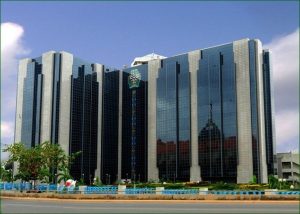
FX DERIVATIVES FALL 45.19% ON WEAK DEMAND
Activity in the Nigerian foreign exchange market slowed down significantly during the week ended 10 July 2026, as total turnover across the Spot and Derivatives markets plummeted by nearly half. According to the latest weekly data released by FMDQ Exchange, the market recorded a total turnover of $1,631.12m. This represents a sharp 46.57% contraction, amounting to a loss of $1,421.89m in liquidity, compared to the $3,053.01m reported in the preceding week ended 3 July 2026. The bearish sentiment trickled heavily into the hedging segment, where derivative instruments faced steep declines. “The week-on-week decrease in total turnover was jointly driven by the 46.62% ($1,379.66m) decrease in FX Spot transactions… and the 45.19% ($42.23m) decrease in FX Derivatives transactions for the week-ended 10 July 2026,” FMDQ noted in its weekly commentary. A closer look at the derivatives segment reveals that the slump was entirely a reflection of cooling corporate appetite for future value contracts, with other derivative classes failing to post any activity. “The WoW decrease in FX Derivatives turnover was driven by the 45.19% ($42.23m) decrease in FX Forwards turnover,” the report further detailed, highlighting that Exchange-Traded FX Futures remained entirely flat at $0.00m for both weeks. As a result of the broad market slowdown, daily average liquidity also took a major hit, as the daily average for total turnover slipped from $610.60m to just $326.22m during the week under review. Despite the severe drop in volume, FX Spot transactions continued to hold the lion’s share of the market, accounting for 96.86% of total turnover, while FX Forwards made up the remaining 3.14%.

HIGH BOND YIELDS TO PERSIST UNTIL Q4 AMID INFLATION
Fixed-income investors in Nigeria have been advised to brace themselves for a prolonged period of high interest rates, as financial experts project that any meaningful reversal in Federal Government bond yields is highly unlikely before the final quarter of 2026. According to the latest macroeconomic insights, the domestic debt market will remain heavily skewed towards elevated yields due to a combination of rigid macroeconomic pressures, strict regulatory adjustments, and ongoing volatility in both the domestic and global inflation landscapes. For institutional fund managers and retail investors alike, this high-yield environment presents a double-edged sword: highly attractive nominal returns on short-term instruments, juxtaposed against severe inflationary erosion that continues to challenge positive real yields. As the macroeconomic landscape shifts, navigating the fixed-income curve has become a test of tactical patience. According to a comprehensive macroeconomic report released by Coronation Asset Management, the domestic debt market is expected to maintain its elevated posture for the foreseeable future. The asset management firm noted that market analysts predict any significant reversal in Federal Government bond yields is highly unlikely to occur before the final quarter of 2026, meaning fixed-income investors should brace for an extended cycle of high borrowing costs. This environment is deeply tied to the Central Bank of Nigeria’s sustained hawkish monetary stance. Over the past several quarters, the apex bank has aggressively utilised orthodox monetary policy tools to combat money supply growth, deploying frequent Open Market Operations and expanding treasury bill auction volumes to mop up excess banking system liquidity. Concurrently, the Debt Management Office faces intense pressure to plug fiscal deficits by meeting the Federal Government’s substantial domestic funding requirements. This relentless supply of government paper continues to push sovereign borrowing costs upward. Coronation analysts concluded that until headline inflation establishes a clear downward trajectory and fiscal borrowing appetites normalise, the fixed-income yield curve will firmly favour the buyer well into the latter half of the year. The broader global backdrop provides a volatile, mixed canvas for domestic policy trackers trying to gauge imported inflation. A June 2026 macroeconomic update from Meristem Research highlighted temporary international relief earlier in the season as global energy costs briefly eased following a critical United States-Iran ceasefire. This diplomatic breakthrough pushed Brent crude prices down by 17.94 per cent month-on-month to $84.34 per barrel in June. The ripple effect was immediately visible in the Euro Area, where inflation slowed to 2.80 per cent year-on-year in June, aided by a drop in energy inflation to 8.70 per cent. However, Meristem analysts warned that this relief might be short-lived for developing economies like Nigeria. The sudden re-escalation of the US-Iran conflict has already reignited upward pressure on global oil prices, threatening a sharp reversal of June’s global disinflationary progress. With geopolitical flashpoints flaring up again, global energy-driven inflation risks are compounding, making it increasingly difficult for central banks worldwide to pivot towards looser monetary policy. Locally, Nigeria’s internal battle against rising prices remains fierce, deeply complicating the interest rate outlook. Historical data released by the National Bureau of Statistics showed that Nigeria’s headline inflation rose 15.93 per cent year-on-year in May 2026, marking its third consecutive monthly increase. This uptick was propelled by food inflation accelerating 16.96 per cent year-on-year and core inflation climbing 16.82 per cent year-on-year, driven by high domestic transportation costs and structural supply chain disruptions affecting major market staples like tomatoes, yam tubers, and onions.
NIGERIAN EQUITIES EMERGE WORLD’S TOP DOLLAR-RETURN STOCK MARKET
Nigerian equities have overtaken South Korea’s stock market to become the world’s best-performing equity market in dollar terms this year, buoyed by sweeping economic reforms, a stronger naira and improving foreign exchange liquidity, according to a new report by Bloomberg. The global financial news service reported on Thursday that Nigeria’s benchmark stock index has returned 67 per cent in dollar terms so far this year, edging past South Korea’s Kospi index, which posted a 66 per cent return before sliding into a technical bear market. Citing data from 92 global stock exchanges tracked by Bloomberg, the report said Nigeria had emerged as the top-performing equity market worldwide, ahead of South Korea, Ghana and Taiwan. According to the report, “Nigerian equities have overtaken South Korea’s to hand investors the highest dollar-based returns this year, as souring sentiment on artificial-intelligence stocks pushes the Asian nation’s world-beating rally into bear territory. “The benchmark index in Africa’s largest oil producer has returned 67 per cent in dollar terms this year, outpacing the 66 per cent gain for the Kospi index, according to data from the 92 global stock exchanges tracked by Bloomberg.” The report explained that while South Korea’s market had lost momentum amid concerns over the sustainability of the global artificial intelligence boom, Nigeria’s market had continued to attract investors on the back of improving macroeconomic fundamentals. Bloomberg stated that, “The Kospi index entered a technical bear market this week after declining 22 per cent from its June 19 peak as investors increasingly questioned whether the rapid surge in artificial intelligence-related stocks could be sustained.” It added that the weakening of South Korea’s currency had also weighed on investor returns. According to the report, “The South Korean won has depreciated by about five per cent against the dollar since the beginning of the year, making it the fourth-worst-performing currency in Asia.” In contrast, Bloomberg noted that Nigeria’s economic reforms have significantly improved investor sentiment. It said, “Nigerian equities have rallied this year on the back of macroeconomic reforms, higher international crude oil prices, and improved foreign exchange liquidity. Nigerian stocks have rallied this year on macroeconomic reforms, higher oil prices and better foreign exchange supply, with the naira gaining 4 per cent since January.” The report observed that financial institutions listed on the Nigerian Exchange had played a leading role in driving the market’s exceptional performance. Financial services firms on the Lagos-based bourse have led gains in the benchmark index. Fortis Global Insurance Plc, an insurer, has delivered outsized returns of 1,400 per cent in dollar terms. Unlike the Kospi, companies listed on Nigeria’s stock exchange are not directly exposed to artificial intelligence. It quoted a Lagos-based trader at StoneX Nigeria Financial Limited, Damilola Okeleye, as saying investor confidence had been strengthened by ongoing economic reforms and expectations surrounding a potential listing of the Dangote Petroleum Refinery. Okeleye said, “Unlike the Kospi, companies listed on Nigeria’s stock exchange are not directly exposed to artificial intelligence. Investors buying Nigerian equities are attracted by different factors. Nigeria’s economic reforms and the potential listing of the continent’s largest crude processor, Dangote Petroleum Refinery and Petrochemicals FZE, have been a strong driving force behind the gains recorded so far this year.” Bloomberg noted that expectations surrounding the refinery’s possible listing had added to optimism in the domestic capital market, with investors anticipating that such a move could significantly deepen market capitalisation and attract additional foreign portfolio inflows. The latest ranking underscores the dramatic turnaround in Nigeria’s financial markets following a series of reforms introduced by President Bola Tinubu’s administration. Since 2023, the government has implemented major policy changes, including the unification of foreign exchange windows, the removal of petrol subsidies and broader fiscal and monetary reforms aimed at restoring investor confidence. While the reforms initially triggered high inflation and currency volatility, recent improvements in foreign exchange liquidity, relative stability in the naira and stronger oil prices have encouraged renewed interest from both domestic and foreign investors. Sustained macroeconomic stability and additional high-profile listings, including that of the Dangote Refinery, could further strengthen Nigeria’s position among emerging market investment destinations.