












CAPITALDIGEST DAILYNEWS, 13/04/2026
April 13, 2026
NNPC REVENUE HITS N2.68TN DESPITE FEBRUARY OIL OUTPUT DROP
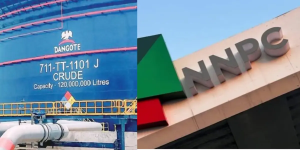
The Nigerian National Petroleum Company Limited has announced a revenue collection of N2.68 trillion from its economic activities in February 2026, even as crude oil production declined to 1.51 million barrels per day amid pipeline outages and operational setbacks. The company reported a 4.2 per cent increase in revenue for its February 2026 operations, rising to N2.68tn from N2.57tn recorded in January. However, the company’s profit after tax plunged by 64.67 per cent to N136bn in February, down from N385bn posted in the previous month. Details from the company’s February monthly report summary released on Saturday showed that profit after tax stood at N136bn, while statutory payments to the Federal Government rose to N1.804tn, underlining the firm’s continued fiscal importance despite production headwinds. The sharp decline in profit comes amid increased remittances to the Federation following a presidential directive removing the 30 per cent retention on profit from oil and gas. As a result, NNPC’s remittance surged by 148.48 per cent, climbing from N726bn in January to N1.8tn in February. The report indicated that crude oil and condensate production dropped from 1.64mbpd in January to 1.51mbpd in February, reflecting disruptions across key upstream assets. A breakdown showed that crude oil output stood at 1.27mbpd, while condensate contributed 0.24mbpd during the month under review. The national oil company attributed the decline to multiple operational challenges, including outages on critical export infrastructure. It stated, “February production performance was impacted by the combined effect of the outage of the Trans Forcados Pipeline due to integrity issues, start-up challenges of Stardeep Agbami GTC 2 and 3 following completion of turnaround maintenance, delayed completion of the Sterling Oguali flow station, and production ramp-up constraints from Enyie wells due to sludge management issues, among other operational challenges.” Despite the dip in crude output, gas production remained relatively strong, rising to 7,458 million standard cubic feet per day, one of the highest levels recorded in recent months. Gas sales, however, stood at 4,893mmscf/d on a two-month lag basis, slightly below the peak levels recorded in mid-2025. The report also showed that total crude oil and condensate sales for February stood at 23.08 million barrels, lower than the 28.64 million barrels recorded in October 2025, reflecting both production and evacuation constraints. On the downstream side, the availability of Premium Motor Spirit at NNPC Retail Limited stations dropped to 58 per cent, raising concerns about fuel distribution efficiency and possible supply tightness across parts of the country. In terms of infrastructure, the company reported steady progress on key gas pipeline projects critical to Nigeria’s domestic gas expansion strategy. It noted that the Ajaokuta-Kaduna-Kano gas pipeline had reached 93 per cent completion, with ongoing construction and installation works aimed at delivering early gas supply to Abuja and other northern corridors. Similarly, the Obiafu-Obrikom-Oben gas pipeline project recorded 96 per cent completion, with drilling operations continuing in collaboration with stakeholders. The report stated, “We will continue to strengthen production resilience and restore output through improved asset reliability, faster resolution of evacuation constraints, timely delivery of critical infrastructure, and deeper collaboration with operators and other stakeholders to drive disciplined and accountable production recovery across key assets.” Upstream pipeline availability was put at 93 per cent, reflecting relative stability in parts of the network despite the disruptions recorded during the month. Nigeria has struggled to consistently meet its crude oil production targets in recent years due to a mix of pipeline vandalism, oil theft, ageing infrastructure, and delayed upstream investments. The Trans Forcados Pipeline, one of the country’s major crude evacuation routes, has historically been prone to outages, often leading to significant production losses whenever disruptions occur. At the same time, the Federal Government has increasingly relied on NNPC Limited as a major revenue source, especially amid fiscal pressures and foreign exchange constraints. The company’s strong revenue and statutory remittances in February highlight its critical role in supporting government finances, even as operational inefficiencies continue to weigh on production. Sustained improvements in pipeline security, infrastructure reliability, and timely project delivery, particularly on strategic gas pipelines like AKK and OB3, will be crucial to unlocking Nigeria’s full oil and gas potential and stabilising energy supply across the country. The report noted that all figures remain provisional and subject to reconciliation with relevant stakeholders.
BANKING STOCKS DRIVE 0.28% NGX GROWTH
The Nigerian equities market closed on a positive note during Thursday’s trading session as a late-session rally in the banking sector pushed the market capitalisation up by N370bn. The All-Share Index grew by 0.28 per cent, gaining 576.27 points to settle at 203,161.81 points, while the total market value of listed equities rose to N130.774tn. This upturn was primarily driven by price appreciation in medium and large-cap stocks, most notably Nestle Nigeria, Aradel Holdings, Nigerian Exchange Group, Zenith Bank, and Lafarge Africa. Despite the gains in the headline index, market breadth remained perfectly balanced with 30 advancers matched by 30 decliners. Trans-Nationwide Express emerged as the top performer of the day with a 9.94 per cent price surge to close at N3.43 per share, followed closely by International Energy Insurance, which gained 9.84 per cent to close at N3.46. Guinea Insurance, Regency Alliance Insurance, and Wapic Insurance also featured prominently on the gainers’ On the flip side, LivingTrust Mortgage Bank led the laggards after shedding 10 per cent to close at N4.32 per share. Other significant decliners included R.T. Briscoe, which dropped by 9.94 per cent, and Tantalizers, which fell 9.55 per cent. Livestock Feeds and VFD Group rounded out the losers’ chart with depreciations of 9.40 per cent and 8.85 per cent, respectively. Trading activity saw a noticeable pullback as total volume decreased by 35.17 per cent to 652.863 million units, valued at N39.820bn and exchanged in 51,101 deals. The banking sector continued to dominate the activity chart, led by Access Holdings with a turnover of 121.702 million shares valued at N3.165bn. Guaranty Trust Holding Company followed with 62.274 million shares worth N8.096bn, while Chams Holding Company, Zenith Bank, and United Bank for Africa also recorded high transaction volumes.list with respective appreciations of 9.52 per cent, 9.18 per cent, and 9.09 per cent. Providing a forecast for the next session, analysts at Cowry Assets Management Limited noted that the market is expected to face mild headwinds on Friday as end-of-week profit-taking activities begin to weigh on investor sentiment.

FGN UNVEILS SAVINGS BONDS
The Debt Management Office has officially opened subscriptions for the April 2026 Federal Government of Nigeria Savings Bonds, offering retail investors a high-yield opportunity to grow their wealth in a secure environment. The latest issuance offers interest rates of up to 14.082 per cent per annum, underscoring the government’s commitment to delivering stable investment opportunities amid a shifting macroeconomic environment. According to the announcement made on Tuesday, the offer consists of two distinct tenors tailored to different investor needs. The first is a two-year bond due on 15 April 2028, which carries an interest rate of 13.082 per cent per annum. For those seeking higher returns, the three-year bond due on 15 April 2029 offers a maximum rate of 14.082 per cent per annum. The DMO emphasised the accessibility of the instruments, noting that they are designed to encourage a savings culture among Nigerians across all income levels. The bonds are priced at N1,000 per unit, with a minimum subscription requirement of N5,000 and a maximum limit of N50m. “The move aims to provide Nigerians with a secure investment option amid the country’s evolving interest rate environment. Backed by the full faith and credit of the Federal Government, these instruments are considered low-risk,” the DMO stated in the issuance notice. Subscription for the bonds opened on 7 April and is scheduled to close on 10 April 2026, with the settlement date set for 15 April. Investors are expected to receive their interest payments quarterly, with disbursements scheduled for 15 July, 15 October, 15 January, and 15 April throughout the duration of the bond. Beyond the attractive yields, the DMO highlighted that the bonds serve as a strategic tool for deepening the domestic debt market. “In addition to competitive returns, FGN Savings Bonds offer tax and regulatory benefits, qualifying as approved securities for trustees and as liquid assets for banks,” the agency added. For investors seeking flexibility, the bonds will be listed on the Nigerian Exchange, allowing for secondary market trading. This feature ensures that subscribers can liquidate their positions, if necessary, before the maturity date, adding a layer of liquidity to the safety of the asset. As the subscription window remains open for only four days, financial analysts expect a strong turnout from retail investors looking for a “safe avenue to grow their savings while benefiting from one of the most attractive government-backed rates in recent times”.
‘NIGERIA’S EXPORT SURGE SIGNALS MARITIME SECTOR GROWTH’
The Chief Executive Officer of APM Terminals Nigeria, Frederik Klinke, has said that Nigeria’s maritime sector is demonstrating remarkable resilience and momentum, with a dramatic surge in export volumes positioning the country as an emerging force in global trade. According to a statement on Thursday, Klinke stated this in Abuja while speaking during the opening of the Blue Economy Investment Summit. He highlighted a significant increase in export activity, attributing it to Nigeria’s strategic reforms and investments, adding that they are beginning to yield tangible results even as the global maritime industry faces mounting uncertainty. Klinke noted that while international shipping continues to grapple with disruptions driven by geopolitical tensions and shifting trade routes, “Nigeria has maintained forward progress, particularly in its push to expand non-oil exports.” He referenced the Nigerian Ports Authority’s third quarter 2025 report, stressing that the report showed that export-laden container volumes surged by an extraordinary 1,085 per cent, underscoring the scale of transformation underway within the country’s trade ecosystem. Klinke attributed the growth to “deliberate policy measures and operational improvements aimed at enhancing efficiency and reducing bottlenecks,” adding that chief among these is the rollout of the National Single Window, a centralised digital platform designed to streamline import and export processes. “The initiative is expected to cut cargo clearance timelines dramatically, from several weeks to as little as 48 hours, thereby improving Nigeria’s competitiveness in global markets,” he stated. Despite persistent global challenges, including rising freight costs, longer shipping routes, and increased insurance premiums, Klinke emphasised that Nigeria’s export expansion reflects a sector responding positively to reform. Nevertheless, he warned that without sustained intervention and coordination, external pressures could still undermine the country’s diversification agenda. Klinke said that the terminal has aligned its operations to support and capitalise on the upward trend in exports. “The company has invested more than $600m in its Nigerian terminals, focusing on efficiency, sustainability, and infrastructure upgrades to facilitate smoother cargo movement. These investments are already contributing to export growth,” he stated. Klinke pointed to targeted operational strategies such as the establishment of a dedicated Container Freight Station at Onne, the introduction of exclusive export lanes at Apapa to reduce delays, and the launch of a thrice-weekly rail service linking Apapa Port to Moniya in Ibadan, stressing that the rail connection is improving the reliability and speed of moving export cargo from inland production hubs to the ports. He stressed that such measures are critical in sustaining the current momentum in export volumes, particularly at a time when trade patterns are rapidly evolving. “With East–West Africa trade volumes having risen by more than 30 per cent in 2025, now the fastest-growing container trade corridor globally, Nigeria is well positioned to capture a larger share of this growth if it continues to strengthen its maritime infrastructure and logistics systems,” Klinke continued. Klinke also underscored the importance of maintaining consistent regulatory reforms and advancing port modernisation to support export expansion. He called for deeper channel drafts to accommodate larger vessels, full integration of digital systems across the port ecosystem, and improved multimodal transport networks to ensure seamless cargo movement. According to him, reducing cargo dwell times and simplifying documentation processes will not only lower the cost of doing business but also enhance Nigeria’s credibility in international trade, further boosting export competitiveness. He concluded that Nigeria’s maritime economy is at a critical juncture, where sustained alignment between policy, infrastructure investment, and execution could unlock even greater export growth. “With the private sector ready to invest, he said the priority must be to ensure predictable regulations, accelerated digitisation, and efficient trade corridors that enable Nigeria to fully realise its export potential and establish itself as a leading maritime hub in West Africa,” he concluded.

CBN TIGHTENS OVERSIGHT AS DIGITAL FINANCE EXPANDS
The Central Bank of Nigeria is stepping up efforts to reinforce confidence in the country’s financial system, introducing new measures to strengthen oversight of virtual asset operators and digital financial platforms in response to the rapid growth of technology-driven finance. The move marks a significant moment in Nigeria’s financial evolution, as regulators attempt to keep pace with a fast-changing ecosystem where mobile apps, online platforms, and digital currencies are increasingly shaping how money is sent, received, and invested. For millions of Nigerians—especially young people and small business owners—digital finance has become an essential part of daily life. Under the leadership of its Governor, Olayemi Cardoso, the apex bank’s approach reflects a broader strategy aimed at safeguarding financial system stability while ensuring that more Nigerians can access formal financial services. As adoption rises, the challenge for regulators has become not just enabling innovation, but ensuring it operates within a secure and transparent framework. Across the country, digital finance has witnessed remarkable expansion. Individuals and businesses now rely heavily on fintech platforms to carry out transactions that were once dependent on traditional banking channels. From paying for goods and services to transferring funds across borders, digital tools have made financial transactions faster and more convenient. Virtual assets, including cryptocurrencies and digital payment platforms, have grown in popularity, particularly among younger Nigerians, freelancers, and entrepreneurs seeking flexible ways to manage money. These tools offer alternatives to conventional banking systems, often eliminating delays and reducing transaction costs. Unlike traditional financial systems, where transactions are processed through banks and other regulated institutions, virtual asset platforms enable users to interact directly using mobile applications and online systems. This has opened up new possibilities for cross-border trade and remote work, allowing Nigerians to connect with global markets more easily. A small business owner in Lagos, for instance, can receive payment from an international customer within minutes using digital platforms, bypassing the delays commonly associated with bank transfers. Similarly, freelancers and remote workers increasingly depend on these platforms to receive payments from clients abroad, making them a critical part of Nigeria’s emerging digital economy. Yet, the very features that make these systems efficient also present new risks. Because many transactions occur online and often span multiple jurisdictions, they can be difficult to monitor without effective regulatory systems. This raises concerns about the potential misuse of digital platforms for illicit activities such as money laundering, tax evasion, and the financing of criminal operations. It is this balance between opportunity and risk that has placed virtual assets at the centre of regulatory attention, not only in Nigeria but across the world. For the Central Bank of Nigeria, the message is clear: innovation will continue to be supported, but it must be accompanied by strong safeguards that protect the financial system and the broader economy. As the country navigates the opportunities and complexities of a digital financial landscape, the need for a system that is both inclusive and secure has become increasingly important. Cardoso emphasised that maintaining effective oversight goes beyond simply meeting international benchmarks. It is also about building a stable foundation that can sustain long-term economic growth and inspire confidence among investors and financial institutions. Industry observers believe that insights from the apex bank’s latest initiative could play a crucial role in shaping the next phase of regulation for virtual assets in Nigeria. “By engaging directly with selected companies, regulators are expected to develop a deeper understanding of how the sector operates and where vulnerabilities may exist,” a Lagos-based analyst, Daniel Anozie, who is familiar with the development, stated. Another economist from Abuja, Okpara Kingsley, while reacting to the development, said, “There are growing expectations that this engagement will lead to clearer operational guidelines and possibly the introduction of a formal licensing framework for virtual asset service providers. “Such a framework would outline how these companies are expected to operate, the standards they must meet, and the level of oversight required to ensure compliance.” The analysts also suggested that the initiative could pave the way for broader regulations covering cryptocurrency transactions, cross-border digital payments, and the integration of virtual asset platforms into the mainstream banking system. As digital finance continues to evolve, traditional banks and fintech companies are likely to collaborate more closely, creating a more interconnected financial ecosystem. This convergence could combine the agility of fintech innovation with the stability and trust associated with established financial institutions. At the same time, regulators may adopt more advanced digital tools to enhance oversight. Real-time transaction monitoring, improved reporting systems, and stronger cooperation with international partners are among the measures being considered to strengthen the regulatory framework. The rapid pace of growth, however, has not come without concerns. Regulators are increasingly wary of the potential for abuse, particularly given the cross-border nature of many digital transactions. Without robust monitoring systems, these platforms could be exploited for money laundering, terrorism financing, and other forms of financial crime. To address these challenges, the Central Bank of Nigeria has introduced a new Anti-Money Laundering, Counter-Financing of Terrorism, and Counter-Proliferation Financing supervision pilot programme focused on Virtual Asset Service Providers. According to the apex bank, the initiative is part of a wider effort to enhance financial system stability and ensure that innovation does not undermine regulatory control. “This pilot forms part of the Bank’s risk-based supervisory programme and supports ongoing efforts to strengthen financial system stability and market integrity,” the bank said in a statement recently. The regulator clarified that the programme does not constitute a new law or replace existing rules governing virtual assets in Nigeria. Instead, it is designed as a structured engagement between the Central Bank and selected companies to better understand the sector. “This pilot does not alter, replace, or supersede the existing regulatory framework governing virtual assets in Nigeria,” the bank added. At its core, the initiative seeks to provide regulators with detailed insights into how digital finance companies operate. This includes examining their business models, customer onboarding processes, and transaction systems.