












CAPITALDIGEST DAILYNEWS, 08/06/2026
June 8, 2026
PETROL PRICE SOARS 643% IN THREE YEARS
The price of Premium Motor Spirit (petrol) jumped from N175 to N1,300 between May 2023 and May 2026, representing approximately a 643 per cent price increase in three years, The PUNCH reports. Findings showed that the surge in petrol prices was triggered by the removal of subsidies by President Bola Tinubu immediately after he was sworn in on May 29, 2023. Also, the devaluation of the naira compounded the situation, causing the then-imported product to rise beyond the reach of many Nigerians. Three years later, the cost of a litre of petrol jumped at filling stations, ranging between N1,300 and N1,400, depending on the location. The current price surge from about N800 some months ago to N1,300 was occasioned by Middle East tensions, which led to global oil disruptions due to the closure of the Strait of Hormuz. Recall that immediately after Tinubu took the oath of office, he quickly announced that “the fuel subsidy is gone.” This led to an immediate rise in petrol prices from N175 or N200 to over N500 per litre. The Nigerian National Petroleum Company Limited, which was the sole importer of petrol, led the charge by raising its pump prices. Remarkably, Tinubu had hiked the fuel price without recourse to the promise he made in Abeokuta during his campaign that he would bring down the price of petrol. With the removal of fuel subsidies, the price went up, and this led to a rise in inflation across the country. But Nigerians were persuaded by the President that there would be no gain without pain. Also, recall that when the government floated the exchange rate in June 2023, the cost of petrol rose above N1,000. However, the NNPC quickly introduced what the International Monetary Fund tagged an “implicit subsidy” payment through the back door. While the landing cost of petrol was around N1,200, the NNPC sold it at half the price based on the promise of the Federal Government to pay the shortfall, or what was tagged “under-recovery.” For close to a year, the NNPC sold the product at about N600 per litre, denying claims that it was paying subsidies. However, in 2024, the state oil firm admitted to selling below the cost price. The former Chief Financial Officer of the NNPC, Umar Ajiya, stated, “In the last eight to nine years… what has been happening is that we have been importing PMS, which has been landing at a specific cost price, and the government tells us to sell it at half price. So, the difference between the landing price and that half price is a shortfall…”Following the admission, fuel prices rose to as high as N1,080. This coincided with the unveiling of the Dangote Petroleum Refinery’s PMS. The Dangote refinery triggered a price war in the petroleum market towards the end of 2024 when it started reducing petrol prices.

BANKS FACE N100M PENALTY FOR FOREX VIOLATIONS
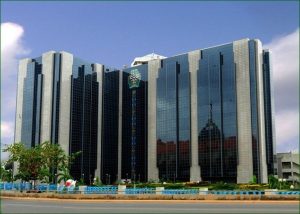
The Central Bank of Nigeria has set a N100m penalty for banks that process foreign exchange transactions without adequate documentation as part of a sweeping compliance regime unveiled in its newly released Foreign Exchange Manual. Under the offences and sanctions section of the fourth edition of the manual, the apex bank stated, “Authorised dealers shall pay N100m in addition to N10m per transaction” for consummating foreign exchange transactions with inadequate documentation. The sanction forms part of a broader framework aimed at tightening oversight of Nigeria’s foreign exchange market, strengthening compliance standards, and curbing abuses among authorised dealers and other market participants. The revised manual, issued by the CBN’s Trade and Exchange Department in May 2026, is the first major update since 2017. It serves as a regulatory guide for banks, authorised buyers, exporters, investors, and members of the public participating in foreign exchange transactions. According to the CBN, the manual seeks to promote transparency in foreign exchange inflows and outflows, establish clear documentation and reporting requirements, strengthen enforcement mechanisms, and support national economic priorities by ensuring foreign exchange is channelled to productive uses. Beyond the N100m sanction, the manual introduces a range of penalties for violations in the Nigerian Foreign Exchange Market. Banks that exceed their approved Net Open Position limits face escalating punishments. A first offender will receive a warning letter, while a second offence attracts a 10-working-day suspension from the foreign exchange market. A third violation will result in a 90-day suspension from the market. The apex bank also tightened reporting obligations for authorised dealers. Banks are required to submit daily returns on foreign exchange transactions by 10 a.m. for the preceding day and monthly returns within five working days after month-end. Failure to comply attracts sanctions. Under the new rules, late rendition of returns will attract a penalty of N500,000, while non-rendition carries a minimum fine of N5m and an additional N500,000 for every day the violation continues. The CBN further warned banks against reallocating foreign exchange funds without regulatory approval, stating that such actions could attract monetary fines, suspension of authorised dealership licences for at least six months, or outright licence revocation, depending on the severity of the breach. Import-related transactions also received significant attention in the revised framework. The manual requires importers to submit Exchange Control Documents within 90 days of negotiating shipping documents with overseas correspondent banks. Importers who fail to comply will be restricted from conducting valid and non-valid foreign exchange transactions, including the processing of Form M applications. First-time offenders will face a 90-day restriction, rising to 180 days for a second offence and 360 days for a third. A fourth violation will attract a complete ban from the foreign exchange market. Where banks fail to report such defaults, they risk sanctions, including a warning and a N10m penalty for each affected transaction. The manual also imposes stricter obligations on exporters. For non-oil exports, proceeds must be repatriated and credited to exporters’ domiciliary accounts within 180 days of shipment, while oil and gas export proceeds must be received within 90 days. Exporters that fail to repatriate proceeds within the stipulated period will pay a penalty equivalent to one per cent of the naira value of the outstanding proceeds, while banks that fail to ensure compliance will be fined 0.5 per cent of the outstanding amount. The manual further empowers the CBN to sanction banks for late approvals of export documentation, non-remittance of export supervision levies, and failure to render returns on export proceeds. In addition to the sanctions, the revised framework introduces several operational reforms designed to improve market efficiency. Among the changes are an increase in allowable advance payment for imports from 15 per cent to 30 per cent, the introduction of a permissible import shortfall or excess margin of plus or minus 10 per cent of the Cost and Freight value on Form M, and the removal of processing fees for Form NXP used for exports. The CBN also introduced provisions covering service exports, technology-related remittances, Pan-African Payment and Settlement System transactions, non-resident investment accounts, and tuition fee remittances of up to $25,000 per semester for undergraduate and postgraduate studies abroad. The manual additionally removed the mandatory requirement for Form A in remittances funded through ordinary domiciliary accounts, although banks are still required to verify the legitimacy and purpose of such transactions. The apex bank said the reforms were developed after extensive consultations with banks, exporters, corporates, regulators, and development partners and are intended to support a transparent, rules-based, and market-oriented foreign exchange system. According to the CBN, the revised manual is expected to improve compliance, reduce transaction bottlenecks, deepen market confidence, attract investment inflows, and strengthen the integrity of Nigeria’s foreign exchange market. The Governor of the CBN, Mr Olayemi Cardoso, earlier said the initiative reflected the apex bank’s commitment to strengthening macroeconomic stability and modernising Nigeria’s foreign exchange administration. He said the revised manual became necessary following evolving global economic conditions, domestic structural adjustments, and ongoing reforms in Nigeria’s foreign exchange market. The Deputy Governor, Corporate Services Directorate of the CBN, Dr Muhammad Abdullahi, said the revised manual formed part of broader reforms initiated under Cardoso’s leadership to restore confidence, improve transparency, deepen liquidity, and strengthen market efficiency. He said the review was undertaken to align Nigeria’s foreign exchange framework with current market realities and international best practices. “Our goal is to reduce transaction frictions, improve processing timelines, deepen market confidence, encourage formal market participation, and create a more seamless and efficient experience for legitimate users of Nigeria’s foreign exchange market,” he said.
NGX SHEDS N581BN AS MARKET SLUMP ENTERS FOURTH DAY
The Nigerian equities market closed Thursday’s session in negative territory, extending its bearish run to the fourth consecutive trading day as profit-taking in heavy and mid-cap equities dragged down key performance indicators. At the close of trading, the overall market capitalisation value shed N581bn or 0.37 per cent to seal the day at N155.359tn, down from N155.940tn recorded in the previous session. Similarly, the All-Share Index retreated by 905.30 absolute points, representing a decline of 0.37 per cent, to close at 242,227.31 points. The negative outing was largely driven by price depreciation in large and medium-capitalised stocks, including Aradel Holdings, UACN, Stanbic IBTC Holdings, Eterna, and Transnational Corporation. Market breadth closed negative as 30 decliners outpaced 24 advancers, reflecting dominant bearish sentiments. On the laggards’ log, McNichols led the losers’ chart with a maximum price plunge of 10 per cent to close at N7.74 per share. Associated Bus Company followed closely, declining 9.88 per cent to finish at N6.20 per share, while Eterna lost 9.85 per cent to close at N29.75 per share. Energy giant Aradel Holdings also suffered a 9.51 per cent drop to close at N1,749.90 per share, while NPF Microfinance Bank slipped 8.45 per cent to settle at N5.20 per share. Conversely, International Energy Insurance recorded the highest price gain, rising 10 per cent to close at N6.60 per share. Omatek Ventures followed on the gainers’ log with a 9.73 per cent increase to close at N2.03, while Ellah Lakes and Abbey Mortgage Bank both appreciated 9.68 per cent to close at N8.50 per share. Cutix also registered a 9.66 per cent gain to close at N3.18 per share. Activity metrics weakened as total volume traded plummeted 43.4 per cent to 522.28m units, valued at N24.11bn, and exchanged in 53,613 deals. Transactions in the shares of Access Holdings topped the volume-driven activity chart with 109.719 million shares valued at N2.617m. FCMB Group followed with 34.599m shares worth N384.162m, while Nigerian Exchange Group transacted 28.045m shares valued at N3.889bn. Zenith Bank traded 26.937m shares valued at N3.318bn, while Sterling Financial Holdings Company filled the top-five volume spot with a turnover of 22.492 million shares worth N176.098m.
BANKS: BAD LOANS RISE AFTER CBN ENDS FORBEARANCE
Bad loans in Nigeria’s banking sector rose to 8.03 per cent in January 2026, seven months after the Central Bank of Nigeria moved to end regulatory forbearance granted to banks on some credit exposures and single obligor limit breaches. The figure, contained in the CBN’s January 2026 Economic Report, showed that the industry’s non-performing loans ratio rose by 0.52 percentage point from 7.51 per cent in December 2025. It also remained above the CBN’s prudential threshold of five per cent, indicating a further deterioration in asset quality across the banking industry despite the apex bank’s insistence that the sector remained resilient. The report said, “Following the bank’s loan reclassification after the withdrawal of forbearance, the non-performing loans ratio rose by 0.52 percentage point to 8.03 per cent compared with the level in the preceding period and was above the 5.00 per cent prudential threshold.” The development came after the CBN, in June 2025, directed banks still benefiting from regulatory forbearance on credit exposures or single obligor limit waivers to suspend dividend payments, defer bonuses to directors and senior management, and halt fresh investments in foreign subsidiaries or offshore ventures. The regulator said the measure was aimed at strengthening capital buffers, improving balance sheet resilience, and forcing affected banks to retain earnings while exiting temporary regulatory reliefs. In a separate transition measure, the apex bank also moved to terminate COVID-19-related regulatory forbearance and waivers on single obligor limits effective June 30, 2025, requiring banks to align affected credit exposures with existing prudential guidelines. Regulatory forbearance had allowed banks to restructure loans affected by the pandemic without immediately classifying them as non-performing. With the withdrawal of the measure, a number of previously restructured facilities have now crystallised as bad loans, pushing the industry ratio above the regulatory ceiling. The latest NPL reading suggests that the clean-up is beginning to expose weaker loans that had previously been cushioned by regulatory reliefs. Once those loans were reclassified, banks had to recognise more credit weakness on their books, pushing the industry’s bad loan ratio further above the regulatory limit. In its macroeconomic outlook report, the CBN warned that a “significant rise in non-performing loans could impair asset quality and weaken banks’ balance sheets, thereby posing systemic risk,” showing the importance of monitoring credit risk and sustaining prudential discipline. It also recommended deepening “the operational integration of the GSI framework across all financial institutions to enhance loan recovery efficiency and credit discipline.” The CBN also recommended strengthening credit discipline and reducing non-performing loans by fully integrating the Global Standing Instruction framework to boost loan recovery efficiency. Earlier, in February 2025, the apex bank ordered bank directors with non-performing insider-related loans to step down immediately. Insider loans refer to loans granted by a bank to its own executives, directors, employees, major shareholders, or related parties. According to the CBN, the decision aims to strengthen corporate governance and improve risk management in the banking sector. To minimise financial risks, the apex bank instructed banks to recover debts through collateral enforcement and seize the shareholdings of affected directors. “Directors with non-performing insider-related facilities are required to step down immediately from the board, while the bank should commence immediate remediation of the loans through the recovery of the collateral, including the shareholdings of the affected directors,” the circular read. More recently, the CBN directed banks to deny certain banking services and additional credit facilities to large borrowers with non-performing loans as part of measures to strengthen credit discipline in the banking sector. The directive was contained in a letter dated March 12, 2026, and signed by the Director of Banking Supervision, Dr. Muhammad Abdullahi. Under the directive, borrowers whose loan facilities have been classified as non-performing and recorded in the Credit Risk Management System or any licensed private credit bureau will no longer be eligible to obtain additional credit from banks. The apex bank said the measure was designed to reduce risks posed by large borrowers whose defaults could threaten financial system stability. “Effective immediately, all financial institutions shall: Restrict further credit access: Any large-ticket obligor with a non-performing facility recorded in the CRMS and/or any licensed private credit bureau shall not be granted additional credit facilities. “For the purpose of this restriction, credit facilities include loans and other forms of direct credit. In addition, such obligors shall not be granted banking facilities or contingent liabilities such as bankers’ confirmations, letters of credit, performance bonds, or advance payment guarantees,” the bank said. The CBN explained that the restrictions apply to borrowers classified as large-ticket obligors under the prudential guidelines for deposit money banks. According to the regulator, such borrowers include individuals or companies whose combined exposure across banks exceeds the Single Obligor Limit or whose financial obligations could significantly affect a bank’s capital adequacy ratio. The bank also directed financial institutions to obtain additional realisable collateral from affected borrowers to adequately secure existing loan exposures. It said the determination of affected borrowers would rely on information captured in the Credit Risk Management System and reports from licensed private credit bureaus. However, the CBN maintained that the wider banking system remained stable. The report showed that the industry’s liquidity ratio improved to 63.38 per cent in January from 57.22 per cent in December, staying well above the 30 per cent prudential minimum. The capital adequacy ratio stood at 12.05 per cent, lower than 12.35 per cent in December, but still above the 10 per cent regulatory minimum. According to the CBN, “The Nigerian banking industry remained resilient, with most financial soundness indicators staying within prudential regulatory thresholds, affirming financial stability and institutional soundness.” The figures indicate a mixed picture for the banking sector. Liquidity remains strong, and capital levels are still above the minimum benchmark, but the rise in bad loans points to pressure from legacy exposures, currency devaluation, high interest rates, and tighter regulatory classification. The worsening asset quality in the banking sector also drew concern from members of the CBN’s Monetary Policy Committee during its February 2026 meeting, with policymakers warning that rising bad loans could threaten financial stability despite broader improvements in macroeconomic conditions. The CBN’s Deputy Governor for Economic Policy, Dr Muhammad Abdullahi, said increasing non-performing loans had emerged as a key risk to the financial system and could undermine the effectiveness of monetary policy transmission if left unchecked. “Additionally, rising NPLs could pose financial stability risks, and the broader macroeconomy needs to rebalance growth and stability objectives,” Abdullahi said. The deputy governor noted that the challenge was occurring alongside persistent excess liquidity in the banking system, warning that both factors could weaken the impact of monetary policy measures and limit the efficient flow of credit to productive sectors of the economy. Echoing similar concerns, MPC member and corporate governance expert Aku Odinkemelu said the increase in bad loans required closer regulatory scrutiny. “The increase in Non-Performing Loans within the banking system… underscores the need for heightened supervisory vigilance to safeguard asset quality and ensure effective credit transmission,” Odinkemelu said.
NGX TURNOVER SLIPS TO 2.39BN SHARES IN SHORT WEEK
The Nigerian capital market ended the week on a resilient note despite a sharp 38 per cent decline in turnover caused by the two-day Eid al-Adha public holidays. Although trading activity across major asset classes was significantly weakened by the break, the All-Share Index still posted a modest gain as investors conducted system checks ahead of the transition to the T+1 settlement cycle, JIDE AJIA reports The Nigerian Exchange experienced a sharp contraction in trading activity for the week ended 29 May 2026. This retraction was primarily driven by a compressed trading timeline, as the Federal Government declared Wednesday, 27 May, and Thursday, 28 May, as public holidays to commemorate the Eid al-Adha celebrations. Despite the lost momentum in total volume, underlying market sentiment remained quietly resilient. The benchmark All-Share Index managed a minor gain, while the market prepared for a major regulatory milestone. The footprint of the two-day pause was starkly visible in the week’s trading statistics. Investors exchanged a total turnover of 2.398 billion shares worth N111.480bn in 241,313 deals. This represents a significant 38.12 per cent drop in volume and a 31.08 per cent decline in financial value compared to the preceding week, which had seen 3.875 billion shares valued at N161.757bn change hands across 334,745 deals. Even with the shortened week and lower participation, buying interest in select heavyweights managed to push the NGX All-Share Index up by 0.27 per cent, closing the week at 250,385.47 points. Concurrently, aggregate market capitalisation closed at a robust N160.509tn. As is typical on the local bourse, liquidity is concentrated heavily inside institutional banking and financial tickers. The Financial Services Industry anchored the week’s activity chart, clearing 1.656 billion shares valued at N48.229bn across 94,812 deals. This sector single-handedly accounted for 69.07 per cent of the total equity turnover volume and 43.26 per cent of the overall value. The Services Industry secured a distant second place, recording a turnover of 265.448 million shares worth N4.530bn. The Information and Communications Technology Industry took third place, tracking 101.848 million shares worth N9.163bn. On an individual stock level, the trio of Fidelity Bank Plc, Access Holdings Plc, and The Initiates Plc dominated order books. Together, they accounted for 903.681 million shares worth N19.227bn, commanding 37.69 per cent of the week’s total traded volume. Market breadth leaned negative for the week, signalling selective profit-taking as investors repositioned their portfolios. Overall, 34 equities closed higher, 51 ended lower, and 61 maintained their previous valuations. International Energy Insurance Plc led the appreciation chart with a stellar 32.55 per cent surge, closing at N4.52 per share. It was followed closely by Sovereign Trust Insurance Plc, which climbed 20.61 per cent to finish at N2.75, and Tantalizers Plc, jumping 18.40 per cent to close at N4.89. Conversely, Dangote Sugar Refinery Plc took a heavy hit, plunging 18.22 per cent to top the losers’ table at N71.15 per share. The Initiates Plc also pulled back after its high-volume sessions, shedding 15.98 per cent to close at N28.40. Beyond secondary trading, the final week of May featured highly consequential updates for corporate funding and the fixed-income ecosystem, including Dangote Sugar’s Rights Issue. The exchange officially activated the trading code (RR26DANGSU) for Dangote Sugar Refinery Plc’s massive capital raise. The company is offering over 8.09 billion ordinary shares at N60.00 per share based on two new ordinary shares for every three held. The trading window for these rights will remain open until 24 June 2026. The debt market received an additional liquidity layer as the NGX listed supplementary units of existing Federal Government of Nigeria Bonds issued earlier in May. This expanded the outstanding units for both the 16.2499 per cent FGN APR 2037 and the 22.60 per cent FGN JAN 2035 tranches, providing institutional investors with deepened fixed-income depth. The share prices of ABC Transport Plc, AIICO Insurance Plc, and Haldane McCall Plc were officially adjusted by the exchange following their respective ex-dividend dates, reflecting their cash distribution payouts to shareholders. While the shortened week felt subdued on the surface, Friday, 29 May, marked a historic bookend for the Nigerian capital market. It was the final session operating under the legacy T+2 post-trade settlement timeline. Beginning Monday, 1 June 2026, the NGX officially transitions to a T+1 settlement cycle, shortening the window to clear transactions down to a single business day. This structural reform effectively cuts asset lock-up periods in half, optimising liquidity velocity for retail players and global portfolio managers alike. Analysts anticipate a visible uptick in daily market turnover as funds clear and redeploy within 24 hours. The structural shift, greenlit by the Securities and Exchange Commission, will condense the country’s post-trade clearing timeframe to one business day following trade execution, effectively replacing the current T+2 protocol implemented in late 2025. Under the new regulatory directive, secondary market equities and commodities transactions matched across the Nigerian Exchange Limited, NASD OTC Exchange, and the Lagos Commodities and Futures Exchange will see concurrent exchanges of cash and securities finalised within a single 24-hour cycle. Ahead of the go-live milestone, market firms have deployed Straight-Through Processing extensions and Application Programming Interface portals to eliminate human friction from trade matching and clearing validations. Reflecting on the infrastructure overhaul during an interactive industrial discourse, the Managing Director and Chief Executive Officer of the Central Securities Clearing System Plc, Shehu Shantali, described the transition as a definitive threshold for the local bourse. “The transition to T+1 represents another important milestone in the evolution of Nigeria’s capital market infrastructure. It reflects the market’s readiness to embrace reforms that enhance efficiency, strengthen investor confidence, improve liquidity, and align Nigeria more closely with leading global markets,” Shantali said. Shantali further maintained that the compressed operational horizon was achieved through intense backend cross-collaboration between tech engineers, market infrastructure suppliers, and market desks. “The successful implementation of T+1 is a product of extensive collaboration across the capital market ecosystem,” he noted. “We appreciate the commitment demonstrated by our regulator, the Securities and Exchange Commission, Exchanges, Trade Associations, market operators, and the T+1 Implementation Plan Committee,” he added.