












CAPITALDIGEST MARKET REVIEW, 26/01/2026
January 26, 2026
POUND HEADS FOR BIGGEST TWO-DAY RISE SINCE DECEMBER AS DOLLAR WILTS
The pound headed for its largest two-day rise since December on Tuesday, rallying as investors ditched the dollar in the face of mounting trade tensions between the United States and Europe over Greenland. U.S. President Donald Trump has threatened to impose tariffs from February 1 on imports from the UK, Denmark, Norway, Finland, France, Germany and the Netherlands unless they agree to U.S. ownership of Greenland, a Danish autonomous territory. Investors have responded by selling U.S. assets, including the dollar, and largely buying European currencies and gold. Sterling has gained 0.8% in the last two days to trade around $1.348, although it has lost out against a resurgent euro, the major beneficiary of the push out of the dollar, which was last up 0.4% on Tuesday, the most since early November, to trade at 87.03 pence. UK labour market data earlier in the day painted on the surface a fairly bleak picture for the employment market, with the jobless rate holding around five-year highs in November and the number of workers on payrolls dropping by the most since November 2020. But there were some bright spots in the report to suggest that the worst of the downturn may have passed, analysts said. George Buckley, chief UK and euro area economist at Nomura, said the report also showed redundancies fell, while vacancies and the unemployment rate stabilised, along with the inactivity rate falling. Wage growth, a key metric for the Bank of England, also slowed to what he called “inflation-target consistent rates”. “This provides a helpful backdrop for the bank to cut rates again – we expect a final move to 3.50% in April, with markets pricing in the risk of earlier/more cuts,” he said. Markets are currently pricing one rate cut from the BoE by mid-year, with a roughly 60% chance of a second by December.
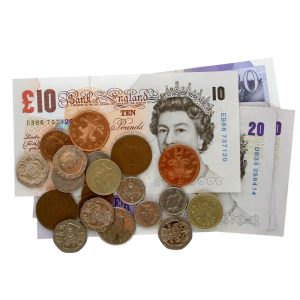
DOLLAR GAINS AFTER TRUMP AGREES TO OUTLINE OF GREENLAND DEAL, BACKS OFF TARIFFS
The dollar moved sharply higher against the euro and the Swiss franc on Wednesday as U.S. President Trump withdrew a threat to impose tariffs on a number of nations, saying he had reached an agreement on a framework of a future deal on Greenland with NATO. Trump’s threats to levy tariffs on a number of nations for their stance on Greenland spooked markets and triggered a broad selloff in U.S. assets, but his comments in Davos on Wednesday that he had he ruled out military action in the northern island offered investors some relief. The euro was down 0.36% at $1.17, having risen more than 1% in the last two sessions. It hit $1.168 on Tuesday, its highest level since Dec 30. The safe-haven Swiss franc was down 0.77% to 0.7958 per dollar, after gaining about 1.5% between Monday and Tuesday. Trump vowed on Saturday to implement a wave of increasing tariffs from Feb 1 on European Union members Denmark, Sweden, France, Germany, the Netherlands and Finland, along with Britain and Norway, until the U.S. is allowed to buy Greenland, a step major EU states decried as blackmail. Trump did not offer any details in a post to Truth Social on what the framework for a future deal with NATO would entail, but said as a result that he would not impose the tariffs. The comments sparked a stock market rally, with the S&P 500 (.SPX), opens new tab index up over 1.5%. “We’re seeing a bit of a relief rally in markets,” said Matt Weller, global head of market research at StoneX. “I really do think the details perhaps are not as relevant, even perhaps if they never come to light. The near-term crisis appears to be behind us, and we’ll wait to see what crops up next to drive sentiment.” Still, European Union leaders are set to proceed with an emergency summit on Thursday to discuss options following Trump’s tariff threat, a council spokesperson said on Wednesday. The dollar was up against the Japanese currency, which faced its own selloff after Prime Minister Sanae Takaichi on Monday called snap elections for Feb 8 and pledged measures to loosen fiscal policy. The yen was last down against the dollar at 158.430. Investors closely watched Japanese government bonds (JGBs) which were hit hard early this week, but rebounded on Wednesday. “The absence of strategic buyers in this segment has made price action more sensitive and amplified volatility. I expect this environment of elevated volatility to persist through 2026,” said Vincent Chung, co-portfolio manager at T. Rowe Price. “A further sell-off in JGBs would seem to drag the dollar/yen towards intervention territory at 159/160,” said Chris Turner, global head of markets at ING. “However, if the yen sell-off is a self-inflicted wound from the Japanese government policy, the effectiveness of intervention will become increasingly questionable.”

DOLLAR EDGES LOWER AS GREENLAND CONCERNS EASE; AUSSIE JUMPS AFTER JOBS DATA
The safe‑haven dollar slipped on Thursday, while risk‑sensitive currencies such as the euro and sterling firmed after President Donald Trump dropped tariff threats and ruled out seizing Greenland by force, helping calm jittery markets. The greenback recovered versus the euro on Wednesday on Trump’s remarks about Greenland, after losing a bit less than 1% between Monday and Tuesday. It was last down 0.49% to $1.1744 per euro, following a 0.35% rebound in the prior session. The dollar weakened 0.69% to 0.7899 Swiss franc. New Personal Consumption Expenditures inflation data – the Federal Reserve’s preferred inflation gauge – were unveiled, showing that U.S. consumer spending increased solidly in October and November, likely keeping the economy on track for a third straight quarter of strong growth. Consumer spending, which accounts for more than two-thirds of economic activity, rose 0.5% after rising by the same margin in October, the Commerce Department’s Bureau of Economic Analysis said on Thursday. Economists polled by Reuters had forecast consumer spending increasing 0.5% in November. The Australian dollar rose to a 15-month high, buoyed by data showing an unexpected decline in the jobless rate. The yen remained under pressure after Japanese Prime Minister Sanae Takaichi this week called a snap election and pledged measures to loosen fiscal policy. Trump’s threat to levy tariffs on allied nations resisting his ambition to control Greenland had spooked markets, triggering a broad selloff of U.S. assets. Still, some analysts said there was little evidence of a real move out of the U.S. dollar. “This whole argument about European investors selling U.S. assets is very hard to sustain,” said Bob Savage, head market strategist at BNY. “This isn’t a ‘sell America’ story, it’s a risk‑management story,” he added. “We’re just seeing more hedging because volatility has risen after being at very low levels at the end of last year.” Details of a framework for an agreement on Greenland were not yet known. However, “the most likely outcome is still that the next wave of excitement will pass us by after a brief period of volatility and that the market will refocus on central banks and interest rate differentials,” Savage said. The Aussie was last up 1.15% to $0.684, touching its strongest level since October 2024, and headed for a fourth straight daily gain, outperforming even as risk assets came under pressure this week. “The strength of both the Australian and the New Zealand dollar is the latest example that speculation about moves in short-term interest rates in relation to central bank policy remains alive and well,” said Jane Foley, senior forex strategist at Rabobank. The Japanese currency weakened 0.07% at 158.42 per U.S. dollar, near last week’s 18-month trough of 159.45. Analysts anticipate a hawkish tilt from the Bank of Japan at Friday’s policy meeting to help stabilise the yen, which is trading uncomfortably close to the 159-160 levels that are seen as intervention territory. Japan’s super-long-dated government bonds extended gains on Thursday on the expectation that the finance ministry could take some measures to contain further rises in yields.

STERLING EDGES UP AS FOCUS SHIFTS TO DATA, BOE RATE OUTLOOK
Sterling edged up against both the euro and the U.S. dollar after recent economic data painted a mixed picture, bringing the Bank of England rate outlook back into focus. Investor attention shifted to the state of the economy after geopolitics dominated earlier in the week, as the prospect of a U.S.-Europe trade war unsettled markets. The U.S. dollar held on to overnight gains after President Donald Trump withdrew a threat to impose tariffs on several European NATO countries over Greenland. Earlier this week data showed Britain’s jobs market weakened, potentially easing the BoE’s worries about persistent inflation pressures. “Despite the uptick in the consumer price index, we still see Bank Rate on a downward direction,” said Sanjay Raja, chief UK economist at Deutsche Bank, adding the bank is sticking for now to its call for two additional rate cuts. “However, we see risks as skewed to slower easing in the first half of 2026,” he added. The pound held steady on Wednesday, after data showed UK inflation picked up more than expected in December. “UK employment data for November and December were weak, confirming the recent labour market slowdown, and December consumer price data was mixed, but on the cool side,” said Felix Vezina Poirier, chief strategist at BCA Research. “More Bank of England cuts will be required, with barely two 25 bps cuts priced by year-end,” he added, arguing that further weak data could bring an April cut into focus. Morgan Stanley expects the BoE to deliver its next interest rate cut in March. The euro was down 0.05% at 86.96 pence, after hitting 87.45 pence on Wednesday, its highest level this year. The single currency rose 0.63% against the pound on Tuesday in its biggest daily rise since early August. Britain’s government borrowed less than expected in December, helped by robust growth in tax receipts, according to data on Thursday.
STERLING SET FOR BEST WEEK AGAINST DOLLAR SINCE AUGUST AFTER DATA BOOST
Sterling rose on Friday and was set for its best week against the dollar since August, after stronger-than-expected UK retail sales and business activity figures ended a week of mixed economic data. The British pound was last 0.2% higher at $1.3525 and set for its biggest weekly jump since August with a rise of just over 1%. The Reuters Inside Track newsletter is your essential guide to the biggest events in global sport. The euro was down 0.36% at 86.73 pence. UK retail sales rose 0.4% in December, compared to an expected 0.1% decline. While the data was widely received as a positive signal for the UK economy, Jonas Goltermann, deputy chief markets economist at Capital Economics, noted that retail sales figures can be unstable. “Retail sales are a very volatile series, so you get these big, big, big, big positive surprises, very positive or negative,” he said. The latest S&P Global UK Composite Purchasing Managers’ Index meanwhile rose to 53.9, also above forecasts, to a 21-month high. British businesses reported the fastest upturn since April 2024. Employment in the services sector, however, fell at a faster rate and inflation pressures increased. “The Flash PMI leaping in January gives a further signal that GDP growth is likely to pick up in Q1, as the economy continues to recover from months of pre-Budget anxiety,” Elliott Jordan-Doak, senior UK economist at Pantheon Macroeconomics, said in a note. Friday’s data, alongside reports earlier in the week that showed the labour market weakened and inflation accelerated, has put the outlook for interest rate decisions by the Bank of England back into focus. The BOE is expected to hold rates steady when it next meets in February. Markets fully price in a quarter-point rate cut by June.