







CAPITALDIGEST DAILYNEWS, 23/03/2026
March 23, 2026
OIL PRICES SURGE AS GLOBAL POWERS MOVE TO INTERVENE
European powers and Japan promised to stabilise energy markets and join “appropriate efforts” to open the Gulf’s energy chokepoint after strikes on energy plants dramatically heightened the US-Israeli war on Iran. This is coming two days after NATO allies refused to help the United States President, Donald Trump, reopen the Strait of Hormuz. A report by Reuters stated that countries have been scrambling to cushion the impact of soaring energy prices after Qatar reported “extensive damage” from Iranian missile strikes on Ras Laffan Industrial City in response to Israel’s bombing of Iran’s major gas field. Ras Laffan processes about a fifth of the world’s liquefied natural gas. Our correspondent observed that Brent crude rose from $108 per barrel on Wednesday to $114 on Thursday before dropping to $110. Reuters reports that Saudi Arabia’s main port on the Red Sea, where it has been able to divert some exports to avoid Iran’s closure of the Gulf’s exit point, the Strait of Hormuz, was also attacked. The strikes, it was learnt, underscored Iran’s continued ability to exact a heavy price for the US-Israeli campaign and the limits of air defences in protecting the Gulf’s most valuable and strategic energy assets. With no end in sight, almost three weeks into the war, and the threat of a global oil shock growing by the day, Britain, France, Germany, Italy, the Netherlands, and Japan issued a joint statement expressing “our readiness to contribute to appropriate efforts to ensure safe passage through the strait”. They also promised “other steps to stabilise energy markets, including working with certain producing nations to increase output”. The statement was a significant shift after weeks of resistance by major US allies to Trump’s demands that they help secure the strait, intervening in a conflict with unclear objectives that they did not seek and over which they have little control. In particular, Israel’s bombing of Iran’s South Pars gas field, which Trump said the U.S. had not known about, suggested gaps in coordination of strategy and war aims between the main protagonists. US Defence Secretary Pete Hegseth said the US objectives in the war were “unchanged, on target and on plan”. But Director of National Intelligence Tulsi Gabbard told the House intelligence committee that the US and Israeli goals differed, saying, “…the Israeli government has been focused on disabling the Iranian leadership. The (US) president has stated that his objectives are to destroy Iran’s ballistic missile launching capability, their ballistic missile production capability, and their navy. QatarEnergy’s CEO told Reuters the Iranian attacks had knocked out a sixth of Qatar’s liquefied natural gas export capacity, worth $20bn a year, and that repairs would take three to five years. Brent crude oil futures were up nearly 4.5 per cent at $112, having surged up to 10 per cent before the joint statement. European near-term gas prices were up more than 15 per cent and have leapt by over 60 per cent since the war began. Japanese and South Korean stocks fell around 3 per cent, while the pan-European index was down 2.3 per cent, around its lowest in more than three months. On Wall Street, the Dow Jones Industrial Average was down about one per cent. Fears of lasting inflation pressures encouraged both the European Central Bank and Bank of England to hold rates steady, and investors who once expected cuts were pricing in hikes by year-end. The ECB now sees 2026 inflation at 2.6 per cent, above the 1.9 per cent predicted in December. At a summit in Brussels, European Union leaders sought ways to offset higher energy costs for industries and consumers already struggling with the rising cost of living. Iranian attacks since Wednesday have also forced the UAE to shut its Habshan gas facility and set off fires at two Kuwaiti oil refineries. Saudi Arabia reportedly intercepted a ballistic missile heading for Yanbu, the port city that is the kingdom’s only outlet for crude exports since Iran in effect closed the Strait of Hormuz, through which around a fifth of the world’s crude oil and liquefied natural gas normally passes. Israeli media reported that an Iranian strike hit oil facilities in Israel’s port of Haifa, causing damage but no casualties. Iran’s military said strikes on Iran’s energy infrastructure had led to “a new stage in the war” in which it had attacked energy facilities linked to the United States. “If strikes (on Iran’s energy facilities) happen again, further attacks on your energy infrastructure and that of your allies will not stop until it is completely destroyed,” spokesman Ebrahim Zolfaqari said, according to state media. Trump, politically vulnerable to rising fuel prices among his core voters, said Washington had had no advance knowledge of Israel’s attack on Iran’s gas field and that Qatar – host to the Gulf’s largest US air base – had not been involved. He said Iran had then “unjustifiably and unfairly attacked” Qatar’s LNG plant. He warned that if it did so again, the US, “with or without the help or consent of Israel, will massively blow up the entirety of the South Pars Gas Field”. A US official and three other people familiar with the planning told Reuters that Trump was considering sending thousands more US troops to the Middle East. They could be used to help restore shipping through the Strait of Hormuz, potentially even landing in Iran or its Kharg Island oil hub.
SEC RAISES CAPITAL THRESHOLDS FOR MARKET OPERATORS
The Securities and Exchange Commission has officially raised the minimum capital requirements for all Capital Market Operators in a move designed to overhaul the backbone of Nigeria’s financial ecosystem. The new directive, rooted in the Investments and Securities Act 2025, marks a significant shift towards higher financial resilience. Under the revised framework, broker-dealers must now bolster their capital base to N2bn, a massive jump from the previous N300m. Top-tier fund and portfolio managers face even steeper climbs, with thresholds reaching up to N10bn depending on their total assets under management. According to the Commission, the hike is not merely about numbers but about market integrity. The SEC stated the requirements are “intended to promote investor protection, strengthen market integrity, and align Nigeria’s capital market with global regulatory standards.” The Commission further emphasised that the higher bars will create a more stable environment for both domestic and international investors, adding, “The revised requirements… strengthen the resilience and stability of Nigeria’s financial markets.” The SEC has provided a clear transition window to prevent immediate market shock. While the final compliance deadline is set for 30 June 2027, operators have a much more immediate hurdle to clear. “All CMOs are required to submit board-approved capitalisation plans to the SEC by 30 April 2026, outlining their compliance strategies, funding sources, and implementation timelines.” To ensure these figures represent true financial strength rather than “paper wealth”, the SEC has tightened the definition of what counts as capital. The regulator noted, “All capital positions will be subject to verification, with only audited financial statements recognised for compliance purposes.” This definition specifically limits qualifying capital to fully paid-up share capital, share premium and retained earnings, while strictly excluding borrowed funds and revaluation reserves. For firms unable to meet the new billion-naira benchmarks independently, the SEC is pointing towards the exit or the altar. The Commission noted that it has “approved mergers and acquisitions as viable pathways to meeting the new thresholds, subject to regulatory approval.” Smaller firms also have the choice to “scale down their licence categories where full compliance is not immediately feasible.” Furthermore, the “fintech” revolution has not been ignored. The SEC’s oversight now extends deeply into the digital space, with the framework introducing “new capital requirements for exchanges, custodians and tokenisation platforms, reflecting the SEC’s expanding regulatory oversight of fintech-driven activities.” Analysts suggest that this “capital regime” will mirror the recent recapitalisation waves seen in Nigeria’s banking sector. By forcing a consolidation of smaller players and reinforcing the balance sheets of larger firms, the SEC is taking what it describes as “a decisive step toward deepening market confidence and positioning Nigeria’s capital market for sustainable long-term growth.”
NAIRA SLIPS 1,385/$ AMID MIDDLE EAST TENSION
The naira has come under renewed pressure in the foreign exchange market, slipping to N1,385 per US dollar as escalating conflict in the Middle East sends shockwaves through global financial systems.The local currency, which had previously shown signs of stability at N1,360, has depreciated by roughly 0.3 per cent over the past fortnight. While Nigeria’s position as a leading crude exporter has provided a partial buffer against the global carnage, the domestic economy is beginning to feel the heat of “monstrous” volatility in the energy sector.The exchange rate shift coincides with a dramatic spike in local energy costs. Despite Nigeria’s inflation easing slightly to 15.06 per cent in February, the subsequent eruption of conflict in the Middle East has seen domestic gasoline prices soar by more than 30 per cent. Market analysts at ForexTime Limited on Tuesday warned that these rising transportation and energy costs are likely to bleed into broader consumer prices, potentially undoing recent progress made by the Central Bank of Nigeria.“As these tensions escalate, mounting fears of inflationary shocks could force central banks to rethink their 2026 playbooks,” noted Matthew Anthony, Senior Market Analyst for Africa. The global backdrop remains grim, with Brent crude rallying above $103 a barrel on Tuesday. Fears of supply shocks have intensified following attacks on energy infrastructure in the Middle East and ongoing concerns regarding ship traffic through the critical Strait of Hormuz. In a desperate bid to stabilise prices, the International Energy Agency launched its largest-ever oil release of 400 million barrels, while the US issued a second temporary waiver for Russian oil purchases. However, the “oil bulls” remain undeterred, keeping prices firmly in the triple digits. The volatility is not limited to Nigeria. On Tuesday, the Reserve Bank of Australia raised interest rates for the second consecutive meeting, a move that many fear foreshadows a global trend. Investors are now looking toward the Federal Reserve, European Central Bank, and Bank of England, all of which are under the spotlight this week. Market expectations for a Fed rate cut have effectively evaporated, with traders now pricing in only one potential cut for the entirety of 2026. “Ultimately, this has injected oil prices with monstrous levels of volatility… Iran’s attacks on energy infrastructure around the Middle East have intensified fears around supply shocks,” Anthony added. For Nigeria, the immediate concern remains the CBN’s policy direction. The sudden spike in gasoline prices and the naira’s dip may force the apex bank to abandon its plans to lower interest rates as it pivots back to a defensive stance against conflict-induced inflation. “The brief tech rally in the previous session merely served as a small distraction with equities on the back foot amid the overall caution,” the report concluded, signalling a week of high-stakes navigation for Nigerian policymakers.
NIGERIA RECORDS $96BN CRYPTO TRANSACTIONS – SEC
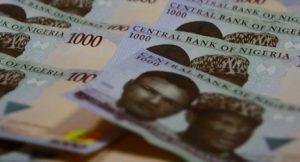
Nigeria’s digital finance ecosystem recorded about $96bn in cryptocurrency and other virtual asset transactions, the Director-General of the Securities and Exchange Commission, Emomotimi Agama, has disclosed. Agama revealed this during a Citizens and Stakeholders Engagement Session organised by the Federal Ministry of Finance in Abuja on Monday, stressing that the scale of activity in the digital asset market makes it necessary for regulators to place the sector under stronger oversight. “As we speak today, it is a known fact from research and statistics that the virtual asset service providers and indeed the digital space, cryptocurrency operation is within the range of $96bn in transaction flow in Nigeria, and that is important for us to manage,” he said. According to him, the regulatory framework governing the space has been reinforced with the enactment of the Investment and Securities Act 2025, which gives the commission powers to regulate digital assets and other emerging financial technolo He explained that the legislation also reaffirmed the SEC as the apex regulator of the Nigerian capital market while introducing provisions aimed at monitoring systemic risks and aligning the country’s market operations with global standards. Agama stated that the capital market has continued to support investment across key sectors of the economy, noting that the commission approved about N3.68tn worth of new capital market issues in 2024, covering both equity and fixed income instruments. He added that the market also played a major role in strengthening the banking sector during the recent recapitalisation exercise, with more than 31 banks raising funds through the capital market to meet new capital requirements. The SEC boss noted that the overall performance of the market has improved significantly in recent years, with total market capitalisation rising from about N55tn in 2024 to roughly N127tn currently. He further stated that the capital market’s contribution to the economy has increased, as the ratio of market capitalisation to gross domestic product rose from about 13 per cent to roughly 33 per cent. Agama said the commission has also intensified efforts to strengthen investor protection and sustain confidence in the market. He disclosed that the SEC had issued more than 90 advisory notices warning Nigerians about suspicious investment schemes and risky financial offers. According to him, the regulator has also stepped up its crackdown on fraudulent investment operations, including Ponzi schemes, while working with the Nigeria Police Force to investigate and prosecute offenders. He warned that many victims of such schemes often invest through unregistered platforms promising unrealistic returns, advising investors to verify whether any investment opportunity has been approved by the SEC. The SEC Director-General also noted that the capital market has helped support infrastructure development through bond issuances by state governments. He explained that several public projects, including markets, stadiums, and other infrastructure, have been financed through subnational bonds raised in the capital market. Agama added that investors in state bonds are protected through the Irrevocable Standing Payment Order system, which allows repayments to be deducted directly from states’ allocations from the Federation Account. He disclosed that the commission has established an Office of Municipal Fund Development to assist state and local governments in accessing capital market funding for development projects at the grassroots level. Agama also said the SEC supported the launch of the Mortgage Refinancing and Infrastructure Fund to help address Nigeria’s housing deficit by providing long-term funding that enables Nigerians to obtain mortgages at single-digit interest rates. Looking ahead, he said the commission plans to deepen the capital market by increasing the market capitalisation-to-GDP ratio from about 30 per cent towards levels seen in emerging markets such as India, where the ratio stands at about 92 per cent. Also speaking at the session, the Permanent Secretary of the Federal Ministry of Finance addressed concerns about the implementation of the federal budget. He explained that several factors have affected budget performance, including Nigeria’s difficulty meeting its oil production benchmark of about 2.1 million barrels per day and fluctuations in global crude oil prices. According to him, the budget benchmark was set at $75 per barrel, but oil prices at some point dropped below $60 per barrel, reducing government revenue. He added that rising debt servicing obligations and increased salary commitments have also placed pressure on available funds. The Permanent Secretary said the government is taking steps to address the situation through closer monitoring of revenue and expenditure. He disclosed that the ministry now holds weekly cash management meetings every Monday to review government finances and identify measures to improve revenue performance. He added that budget implementation is expected to improve once Nigeria returns to operating a single budget cycle, noting that efforts are underway to collapse overlapping budgets so that the country will run only one national budget from 2026 onward.
STOCK RALLY LIFTS NGX ASI BEYOND 200,000 MILESTONE
Nigeria’s stock market hit a major milestone on Monday, with the NGX All-Share Index crossing the 200,000-point mark, buoyed by strong investor demand and broad-based gains across key sectors. The benchmark index rose 1.55% to close at 201,474.89 points, up from 198,407.30 points in the previous trading session. This brings the month-to-date return of the ASI to 4.48% and the year-to-date return to 29.47%, reflecting strong market momentum.Market capitalisation expanded to N129.33tn, up from N127.36tn previously, as large-cap stocks led gains across the market. Reacting to the milestone, the Group Managing Director and Chief Executive Officer of Nigerian Exchange Group, Temi Popoola, described the growth as a sign of growing confidence in Nigeria’s capital market.“Nigeria’s ongoing reforms are strengthening domestic capital formation, and the market is responding positively. Increased participation by local investors, improving corporate fundamentals, and continued market modernisation are reinforcing the role of the capital market as a catalyst for long-term wealth creation and sustainable economic growth,” he said. Trading activity remained robust, with total deals rising to 72,700 while investors exchanged 948.1 million shares valued at N49.15bn. Financial services stocks dominated transactions by volume, reflecting heightened investor interest in the sector. Similarly, the Chief Executive Officer of Nigerian Exchange Limited, Jude Chiemeka, attributed the milestone to sustained demand and active participation across the market. “Crossing the 200,000-point mark reflects strong investor engagement and consistent demand across key sectors. At Nigerian Exchange Limited, we remain focused on deepening market liquidity, enhancing trading infrastructure, and ensuring efficient price discovery to support a resilient and transparent marketplace,” he said. Among the top gainers for the session were BUA Cement Plc, Premier Paints Plc, John Holt Plc, Guinea Insurance Plc, and FTN Cocoa Processors Plc, while decliners included VFD Group Plc, Royal Exchange Plc, Omatek Ventures Plc, Sovereign Trust Insurance Plc, and Regency Alliance Insurance Plc.