












CAPITALDIGEST DAILYNEWS, 23/02/2026
February 23, 2026
NIGERIA LOSES N1.76TN AFTER MISSING OPEC QUOTA
Nigeria’s oil sector lost an estimated N1.76tn in potential crude oil revenue due to its failure to meet the production quota set by the Organisation of the Petroleum Exporting Countries from January 2025 to January 2026. Data from the Nigerian Upstream Petroleum Regulatory Commission revealed that the country’s crude oil production fell below the OPEC-set target of 1.5 million barrels per day in nine months in 2025 and repeated the same in the first month of 2026, even as global crude prices remained moderately strong. According to the figures, Nigeria produced 1.54 mbpd in January 2025, exceeding its quota by about 40,000 barrels per day. Production also slightly exceeded the quota in June and July, with daily outputs of 1.51 mbpd, translating to surpluses of approximately 10,000–30,000 barrels per day. However, production in February (1.47 mbpd), March (1.40 mbpd), April (1.49 mbpd), May (1.45 mbpd), August (1.43 mbpd), September (1.39 mbpd), October (1.40 mbpd), November (1.43 mbpd), and December (1.42 mbpd) fell below the benchmark. The monthly shortfalls against the OPEC quota ranged from 10,000 barrels per day in April to 110,000 barrels per day in September, with the largest deficit recorded in September. In February, average production stood at 1.47 mbpd. Over 28 days, this amounted to 41.16 million barrels, compared to the 42 million barrels expected under the quota, leaving a shortfall of 840,000 barrels. Output dropped further to 1.4 mbpd in March. Total production for the month was 43.4 million barrels instead of 46.5 million barrels, resulting in a deficit of 3.1 million barrels. According to the data, crude production averaged 1.43 million barrels per day in April. Across 30 days, this translated to 42.9 million barrels, leaving a gap of 2.1 million barrels from the 45 million-barrel target for the month. The fifth month recorded approximately 1.45 million barrels per day. Over the 31 days of May, Nigeria produced 44.95 million barrels against a quota requirement of 46.5 million barrels, leaving a deficit of 1.55 million barrels. In August, production slipped to about 1.48 million barrels per day, yielding 45.88 million barrels compared to the expected 46.5 million barrels, creating a shortfall of 620,000 barrels. In September, production fell to 1.39 mbpd — the lowest in the year. Over 30 days, output reached 41.7 million barrels instead of 45 million barrels, leaving a shortfall of 3.3 million barrels. Similarly, in October, average production of 1.44 million barrels per day resulted in 44.64 million barrels compared to 46.5 million barrels expected. The shortfall was 1.86 million barrels. November recorded an average output of 1.46 mbpd; total production was 43.8 million barrels versus 45 million barrels under the quota. The deficit was 1.2 million barrels. In December, production hovered around 1.47 million barrels per day. Over the 31 days, Nigeria produced 45.57 million barrels instead of 46.5 million barrels, resulting in a gap of 930,000 barrels. Cumulatively, these nine months produced a gross shortfall of approximately 18.7 million barrels. However, January, June, and July recorded slight surpluses above the quota. After deducting the combined surplus from those three months, the net annual production deficit stood at 16.85 million barrels. In January 2026, crude production stood at an average of 1.459 mbpd, resulting in a daily shortfall of 41,000 barrels per day. This translated to a shortfall of about 1.27 million barrels for the month. Consequently, from January 2025 to January 2026, Nigeria’s OPEC shortfalls accumulated to 18.12 million barrels.
NGX ENDS RALLY AS MARKET CAP DROPS TO N121.55TN
The Nigerian equities market closed lower on Tuesday, halting a rally that it had been on for days. Data from the NGX indicated that profit-taking in banking stocks was a major driver of the decline. It outweighed gains recorded in consumer goods counters. At the close of trading, the All-Share Index declined from 190,262.44 on Monday to 189,362.94, a 0.47 per cent drop. Market capitalisation correspondingly fell from N122.13tn to N121.55tn. Trading activity strengthened across most indicators, as the number of deals surged 34.82 per cent to 86,697 transactions and volume traded increased 12.93 per cent to 1.19 billion units, although total transaction value declined 4.44 per cent to N60.19bn. The NGX Banking Index recorded the sharpest sectoral decline, 3.69 per cent, with major banking counters posting losses; Zenith Bank Plc’s shares fell 10.00 per cent, United Bank for Africa Plc down 6.56 per cent, Access Holdings Plc shed 4.63 per cent, and Guaranty Trust Holding Company Plc declined 2.33 per cent. The broad-based losses within tier-1 and other banking stocks significantly pressured the overall market. In contrast, the NGX Consumer Goods Index rose from 4,328.43 to 4,438.58, reflecting strong buying interest in the sector. Notable gainers included BUA Foods Plc, up 5.77 per cent; Nestlé Nigeria Plc, up 2.47 per cent; Unilever Nigeria Plc, up 3.63 per cent; and Cadbury Nigeria Plc, up 1.47 per cent. The strength in food and household product manufacturers partially moderated the broader market decline. The NGX Industrial Index eased 0.50 per cent as Dangote Cement Plc recorded a marginal 0.16 per cent gain and Lafarge Africa Plc declined 4.04 per cent. The NGX Insurance Index slipped from 1,338.63 to 1,330.94, a -0.57 per cent decline. Performance within the sector was mixed: FTG Insurance Plc rose 9.52 per cent, while AXA Mansard Insurance Plc fell 8.77 per cent. Meanwhile, the NGX Oil & Gas Index was broadly flat, closing at 3,928.51 compared to 3,930.91 previously. Eterna Plc advanced 3.23 per cent, whereas Aradel Holdings Plc dipped 0.25 per cent.

CBN WARNS STABLECOINS COULD FUEL FX VOLATILITY
The Governor of the Central Bank of Nigeria, Mr Olayemi Cardoso, on Thursday, cautioned that the growing adoption of stablecoins and private digital payment platforms could heighten foreign exchange volatility and weaken monetary policy transmission in emerging economies. Cardoso spoke at the opening ceremony of the G-24 Technical Group Meeting in Abuja, where he delivered a plenary address titled “Digital Cross-Border Payments, Global Finance, and Economic Transformation – Opportunities and Risks.” He said, “The expansion of private digital payment platforms and stablecoins raises concerns about currency substitution and weakened monetary transmission, increased FX volatility and capital flow pressures, systemic importance of non-bank payment providers, and regulatory arbitrage and fragmentation.” According to him, while digital innovation presents a historic opportunity to address inefficiencies in cross-border payments, it must be approached with caution to preserve macroeconomic stability. Without coordination, digital cross-border payments risk becoming fragmented across jurisdictions, entrenching dominant currencies and platforms, reducing interoperability, increasing costs and undermining the ability of Emerging Market and Developing Economies to safeguard monetary sovereignty,” Cardoso said. The CBN governor noted that cross-border payments remain slow, costly and fragmented, particularly for developing economies. “Today, cross-border payments remain too slow, too costly, and too fragmented, especially for developing economies. With global remittance corridors costing over 6.0 per cent, settlement lags of several days, and compliance burdens that exclude MSMEs, millions remain disconnected from global opportunity,” he stated. He explained that inefficiencies in payment systems translate into higher remittance costs, expensive foreign exchange transactions and barriers to small and medium-sized enterprises seeking access to global markets. Cardoso said digital infrastructure such as instant payment systems, interoperable platforms, distributed ledger technology and digital identity frameworks could reduce transaction costs, shorten settlement times and strengthen monetary policy transmission if designed with resilience and strong governance. He said Nigeria had taken deliberate steps to modernise its payment ecosystem, including strengthening oversight of switching and payment infrastructure providers, enhancing agent banking regulations to address anti-money laundering and counter-terrorism financing risks, and improving interoperability across payment channels. The governor disclosed that the apex bank was concluding work on a new Payment System Vision 2028 aimed at boosting innovation, strengthening resilience and advancing financial inclusion, with a strong focus on improving the cross-border payments environment. He said that in June 2025, Nigeria launched the National Payment Stack, a next-generation real-time payment system built on ISO 20022 messaging to support multi-currency and cross-border transactions. Cardoso also highlighted reforms in the remittance space, including the introduction of the Non-Resident Nigerian Ordinary Account for remittances and family support, the Non-Resident Nigerian Investment Account for diaspora investments, and the Non-Resident BVN platform to enable Nigerians abroad open and service accounts digitally. “As a result of these reforms, remittance inflows now average about $600m per month, and we are confident of reaching a $1bn monthly milestone in the near term,” he said. He stressed that central banks must safeguard monetary and financial stability while modernising payment and settlement systems. “The task before us is clear: To shape the future of global finance, rather than be shaped by it,” Cardoso added. He reaffirmed Nigeria’s commitment to working with G-24 members, the IMF and the World Bank Group to build a more inclusive, resilient and development-oriented global financial system. PUNCH Online earlier in September 2025 reported that President Bola Tinubu directed financial and capital market authorities to monitor the increasing use of stablecoins and digital currencies in Nigeria, cautioning that the shift away from traditional banking systems presents emerging challenges that must be proactively managed. Speaking at the 18th Annual Banking and Finance Conference of the Chartered Institute of Bankers of Nigeria in Abuja, Tinubu, represented by the Minister of Finance and Coordinating Minister of the Economy, Wale Edun, acknowledged the global financial system’s rapid transformation.
NAIRA HITS TWO-YEAR HIGH AT 1,347/$
The naira has strengthened sharply in recent weeks, reaching one of its strongest levels in nearly two years, even as rising foreign portfolio inflows increase the risk of investor profit-taking later in the year, according to a macro update by CardinalStone.According to the report, the naira has witnessed a steep appreciation in the official market (+6.9 per cent year to date), reaching one of the strongest levels of the past two years (1,347.78/$ on Monday), which indicates improved liquidity conditions in the official foreign-exchange window. However, the spread between the official and parallel markets persisted, with the parallel market initially trading at about a 5.7 per cent premium before narrowing to roughly 3.2 per cent following renewed FX interventions by the Central Bank of Nigeria. CardinalStone said the narrowing spread suggests “there was more liquidity in the official window than in the parallel market.” Last week, the apex bank permitted licensed Bureau de Change operators to access FX through authorised dealers at prevailing market rates, with a weekly purchase limit of $150,000 per BDC subject to KYC requirements. BDCs must also sell unused balances within 24 hours to prevent hoarding, while cash transactions are capped at 25 per cent of total FX trades, with settlement required through licensed financial institutions. CardinalStone noted that with 82 licensed BDCs, potential supply to the segment could reach about $50m monthly, which is below the more than $1bn supplied monthly before COVID-19. The disparity, the report said, reflects “material improvements in the FX market that reduced speculative demand and routed most corporate FX requirements to the official window”. Still, the renewed supply has eased retail FX pressures, helping compress the parallel market premium. On the foreign portfolio investment side, the analysts warned that continued currency gains could trigger portfolio rebalancing by foreign investors. “Nigeria’s carry trade remains one of the most compelling across EM and frontier markets, continuing to attract sizable foreign portfolio inflows. We estimate outstanding FPI positioning at roughly $12.0–$14.0bn. “Working with the assumption that a significant proportion of the 2025 inflows entered the Nigerian market at a rate of N1,500.00/$, we estimate FX gains of 22.4 per cent on currency alone if the naira strengthens to the midpoint of N1,200.00/$ to N1,250.00/$. Such a gain could potentially increase the risk of foreign portfolio exits, especially considering a likely build-up in uncertainties ahead of the general elections,” said the experts. Ahead of Monday’s Monetary Policy Committee meeting of the CBN, the analysts noted that the indicators likely to shape the committee’s decision were sending mixed signals. “On one side, inflation is moderating and short-term rates are converging around 22.0 per cent, which is about 500 bps lower than the MPR of 27.0 per cent. On the flipside, the recent body language of the CBN shows low tolerance for liquidity after the governor stated at the National Economic Conference that the liquidity overhang is a major risk to the stability achieved through recent policy reforms. “So far this year, the CBN has net-issued N10.9 tn through OMO and has left the SDF rate attractive for banks to deposit with the CBN in a bid to avoid liquidity stoking renewed inflationary pressure. The CBN is also concerned about election-related liquidity, which is expected to become more pronounced in the second half of the year. Furthermore, of the total expected liquidity of N44.2 tn in 2026, over 75.0 per cent is expected in the first half of 2026. It stated, “As such, we perceive that the CBN may be inclined towards
19/02/2026 – FX FOR BUSINESS TRAVELS SOAR BY 366% TO $672M
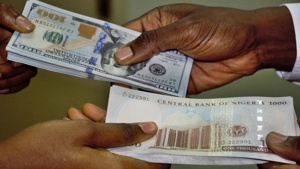
More Nigerians gained access to foreign exchange, boosting their spending on business travels by 366 per cent to $672.27m in the first nine months of 2025, up from $144.19m recorded in the corresponding period of 2024. The figures, contained in the Balance of Payments section of the December 2025 Central Bank of Nigeria’s Quarterly Statistics, showed that spending stood at $231.7m in the first quarter of 2025, rose slightly to $234.56m in the second quarter, and moderated to $205.97m in the third quarter, bringing the nine-month total to $672.27m. In contrast, business travel expenditure was $77.33m in Q1 2024, fell to $46.62m in Q2, and further decreased to $20.24m in Q3, culminating in $144.19m for the same period. Business travel refers to expenditures made by Nigerian residents when they travel abroad for business purposes, such as attending meetings, conferences, training sessions, or other work-related activities. Payments linked to these trips, including for accommodation, local transport, and meals, are captured as outflows of funds in the BoP. Since money leaves Nigeria to pay for these services abroad, they show up as debits (negative entries) in the current account under services. Tickets and airfares are not included. Data from the CBN indicate that travellers had more access to FX for business trips in the period under review. In turn, this reflected stronger international business engagement. In separate interviews with The PUNCH, economic analysts and experts familiar with the matter explained that the development signalled renewed business confidence and improved foreign exchange stability. The Director of the Centre for Promotion of Private Enterprise, Dr Muda Yusuf, said the jump in travel spending reflected improved confidence in international trade and stronger economic stability. He explained: “An increase in business travel costs is a reflection of an improvement in confidence in international trade because there is a relationship between the frequency of travel and the volume of international business, whether it is services or merchandise, there’s always a relationship. If there is no trade, there will not be travel. If there are no international transactions that require physical movement, there will not be any travel.” Yusuf added that the trend underscored Nigeria’s growing connectivity with the global economy, stating, “This is a reflection of the wider stability and confidence that we are seeing in the economy. And this has enabled more Nigerians to travel, to meet their business partners, and vice versa. I think this figure with respect to business travel, this is what it indicates.” CPPE’s director observed that the country’s improved foreign exchange liquidity and exchange rate stability strengthened international trade flows in 2025 compared to previous years. He asserted that given that the dollar is stable, there’s more liquidity in the foreign exchange markets. “So that has also given a big boost to international trade and investments,” Yusuf remarked. A former Chairman of the Chartered Institute of Bankers of Nigeria, Prof Segun Ajibola, explained how this relationship plays into the recent figures. Corroborating CPPE’s Yusuf, the economist noted that the increase could reflect both expanded business activities and higher travel costs. He said, “The 366 per cent jump in expenditure could be a positive and negative development at the same time. Firstly, business travel is a cost item. It is an expense for each business organisation which could be driven by an increased level of activities, which pushes executives and others to travel purely for new business contracts, new business dealings, or by increased expansion of existing businesses, which may take them out of the country, or might involve them inviting business partners to the country at their own expense.” The former CIBN leader added that if driven by business expansion, the rise would positively impact economic output. “It must reflect, if that is the case, it must reflect by way of enhanced business volumes, which means businesses incurring the cost. You also have higher business volumes, which will contribute to the country’s Gross Domestic Product,” he remarked. Meanwhile, the Director-General of the Nigerian Employers’ Consultative Association, Adewale Oyerinde, said business travel spending impacts the country’s net cash outflows. He urged proportional or increased export earnings to balance the spending, which could deplete foreign reserves and widen current account deficits. He explained, “The increased business travel prices impacting the BOP services account, which is a major part of the transaction that occurs and therefore affects the net cash outflows, could lead to depletion of foreign reserves and widening of current account deficits if not offset by a corresponding level of exports or remittances.” Oyerinde observed that with respect to foreign exchange volatility risks, the naira remains devalued, and high prices for hotels add to the overall value to be transferred to US dollars. He added, “Despite the Q3 2025, BOP surplus of $4.60bn, total services’ net cash outflows increased from $3.74bn last quarter, to now $4.07bn, while cash outflows associated with travel alone from Q3, now total $1.67bn, and therefore putting pressure on the external buffers with the foreign reserves now growing to $42.77bn.” On how this improved access to FX for business travel impacts the broader economy, NECA’s DG stated that high costs lead to shrinking profit margins for companies in Nigeria. He said, “Multinationals and exporters that depend on a global supply chain face extreme pressure due to rising hotel rates (+40 per cent in Lagos/Abuja) due to the scarcity of fuel and the unstable foreign exchange market.” He stated that companies have two options, “either to eliminate physical travel through virtual alternatives or absorb the financial loss of high transportation inflation. Both options are likely to decrease a company’s investment capital.” Oyerinde explained that large companies approaching significant expenditures with significant increases indicated a persistent strain on their investments.